I'm glad they're here to shake things up, our local ISPs are insane. You should see some of the quotes I've gotten for internet[1] at work and that's in a rather dense place out of the city center! The worse wat $650/month for 8Mbps! The $100 plan I get at work is probably overkill but the internet is no longer a bottleneck to our work like it once was with 20 devices using a 5MBps ADSL line. Before it was legal people smuggled kits in and used the roaming plans from a neighboring country. The $350 sounds like a lot, but that's what the fibre providers charge to terminate at your house, more if they need to lay more cable. You'll find plenty in the ghetto areas.
At home I've got fibre which is about as good as Starlink offers for $100. It used to be 20Mbps and it went up to 75Mbps max late last year when it looked like starlink would enter and they're gonna do 300MBps soon. It seems local ISPs are trying to do better offering more bandwidth though it's still expensive and heavily abuses "up to" marketing. Like, there's no reason that ISP can't offer 20MBps for $30.
It's not the easiest country to do business, there are a lot of exchange rate shenanigans and ISPs seem addicted to rent seeking. Heck, getting Starlink approved seemed to be a huge mission that surprised the execs working on it.
Funny bit is that I messed up ordering the kit at work so it's in my name meaning I can technically buy the kit off of them and they can get on a business plan without a waiting list or using the overpriced "authorized providers".
Are those prices in USD, or a local currency? (Apologies for not knowing which local currency to ask about; it seems that Zimbabwe changed currency recently and no longer uses the Zimbabwean Dollar?)
I'm guessing the local currency as Zimbabwe's GDP per capita is $2,005, so salaries have to be lower. I doubt anyone could afford to pay 30% of their yearly income on an internet connection :-)
Same thing in Kenya. A 150km radius around Nairobi is maxed out. I have a fishy kit that can’t join due to capacity issues. In fact, the advent of Starlink - which had acquired 0.5% of the entire market - has rattled the existing players so much that, 1. They’ve doubled available bandwidth for residential plans without increasing cost. Safaricom went way overboard and 5x-ed plans. So if you were on 40mbit for $40 USD, you’d get 200mbit for the same cost. 2. They are all writing letters to the fcc equivalent crying about GSM spectrum interference (duh…) and predatory pricing [1]. I’m all for more competition! I’m only considering moving to Starlink due to frequent fibre cuts.
Interesting, because in principle they don't need to bother so much. Starlink doesn't actually have the capacity to provide that kind of connection to everyone in a densely populated area, there are underlying limits to how much bandwidth they can provide to a given area, so it's not given at all that they will be able to grow drastically beyond that 0.5% or so (I wouldn't be surprised if they can get a bit more capacity, but it's just not likely to be able to meet even a large fraction of the demand).
> it's not given at all that they will be able to grow drastically beyond that 0.5% or so
In a country with 33% internet penetration [1], that’s 1.5% of the market. And the top 1.5% of the market can easily be more than 10% of the profits in the market.
Can you help me understand the fundamental limitations?
I remember people saying that about cell phone networks but clever engineering has meant more and more capacity (and bandwidth) in spite of the laws of nature.
The issue is, there just aren't that many satellites in orbit. 7000 (for SpaceX, less for other networks) for the globe means that only a few connections over a particular geographical area end up causing serious congestion.
SpaceX is pushing hard to address this - they'll probably end up launching ~135 times this year, and are aiming for more than 180 times next year[2], most of which will be Starlink. But no matter how many satellites are in orbit, there just won't be the bandwidth to service dense urban areas.
The reason that cell phones work is because there are so many cell towers. And, those towers have a density that correlates with demand.
The problem with LEO satellites is, they have to evenly cover the Earth[1]. Which means that a level of service sufficient for a dense urban area would mean that rest of the world would be ridiculously over provisioned.
---
1. It's more complicated than that. Specifically, providers can use inclination to limit orbits to mid latitudes. But that only helps so much.
2. These numbers may not mean much to you, but they are absurd compared to pre-SpaceX years. SpaceX is doing more launches in a year than most rockets do in their entire lifetimes. A normal year for a SpaceX competitor like ULA is 4-10 launches, although those companies are also aiming to ramp up as Starlink competitors like Kuiper demand more launch volume.
In any given place there are 3-4 Starlink satellites visible at a time. The bandwidth on each is somewhere in the 20 Gbps range.
So if you have 200 people using one satellite that’s no problem. 800 people using that whole cluster of visible satellites is also no problem. With 8000 simultaneous users you’re all down to 10 Mbps which is starting to get a bit limiting.
Each satellite covers an area about 15 miles across. About 100 square miles.
So… that works out to… something like 100 simultaneous users per square mile max.
That’s all back of the napkin math obviously… 1000 users packed into a small city surrounded by corn fields would be fine. 1000 users around every subway stop in NYC wouldn’t work even if the density is the same.
We've known how to efficiently broadcast TV programs to hundreds of millions of viewers simultaneously over satellite for decades now – in fact, that's how it all started :)
I wonder how hard it would be to add multicast capabilities to Starlink? Receivers could even cache popular content on a client side disk the way e.g. US satellite TV operators do for local ad insertion.
Good point about multicast - BT use it in the UK on their fibre/ADSL network to deliver live TV to their set-top boxes. I have never understood why it's not supported cross-ISP.
I believe it's very hard to implement across networks in a way that does not require core routers to become quite stateful and/or risks flooding parts of the network with multicast data nobody asked for.
There was a short conceptual revival of the multicast idea as an overlay network on top of unicast IP, under the banner of "content-addressable networks", but I haven't heard anything about that in a while.
How would Starlink (the Ka band service) interfere with GSM frequencies?
Or is that about the new "direct to cell" product? Is that even being launched near Kenya (presumably it'd not emit anything over areas it does not have a license in)?
Precisely,Safaricom also alleged that they would allow for illegal connections… perhaps they meant connections that we can’t easily wiretap on behalf of the government. Interestingly, during the protests a few months ago, the government severely throttled all external connections by putting a few interfaces down at the fibre sea landing points. Only Starlink users were getting good connectivity. A lot of folks migrated at that point.
Canada checking in. Data caps have only recently increased. Note, I did not say things got cheaper. My understanding is the Canadian government asked for a lower $ per GB. This means by throwing data at customers that isn't needed, they're actually charging "less".
I think Starlink is a huge game changer for rural Canadian areas served only by copper, and to be honest, I'm not sure if Bell cares when the large cities are where most of the population is and that's where they can make their money.
Indeed. Rural areas have always been neglected due to The economic realities. It's just very expensive to build and maintain infrastructure out here to less dense populations, and realistically The big earners who could afford to pay high rates are all in the city. There are sometimes requirements forcing providers to deliver some service, but they will always do the bare minimum because there is just much more money to be made in the denser areas. Starlink is the first time where the script is being flipped somewhat. Starlink works better with less density. It is also delivering reliable and excellent service. I have been using starlink since it was very first available, and it has really been life-changing.
Is there any benefit, from Starlink’s perspective for them to sell ‘reseller kits’ for a single ground based antenna to serve a neighborhood? Or are Starlink’s radios so efficient that it doesn’t really matter?
Also, I wonder why Starlink wouldn’t have more demand-based pricing based on consumption? With a very finite service window at least for the next 10 years, seems like each allotment of time talking to a satellite is worth a highly variable amount depending on its location.
>Is there any benefit, from Starlink’s perspective for them to sell ‘reseller kits’ for a single ground based antenna to serve a neighborhood? Or are Starlink’s radios so efficient that it doesn’t really matter?
I think their antennas can go to half a gigabit or maybe even higher, but in practice the speed will be limited by how many customers are served by each satellite. You can see some medians like 80-120 Mbps[0]. Also seemingly there's an option to buy a big "Starlink gateway" with speeds like 10 Gbps[1] - that could be nice for small ISPs.
>Also, I wonder why Starlink wouldn’t have more demand-based pricing based on consumption? With a very finite service window at least for the next 10 years, seems like each allotment of time talking to a satellite is worth a highly variable amount depending on its location.
What do you mean by "very finite service window at least for the next 10 years"? Starlink satellites are designed with a lifespan of 5 years, so every Starlink sat that is now in the sky will be replaced by a new sat relatively soon (surely by an improved model). There are more Starlinks in the sky each week, the sats launched today are more powerful than older sats, and Starship will be launching even bigger sats for less money.
Right now the prices vary by country (120 USD in USA, 80 USD in Poland, 50 USD in Zimbabwe), and they have "regional savings"[2] and "congestion charges"[3] in specific areas. Anyway, cities aren't really a market for Starlink (too many customers per satellite, so there can't be many customers per capita, and it's expensive so no one would buy it if it was even more expensive), only in moderately populated areas Starlink starts making any business sense, but there's still competition from other ISPs, so prices can't be very high. In sparsely populated areas, you have all the bandwidth, but customers may not have any alternatives, so there's no reason to have very low prices even where the demand is very low. For ships the price is 250 USD, because the only alternative is another satellite service, but much slower than Starlink.
The business plans have some amount of data that has priority - I see on the website that it's 2TB/month for $500/month, and after that there's unlimited non-priority data. So on the busy day the business with priority data would have good speeds, while others would have slow speeds. It's just like controlling how much time is allocated by the satellite for transmissions to business users. I think all the satellites provide service for all users, but they differ in bandwidth (older sats have less), and additional capabilities - some sats have laser satellite-to-satellite links that allow Starlink to have connection even in places where there's no ground station nearby (like in the middle of the ocean), and some sats have "direct to cell" antennas that will provide low-speed LTE connection to regular smartphones (that's not available yet, but will be next year).
“Increasingly” doing a lot of heavy lifting there, fiber rollouts are slow and complex and still lend to the kind of semi-natural monopoly that’s caused massive ISP price gouging in western urban areas. I agree that fibre ultimately dominates the last-mile market, but Starlink et al. are still needed to keep last-mile providers to account.
On the other hand, "but Starlink is available there" seems like a very quick way to stop most government incentives and subsidies to get fiber rolled out anywhere.
> is there any reason to think this will be a trend all over the world where people have shitty internet?
I think it really depends on why the region has bad internet.
If it's because the government officials wants kickbacks from ISPs, they're probably not going to give SpaceX a license to circumvent that arrangement.
If it's because the infrastructure is bad, and there's no money to improve it at the moment, I'd probably be more hopeful.
Hopefully! If nothing else, it's great to have an upper cap on what local ISPs can maximally charge and minimally provide in terms of bandwidth.
But something tells me that it won't universally receive a license. At least some government-owned or incumbent ISPs will probably succeed in lobbying the government to protect their investments in some way, for better or worse.
For example, Saint Helena (which is extremely remote and until recently had only geostationary-based slow internet connections with low data caps) doesn't allow Starlink, apparently because the government has invested a lot in a new fiber project and wants to recoup that cost at least partially from ISP subscriptions rather than people switching to Starlink.
Sure it will be, as long as the price is right. If you live in the sticks, not serviced by fibre/cable then 200meg for £75p/m isn’t the end of the world (if you can afford it).
But if you can be serviced with fibre/cable then it’s just not worth it (imo).
For example where I live, I could get 500/75 meg fttp connection for less than half the per month cost of starlink, not have to fork over £300 for hardware upfront, nor pay for shipping or Starlinks congestion charge, and I’m not even in an area that offers an altnet (which would either be cheaper still and/or offer a symmetrical service).
But if I was stuck on a shitty copper line with very low speeds, didn’t want to move, and mobile internet wasn’t an option. I would consider using it. But all depends on if you can afford it to determine if it’s a good value or not.
No, no - you see, despite rapidly speeding up EV adoption, completely transforming how we get things into space, and enabling many people to finally get high speed internet…
You can do good things and still be a bad person. I’m glad the company he is CEO of is bringing Internet to rural or underserved communities. However I do think he’s a bad person. I prefer my company to be down to earth and act with humility, not to be smug “know it all” edgelords. I am aware many American men are also immature so I won’t pretend to not understand the worship.
He makes jokes and is humble but wouldn't know it from democrat reporters. In a way he was forced into being a republican just like most former democrats like him were. When you are trying to get things done, things like anti-meritocratic ideas like woke culture get in the way. Things like California eliminating advanced classes for students altogether because it was seen as diverting too many resources away from black and brown students. That's one example of hundreds where the democrat run states/cities/officials always seem to make things harder to accomplish anything.
What's wild is that he could take his billions and retire to a private island for the rest of his life, but he seems to spend a great deal of time working on large difficult projects which further humanity's place as a species. I.e. shifting humanity to renewable power, engineering the first reusable rockets, worldwide internet and cellular phone communication, colonizing other bodies in the solar system as backup civilizations, and you've got to wonder why with the way he's vilified. Paints an interesting picture as to why other billionaires aren't interested in grand projects.
Edit: downvoting this comment just reinforces my impression.
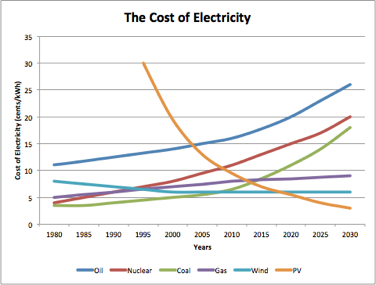
As a stop gap until infrastructure is updated to handle the electricity and generate it from renewable sources. Tesla is heavily in the battery and solar space as well, they just have focused on cars so much its practically been ignored. Solar in order to generate electricity, and battery to store it so you can use it when its night or cloudy. Once alternatives are truly available, you'll see you'll see a huge change, but as it is now, electrification itself enables you to later simply change your power plants rather than every vehicle on the road.
That's not going to happen when there is vested interest in propping up fossil fuels. I hope I'm wrong and you're right, I just don't think that's how the incoming administration sees things.
"The U.S. Solar Market Insight Q2 2024 report says 11 GW of new solar module manufacturing capacity came online in the United States during Q1 2024, the largest quarter of solar manufacturing growth in American history."
There you go. Economics will handle it. No stopping it.
> we could've solved climate change 50 years ago with nuclear
Next time you fire up that time machine, let me know. I've got a sports almanac packed and ready. On this timeline it never happened. Meanwhile, solar pv production capacity has doubled reliably every couple years for decades. And is only a few doublings away from providing all the power the world needs.
It doesn't matter about all of that if we're still burning fossil fuels, do you see what I mean ? You're saying it's cheaper, yet there is no storage solution possible for. that much renewables to keep everything running all the time, night time, winter etc.
I like renewbles, you seem to be getting aggressive as if I'm a climate denier, i'm the opposite, but I just don't think it's as easy as you think politically. To ignore politics is perilous.
We could've eradicated the use of fossil fuels 50 years ago with Nuclear, we didn't.
The stated goal of Tesla was acceleration of electric car production and adoption. It's fine if the people who believe in global warming buy a car from someone else. The republicans need an electric car that they can take to the gun range and not get laughed at though. Coastal elites ignoring flyover states is nothing new, Elon just figured out how to exploit it.


At home I've got fibre which is about as good as Starlink offers for $100. It used to be 20Mbps and it went up to 75Mbps max late last year when it looked like starlink would enter and they're gonna do 300MBps soon. It seems local ISPs are trying to do better offering more bandwidth though it's still expensive and heavily abuses "up to" marketing. Like, there's no reason that ISP can't offer 20MBps for $30.
It's not the easiest country to do business, there are a lot of exchange rate shenanigans and ISPs seem addicted to rent seeking. Heck, getting Starlink approved seemed to be a huge mission that surprised the execs working on it.
Funny bit is that I messed up ordering the kit at work so it's in my name meaning I can technically buy the kit off of them and they can get on a business plan without a waiting list or using the overpriced "authorized providers".
[1]: https://im.farai.xyz/the-classics/blog/zim-internet-sucks/