This, the Parallel Construction story, and the Patriot act having been principally used for the War on Drugs than terror... has made me consider that the War on Drugs may actually be more dangerous to Liberty than the war on terror.
No doubt it's basic premise, that putting a substance into one's own body is a "crime", is a pernicious lie.
The War on Terror's pernicious lie is twofold: Terrorism isn't a crime, and thus isn't subject to any laws, that this war is eternal, and the whole world is a battlefield.
Certainly in practical effects the Drug war is worse: Minorities whose communities are regularly raided by soldiers, depopulated, and placed into our glorious, humane prison system with the highest incarceration rate in the world, than stripped of voting rights and essentially blackballed from employment afterwards, would think surely so...
My natural tendency has so far been to see the war on Terror as worse, this may be me I, like many HNers with dissident political opinions, am more likely to see myself as an actual target in the War on Terror. That, and being an Orwell fan...
The Economist rants on this every couple of months, and I couldn't agree more.
The war on drugs is a terrible misstep. Drugs should never have been a criminal issue, they should be strictly a public health issue. But we're far too entrenched to make that change now.
Watch "The House I Live In" (streaming on Netflix) for a ridiculously detailed picture of the problem
"The House I Live In" was an eye opener for me. Also, one of the directors, David Simon, is the creator of the HBO show 'The Wire' which dealt heavily with the side effects of the war on drugs.
'The Wire' is the first thing I thought of when reading about this story.
The most impressive bit of THILI for me was the two cops that you saw ~15 years ago as young idealistic tough guys in a reality show, and now as jaded cynics who have mostly given up hope.
And now you know why David Simon was one of the few people speaking up about why PRISM wasn't really a big deal, as he has seen firsthand the effect of the War of Drugs on minorities through his work on The Wire.
If the government should have the power to do these types of investigations (and the people keep voting people in who are 'Tough on Crime' so apparently they feel the government should have that power...), then at least the NSA's abuses are essentially equal opportunity with some form of judicial oversight applied. Minorities don't seem to even get that much when we're talking about DEA, FBI, etc.
The jump from "The War on Drugs is worse than PRISM" to "PRISM really isn't a big deal" is rather large...
"If the government should have the power to do these types of investigations..." See, they obviously shouldn't. Justifying PRISM because the DEA is doing something that they shouldn't is silly. Both deserve criticism, and we should not curtail criticism of PRISM just because the War on Drugs isn't getting nearly the criticism it deserves.
David Simon's complaint is just "hipster outrage" bullshit: "I was upset at something before it was cool!" It is just the flipside of the people who get frustrated with recent attention to surveillance because "Of course this is going on, haven't you heard of Room 641A? I've been talking about this for years! Grrr, I am upset that I am no longer unique for my suspicions."
> people who get frustrated with recent attention to surveillance because "Of course this is going on, haven't you heard of Room 641A? I've been talking about this for years!
> Grrr, I am upset that I am no longer unique for my suspicions."
The first part is entirely true, but the second part is a misplaced caricature. If one wasn't operating with this threat model pre-Snowden, they mustn't have been analyzing the situation too hard.
The people who saw the Snowden revelations as inevitable had to endure being buzzkills for the past several years while everyone else leaped at the chance to party with the "cool kids" as geeks entered the limelight. It was clear that Apple's/Facebook's/Twitter's advances were primarily in the marketing department, but it was easy to ignore this to avoid being negative when you're finally gaining long-craved social acceptance.
Now that the herdthink has shifted towards privacy, we're seeing the same wishful marketing being applied to a lot of non-solutions to privacy (encrypting servers like Lavabit, remote code like Hushmail, facades of anonymity like Bitcoin, etc), when the reality is that solving (as opposed to merely obfuscating) these problems is extremely hard and any solution requires users to start taking a modicum of responsibility for their computing environment. But lowest-common-denominator faux solutions cannot address this inconvenient truth, so they give people the illusion of doing something while wasting away this iteration's outrage.
The first part does not warrant frustration that the issue is being covered. The first part alone should render you glad that the issue is now being given the attention it deserves.
The people who complain that it is now receiving attention are doing it, I think, out of frustration that they are not being adequately recognized for being ahead of the curve. They feel vindicated but they think that nobody notices that, so they lash out and complain about the wrong thing.
I see a parallel between this and David Simon's stance. He is upset that people are concerned about PRISM not because he has a good reason to be unconcerned about PRISM but because he wants that outrage reserved for his pet issue. He lashes out at the wrong thing; it should not concern him that people are concerned about PRISM, rather it should concern him that they are not also concerned about the War on Drugs.
(I picked the "upset at not being vindicated" example because it is a position I find myself tempted to take. I feel qualified to talk about the mentality behind it because I understand and resist the urge to adopt that mentality myself.)
I know the tack you're referring to, it's similar to dismissing things as "first world problems", and I consider it petty and divisive. But I don't think it encompasses all of the told-you-so reactions either.
Communications freedom is basically my pet issue. I'm glad the issue is getting attention, but don't feel enthusiastic about how the reaction is playing out.
The primary response seems to consist of politically-aimed incredulousness, as if the NSA will ever stop intercepting everything they physically can. It could have purpose if this were going to be the event that caused dismantling of USG, but it's not.
What's really lacking in the popular dialog is self-reflection about how the pervasiveness is entirely due to people's own poor, compulsive, and lazy technology choices. The status quo in the non-privacy threads is still enthusiasm for the latest shiny centralized trap from Google/Apple/Facebook/Dropbox/otherWebStartup.
The tide of awareness has not actually shifted until it starts being socially uncool to use a Gmail.com address, let Facebook mediate your social life, electively upgrade your pocket tracker for a new facade, rely on software that's controlled by someone else, or build new products in walled gardens.
So it seems like dispassionate/condescending "I've been telling you this all along" is an appropriate way to point out that there's been plenty of people who've been preaching the solution before you bothered to realize there was a problem. And if you'd actually like to empower yourself, you really do need to follow their inconvenient advice instead of seeking easy gratification through the latest fad kickstarter campaign or https site with flawed marketing spiel.
> Both deserve criticism, and we should not curtail criticism of PRISM just because the War on Drugs isn't getting nearly the criticism it deserves.
I would agree that both deserve equitable argumentation.
However the choices appear to be to completely upend the way the legal system and law enforcement handles investigations (which the people have voted against time after time), or to keep the systems that exist and tighten the oversight and transparency.
I suppose your choice on that will fall towards whether you are more distrustful of the government or crooks. But essentially the same logic would appear to apply to both.
> However the choices appear to be to completely upend the way the legal system and law enforcement handles investigations (which the people have voted against time after time), or to keep the systems that exist and tighten the oversight and transparency.
So lets say that War on Drugs reform is impractical as it would upend the legal system or whatever bullshit. I disagree, but lets go with it...
How does it follow that we should then make sure the shit is evenly spread on everybody? Is this the Harrison Bergeron school of social justice? We cannot stomach treating this segment of the population decently, so in order to make this fair, we are going to treat the rest of you like shit too?
Well you know, that's just it; I don't agree that scrapping the War on Drugs would upend the legal system. It would presumably clear out the prisons for the most part, but that's not what we should be worried about.
However many of the legal and investigatory techniques used to investigate drug-related "crimes" are perfectly cromulent ways to investigate many other actual crimes. I would like to keep those techniques available, in general. Each technique may or may not have it's place, for sure.
But a useful, cost-effective tool that's not otherwise unconstitutional should be used. We should then make sure that the oversight and transparency measures for each type of tool is in place to ensure that such measures are not abused.
The government is pretty much literally the only thing we the people have any input into... functions which rightly belong to "the people" at large should be placed into the government. Where government screws those up, the answer should be to fix the government, not for the people to completely abdicate that responsibility.
> How does it follow that we should then make sure the shit is evenly spread on everybody?
You're basically asking why a given system should be fairly applied? I would reverse the question completely and say that any given government system should start off completely fair and only deviate from that for very good reason.
Avoiding "Misery Loves Company" is a good reason, mind you. We levy administrative fines on people who actually screw up, for example.
But the Simon logic is, why is it permissible to surveil tens of thousands of cell phone calls within a predominantly poor, black & Hispanic neighborhood for literally years at a time, looking for evidence of small-time drug dealers, but it's not possible to get the same type of court order to surveil other communications (even at larger scale) for something that's actually important to society at large?
There is a difference in scale, that's for sure. But the difference is not really as large as the difference between no surveillance and what the police/FBI/others are already doing (and have been doing) throughout America. And so that's his point, if America agrees that this type of investigatory powers should be used (the kind that have always permitted incidentally collecting too much, or searching through all records reasonably relevant to a case, etc.), where and why does the framework behind those powers actually end here when it didn't there?
There may very well be a good reason, but if that reason is "we don't trust the government" then by what logic do we let the DoJ in general investigate criminal acts? I guess what I'm saying is that I really wish we would get back to a framework of control of government (like the EFF, ACLU, etc. have been pushing to do for years) instead of instinctive distrust of the idea of government.
But whatever we do decide the government rightly has the power to do, we should at least be consistent with it.
I think that all legal systems should be fairly applied.
I think that when abuse or imbalances become apparent, we should correct that imbalance by pulling back systems and ending enforcement, rather than applying more pressure on other areas.
After the imbalance is corrected, then we can discuss how to reapply the system in a fair balanced manner.
So, in concrete terms: The surveillance/law enforcement techniques being used in the War on Drugs may very well be something that we, as a society, could accept. However the War on Drugs is imbalanced and unfair in a very bad way. We should therefore throttle back on everything, correct the underlying issue, then determine if we still think that those surveillance/law enforcement techniques are still warranted.
Throttling back on these surveillance/law enforcement techniques is extreme, but I think that the accusations leveled against the War on Drugs (basically, that it is a form of class warfare, born of blatant widespread racism) are serious enough to warrant an extreme response.
Simon is pointing out a very clear problem; my suggestion is that we pull over to the side of the road and try to figure out just what the hell went wrong. The sooner we pull over, the better, because we seem to be doing a lot of damage.
But it's not obvious. Lots of people disagree with you and consistently vote for draconian approaches to law enforcement, immigration etc. I know a lot of people that simultaneously think Obama's a wicked tyrant and that Civil War 2.0 is inevitable, and who are also heartily in favor of the death penalty, mass deportations of illegal immigrants, militarizing the border with Mexico, and (insert hardline view here).
If I said "it is obvious that the world is billions of years old", would you object? Plainly there are (many) people that disagree with that statement, but do you think that would change the legitimacy of that statement?
These are things put in the realm of "opinion", but I think we can safely discard fringe notions like "the world is 3000 years old" or "the disparate effect of the War on Drugs on minorities that is accelerated by hard-line stances and rapidly advancing law enforcement technology and techniques is acceptable."[0]
[0] Read: "That stuff that concerns David Simon, @jivatmanx, and myself."
Yes, I would object. It's not obvious that the world is billions of years old, so I think it's a good thing to mention however briefly, that our knowledge of such things is founded on the study of geology, chemistry and so forth, unless you're talking to someone whose views/level of knowledge you're already familiar with.
You weaken your own argument when you go around stating your opinion as fact, and it's not very different from people saying things like 'obviously long prison sentences reduce crime' or 'obviously excluding immigrants will relieve unemployment' or 'obviously the point of prison is punishment.'
I don't think anyone but a loon or a pedant would object to a comment, in a thread about geology, that implied the ancient nature of the earth was obvious. I am afraid that I find it difficult to care about the objections of either loons or pedants. They may think my argument is weakened, and I consider that an acceptable loss. I already go out of my way to qualify much of what I say, I have little interest in further encumbering myself.
Way out of line. It is pretty clear from your comments that you automatically think that anyone who disagrees with you is an idiot. That's funny given the lack of depth your thinking demonstrates so far.
Arguing that your opponent's argument is a "fringe notion" and throwing it in with another irrelevant example of a fringe notion is a pathetic excuse for a counter. You actually have to write a direct counter-argument instead of relying on dismissiveness and fallacy. But hey, acting like an asshole is definitely the easier way.
Is anybody here actually arguing that the War on Drugs is not extraordinarily problematic? As far as I can tell nobody is.
anigbrowl is being pedantic about the term "obvious" but does not seem to actually disagree (The thread you are responding to is about effective communication, on which anigbrowl and I disagree, but I do not think that he is an idiot for disagreeing with me on this point.)
mpyne doesn't seem to disagree that it is problematic (he brought up David Simon after all... in fact his response to me makes me think that we both agree that both situations are problematic), but thinks it is not practical to change the state of affairs. I, again, disagree with that, but I certainly do not think that he is an idiot for thinking that the realities of the situation preclude meaningful change.
mindsling takes exception to my caricature of privacy advocates who are frustrated with recent media attention to their cause, but I think I have explained myself there well enough. I do not think that mindsling is an idiot.
(If I've mischaracterized anybodies position here, please correct me, but as I have interpreted everyones' comments currently I don't think that anybody here is an idiot.)
I don't like the "War on Drugs", no. I'm the kind of person who would remove 80% of the safety labels out there if I had my way, so someone choosing to do something stupid with drugs is on them as far as I'm concerned, up and until it starts affecting other people.
And even where it does start affecting other people, there are probably much better ways to regulate that effect than prison, and we should be using those ways instead. And we should switchover yesterday.
It's probably not yet practical politically to fix that (especially as its so tied toward racist tendencies dog-whistle style), but that would not be a reason for me to argue in support of it.
However I also don't presume that shedding the War on Drugs would eliminate crime, or the need to investigate and prosecute such. So we'll still have government enforcing law, protecting public security, and the like. And so I get very, very tired of the argument that government trying to get power $FOO to do such things is necessarily a dystopian power grab.
Don't get me wrong, it may actually be a bad idea for government to do $FOO, but no one is generally going to convince me of that by hyperbole or invoking the Sheeple Mantra (not saying you're doing that here, btw, just remarking on some HN threads I remember in general).
I don't think anyone but a loon or a pedant would object to a comment, in a thread about geology
Wait a minute, you didn't say anything about 'a thread about geology.' In fact, I was the person who brought that into the conversation. Discussions and misapprehensions about the age of the earth seem more likely to crop up in conversations about religion or general science or ancient history.
You've got a nerve critiquing me for being a pedant when you're retroactively redefining the terms of your argument like that.
> as he has seen firsthand the effect of the War of Drugs on minorities through his work on The Wire
Or rather through his 16 years as journalist on the police beat at the Baltimore Sun, from which he got enough material to write 3 books and 3 TV series, including The Wire.
It's really weird how TV just outshines everything else as soon as it gets in the picture. Simon will forever be "the guy who wrote The Wire", like he was a barista in Hollywood who just sat down at the kitchen table one day and made up all of it in his head and then proceeded to film it for TV.
(And no, I don't agree with him on the subject: the fact that evils come in different forms and shapes doesn't mean we should ignore one or the other.)
> Or rather through his 16 years as journalist on the police beat at the Baltimore Sun
You know I almost mentioned that, but then I had the horrifying thought that he might have had someone on the police beat on his production team and that it may not have been Simon himself with that experience, and I didn't want to spout anything factually incorrect so I left it out completely.
I'm glad to be corrected on that, hopefully I'll remember for the next time it comes up.
I can appreciate where you're coming from with regards to the basic premise of the war on drugs. Like the old adage says: the road to hell is paved with good intentions.
The thing that tears me up about it is that some of these drugs (primarily meth and to a lesser degree heroin) completely obliterate lives and leave a huge cost to the general welfare of society. I don't think that we should be throwing users in jail instead of treatment, but a place where methamphetamine is legal and freely available is a scary place. I think there is a line between legalizing and decriminalizing and I'm not sure I'd want to see some drugs legalized. Weed, MDMA, I can see being legalized, but the hardcore stuff I'd be more comfortable simply decriminalizing usage.
"a place where methamphetamine is legal and freely available is a scary place"
Like the USA in the 1960's? Benzedrine was sold over the counter to children and widely used throughout the country.
Now benzedrine is probably less dangerous than methamphetamine because it's slightly less hydrophobic, which often makes addiction less trouble. Meth showed up as the very similar black market substitute when benzedrine was made prescription only. It turned out methamphetamine was easier to make with household solvents in trailers; users would probably prefer benzedrine.
Both methamphetamine and benzedrine are available with a prescription. Benzedrine is the active substance in Adderall; in fact, Adderall is only a hair's breadth different from methamphetamine.
The difference is that today it's only black market customers that use methamphetamine. If we re-legalized dexedrine or benzedrine over the counter, the trouble would mostly go away.
Yes, we'd have the same issues with diet and study pills that we have today, but somewhat more of them. You can already get those if you have a pliable doctor and plenty of money, you know.
But we'd also shut down a violent black market industry that gets $50 billion a year and kills 25,000-50,000 people in the USA and Latin America each year. That's most of the trouble. Skinny ladies with diet pill issues are small time in the face of mass death. We'd eventually defund most of the expanding police state, too.
>But we'd also shut down a violent black market industry that gets $50 billion a year and kills 25,000-50,000 people in the USA and Latin America each year.
Yup.
>That's most of the trouble. Skinny ladies with diet pill issues are small time in the face of mass death.
Eaxctly.
>We'd eventually defund most of the expanding police state, too.
I'd love to be able to pry back the Castle Doctrine. I may be crazy but I honestly fear a wrong-address or otherwise mistaken police raid more than hostile activity from illegal drug smugglers/sellers.
You mean the same kinds of medical management we have right now for tapering off certain anti-depressants and maintaining pain and sleep-aid prescriptions for people with money and/or good insurance. Not to mention the problems associated with Big Mac abuse.
The frameworks we would desire in a legalized environment are already here, but for some reason truckers and women make it an insurmountable challenge. Something about tattoos and/or menstruation? I'm not sure I follow the logic at work here.
Basically, a portion of the money currently going to prisons would be redirected to medical assistance, which is not the worst result emerging from recent history that I can imagine.
>You mean the same kinds of medical management we have right now for tapering off certain anti-depressants and maintaining pain and sleep-aid prescriptions for people with money and/or good insurance. Not to mention the problems associated with Big Mac abuse.
Yes, almost nothing would change WRT abuse of drugs.
>I'm not sure I follow the logic at work here.
Logic? In the War on Drugs?
>Basically, a portion of the money currently going to prisons would be redirected to medical assistance, which is not the worst result emerging from recent history that I can imagine.
Hopefully a lot of money would be diverted from law enforcement to mental health treatment.
What good intentions? The war on drugs has never been about good intentions. It has been a combination of racism, power-grabbing, and lobbying by big business from the start. Look at the things that were said in newspapers and to Congress in the early days of drug prohibition, back when cocaine was an ingredient in Coca-Cola, if you do not believe me.
"The thing that tears me up about it is that some of these drugs (primarily meth and to a lesser degree heroin) completely obliterate lives and leave a huge cost to the general welfare of society"
The funny thing about methamphetamine is that it has medical uses -- it is used to treat narcolepsy, obesity, and ADHD. Yes, the same drug that people smoke out of broken light bulks happens to be available by prescription and sold at your local pharmacy. You know what the most important difference is? Quality control.
See, pharmaceutical drugs have regulated purity, dosage, and ingredients. You know that the methamphetamine your doctor prescribe will actually be methamphetamine and that it will not be contaminated with oxidizing agents. Methamphetamine is not the safest drug to use to get high (the dose is higher than it would be for medical uses) but even at medicinal doses the black market version is not safe. Likewise with heroin: adulterants are a bigger problem than the drug itself, and pharmaceutical opiates are safer because their production is nice and clean.
"Weed, MDMA, I can see being legalized, but the hardcore stuff I'd be more comfortable simply decriminalizing usage."
There is a bit of irony in saying that you think MDMA should be legalized but that methamphetamine should not be. MDMA is not all that different from methamphetamine (in terms of chemistry, effects, and danger to users) and quite a few "MDMA" pills actually contain methamphetamine (as a mixture, or maybe just methamphetamine depending on how unscrupulous the producer is). MDMA carries with it all the negative effects on amphetamine withdrawal (the "crash").
Really what we need is to legalize and regulate all recreational drugs. A world where methamphetamine is legal but regulated is better than a world where it is decriminalized and unregulated. If someone checks into the hospital because of a bad reaction to drugs, they should be in a position to tell their doctor exactly what drugs they took -- and their doctor should be able to assume that those drugs were not laced with heavy metals.
Most slaves turn a profit, while most prisons require funding.
Prisons are garbage processors for grinding up as many undesirables as possible, for as long as possible. Whom is chosen is somewhat random, but usually people that are undesirable: ugly or antisocial. As for the minor point of finding guilt: a crime can always be found, so that's not a limiting factor.
The majority have already volunteered to be slaves. Healthcare and visa status the whips for native and immigrant employees respectively, especially in the US. Debt and consumption alike further captivate these unfortunate creatures on an unending treadmill of pseudo-affluence they will never attain.
Prisoners beget _revenue_ for the prison system. It is of no consequence that prisoners' labor fails to produce anything marketable that outshines their value to the prison system of only being, existing in a cage, and causing revenue to pour in.
Require funding or get funding? Doesn't a privatised prison derive a profit from its "use" of prisoners (getting/requiring funding) in the same way that slaveholders once derived a profit from their use of slaves?
Most prisons, whether for profit or not, require money to keep going. The money ultimately comes from society via taxes. But the net effect is it costs society thrice to imprison a person: fewer taxes collected, less goods/services produced
and cost to imprison.
> Most slaves turn a profit, while most prisons require funding.
Not even relevant in private prisons, many of which put their prisoners to work and provide third-world wages to their inmates. And the funding comes from the government.
It doesn't surprise me the government would be able to find people swapping out phones on a regular basis using this data.
I once worked in the fraud department of a major US mobile carrier. At that time analog was on its last legs, and the new money-making opportunity was bog-standard identity theft. People would sign up for new phones using stolen information and then rent out minutes to immigrants from the back of a van until we found them out and shut down the phone. We had a system that "fingerprinted" usage patterns such that we knew with a fair degree of certainty when a new account was fraudulent based on his usage patters and the people he called.
I don't see any reason why the same technology wouldn't work to identify criminals with boxes full of prepaid phones.
So assuming worst case scenario that the DEA actually was able to make a whole bunch of arrests based on this historical data, would we really want to pay to jail that many more inmates? What could be the point of this?
Pressure against individuals:
To put pressure on people to get them to do your bidding. To compel people to turn up evidence on bigger fish or your family members. To compel someone to be a patsy for a different crime. To compel celebrities to come out in support of the security state.
Nationally (or bragging rights):
To look good to other countries when we ask for loans ("we're a secure nation- we could arrest all of these people if we wanted to."). To negotiate with prison-building companies (untapped arrests are potential prisons). To compel additional budgeting for high-tech crime-fighting research and equipment. To inflate one party's credibility pre-election ("we turned up all these bad guys."). As bargaining tokens in international deals ("we'll turn in this bad guy of yours if you buy our $million radar"). To bolster Big Pharma's stance that mass-narcotics are necessary ("look how many people self-medicate with dangerous cannabis, they should be taking prozac instead.").
Yikes. I prefer to think that the government would not be that evil, but then again, that's just me choosing ignorance/optimism over thinking about how bad things could actually be.
> would we really want to pay to jail that many more inmates?
I would much rather have some of these people in prison than in society. Bomb makers, drug lords, and other violent types absolutely deserve to be put in prison (regardless of the internet's incessant whining about the drug war).
edit: As an observation, whenever any sort of political thread comes on HN, the comments overwhelmingly tend to be paranoid horseshit. This is not a judgment about the parent comment, just the entire thread in general.
Interesting to note here is that the ATT _gave_ those records "on its own", versus being subpoena via DEA by a judge, something that 99% of judges in their sound mind would have never ever ever agreed on, even in today's world.
I had a hard time believing that ATT would have done something like this out of their own free will, as they would have never done anything that could undermine their sales and bottom line (potentially) so severely.
I put "on its own" in quotes because knowing the way Government thugs are conducting themselves, most likely the ATT had been heavily blackmailed under the table this or another way and at some point they have given up (Wikipedia: tyranny). Don't be surprised if in couple of years from now the administration will change, and the management of ATT will change, and then you will see some tiny PR-lawsuit surfacing that yes indeed ATT were pushed by DEA and now they are "suing".
I wouldn't be so sure AT&T didn't do it entirely on its own. In our crony capitalism times, being friends with the Big Government is a very good strategy for Big Business. Lobbying is the most profitable investment known to man. If giving records to DEA means access to juicy government contracts or a nice regulation that ensures the interests of AT&T are properly protected - then bottom line comes out nicely. That provided anybody besides a handful of geeks would actually care - after all, you'd never do something as vile and disgusting as sell merchandise that the government does not approve, right? So you have nothing to fear and there's no reason for concern at all.
So AT&T kept records for 26 years and counting. Information that includes location of caller. I am very happy drug dealers were caught, but 26 years? There is some serious potential for abuse.
I was at a different telecom a couple years back and legal handed down a ruling that we couldn't keep things beyond two years, even though we were research instead of billing. Research was the last group at the company to have to delete all that stuff, and we only had space for five years anyway, and even that was stripped down to 10% of its original data. However the researchers felt very safe in assuming that since the government has all of the data reflected off the antenna base station switches through its own network, there's no way they're deleting anything.
It's weird that at&t had to give them that data, unless you assume that up til now they had access to the nsa's copy and now the justice department says they have to have their own.
Just read article in depth and found two more significant "features". First one - database build by AT&T can identify if target individual uses multiple phones (So if say I was engineer Joe and wanted to get sell private cell number(s) for Angelina Jolie how much would you pay?). Second - they can identify if you switched to a new number. Even if you threw out your phone. (So speaking of numbers, how much would you pay for a yearly subscription previously offered 'product'). Seriously if AT&T doing this, there is no reason to believe that other providers do not.
>Seriously if AT&T doing this, there is no reason to believe that other providers do not.
The article says AT&T has the data for any telco that uses AT&T switches. This is a little odd, given that the company currently known as AT&T is not the same company that used to manufacture switches; but, if this has been going on for 26 years, I suppose the government would have insisted it continue across corporate splits and mergers.
IIRC, lots of other companies selling telecom use AT&T infrastructure (infrastructure owned by AT&T now, not infrastructure built by a different company called AT&T in the past.) There are a much greater number of companies that you can buy local and long-distance service from than companies that actually operate the physical infrastructure.
I suspect that current infrastructure is the "AT&T switches" that are relevant here.
Now it makes me wonder what the turnover rate will be once all those drug dealers learn that AT&T is bad for their business. I wonder if anyone is even measuring those stats to know.
This is by far not free and I really wonder what AT&T is getting out of the deal. They're devoting a small but significant amount of internal resources for what? Does the DEA overlook their transgressions or just the CEO? I have a hard time believing that AT&T would do this "out of the kindness of their hearts." I wonder now that this is exposed and the real costs of this project will come to bare if they'll keep it up. They certainly have enough money to throw at it, though.
A: The information AT&T is handing over covers far more than just their own subscribers. They're also providing wholesale information, so even if you're not an AT&T subscriber, your provider might eventually buy from AT&T, and they'll get the call detail record for some of your calls anyways.
B: Is it known that the other major providers are not in on this just like AT&T?
And moreover, calls to non-AT&T mobile users are in there. That means you are in there if someone called you from AT&T and/or you called them on AT&T. With a bit of legwork, you could reasonably infer phone number changes on non-AT&T networks given the same people on AT&T and you kept calling each other after your number change.
I would assume that the DEA is paying AT&T whatever they ask, so it's hardly charity. (I wonder if AT&T tacks on mystery fees to the government like they do with consumers.)
I think a total boycott of ATT would be a good start, since it appears ATT actually was out in front of Verizon and T-Mobile and Sprint on this. I'd probably trust T-Mobile and Sprint more than either ATT or Sprint based on corporate history, too. Still totally untrustworthy, but there probably is a difference.
It's getting to the point where a good alternative to how cellphones work might be worthwhile, to keep location data more confidential. A broadcast "ping", and then some form of tunneled return connection, rather than routine registration with location.
Doing it all in a way which doesn't touch PSTN and thus doesn't call under a sane interpretation of CALEA, plus a provider willing to challenge the constitutionality of CALEA and at minimum require full warrants for all cooperation, probably would be a good deal better, too.
Good luck. How do you boycott a backbone network provider thatmay ultimately service your chosen ISP anyway?
Sure, you harm their consumer and residential retail operations, but that won't cripple their business to business operations, which is where all the real money is anyway.
I think when you're boycotting a huge company, you can just avoid them where possible. If you can't tell if the company is a vendor to a vendor, that's ok. It doesn't need to be a material impact on their financials -- just the marketing and PR value which keeps the issue in place is important, and maybe it keeps smaller companies from playing along, too.
I'd probably not buy transit from them, certainly not when given a choice (I'd obviously still peer/etc. if I needed routes to ATT), too.
You don't need to boycott AT&T, although, that would be nice.
They, Google, Level 3, etc. all own so much of the network backbones...it's impossible not to route through an adversarial trunk.
The answer is now encryption. End-to-end, and everywhere. Email should be considered as dead as the landline. Secure-IM and chat...along with self-hosted data services[like Owncloud] are the future. Or at least they should be.
Information is power and your adversaries will not give it up, ever. The only way to take that power is to scramble the bits.
I wish Hacker News had a wiki somewhere listing the most promising solutions to the top issues hackers care about. So like, best off-the-shelf mesh network hardware, best form of encryption, best $5 microcontroller with usb and/or bluetooth and or wifi, stuff like that.
If I could just get these things cheaply and easily, I would gladly use them. Right now so many of them seem more experimental than ubiquitous.
Reminds me of just after iOS6 was released under NDA in beta, and Apple had their new Maps application. My wife and I were going somewhere at about 5PM and I went to go check the traffic on the route we were headed towards, and there wasn't a byte of data available to figure out what the traffic was like since there were maybe a few dozen phones in a few square miles of where I was that were running iOS6.
I'd be one of the first people in line to install a mesh network at my residence and work, but it would be pretty useless unless there were others contributing, else I'd have a pretty lonely network.
I'm actually not convinced, myself, that they're practical at present (I know that anyone is doing anything with them in the real world, so it's not 100% theoretical, but not the extent or the difficulty or the capabilities...).
Which is to say, I'd also very much like to see such a consolidation of resources.
Interesting. At first glance, this feels wrong, but thinking about it more, the only significant issue I really have with it is that it seems strange for the DEA to be allowed to issue its own warrants.
Then there would be a war on piracy. How would you like it if they kept 20 years of your downloading habits? Do you think that in 20 years time they could find something to incriminate you?
And that's why it's so wrong to keep data for so long, and actually be able to use it.
I have a problem with a war on marijuana, or violating the Constitution during the war on drugs. But otherwise I don't have a problem with a war on meth or crack or other drugs that increase the odds that I'll be a victim of violent crime or robbery. (I'd punish simple users with rehab rather than prison.)
You seem to be assuming that a war on drugs must make them illegal. It needn't. Instead the war could do whatever is most effective (per dollar spent) at reducing usage. I support rehab for alcoholics, and measures to reduce drunk driving. I don't support the war on drugs in its current form.
> You seem to be assuming that a war on drugs must make them illegal. It needn't. Instead the war could do whatever is most effective (per dollar spent) at reducing usage.
You mean, it could be legalization, taxation, and using taxes to fund intervention, referral, and treatment programs, and not be opposed to legalization at all?
If so, then its obviously not what people supporting legalization are arguing against when they are arguing againt the War on Drugs.
Yes, that's consistent with my top-most comment in this thread, where I describe a different, gentler and constitutional war on drugs.
I wouldn't stop at using the taxes from the sale of hard drugs to reduce their usage. If spending $X against drug usage lead to $2X in net benefits, I'd support spending $X no matter how much higher it was than those taxes.
A key component would be rehab, in which case it might be tough to make the drug legal. Suppose crack is legal and so there's some parent high on crack all day, providing only the most basic of care for the kids. If it takes keeping crack illegal to legally force that parent into rehab, then I'd want crack to stay illegal, but change the consequence to rehab.
> Suppose crack is legal and so there's some parent high on crack all day, providing only the most basic of care for the kids.
If the "most basic care" is adequately meeting the society's minimums, this obviously doesn't justify criminalization.
If it doesn't, then child neglect can be made illegal (hint: it already is), independently of whether it results from drug abuse.
> If it takes keeping crack illegal to legally force that parent into rehab
Compulsory-as-an-alternative-to-prison rehab obviously requires that something be illegal, but it doesn't require that the illegal thing be the drug of abuse. Rehab as a condition of a suspended sentence could conceptually be tied to any crime for which drug abuse was a contributing factor even if the drug was legal (IIRC, this is sometimes done with alcohol in, e.g., the context of DUI, even though alcohol is legal.)
So, the premise here that making the drug illegal might be essential to make compulsory-as-an-alternative-to-prison rehab an available tool is simply false.
> So, the premise here that making the drug illegal might be essential to make compulsory-as-an-alternative-to-prison rehab an available tool is simply false.
I accept that. I support whatever it takes as a minimum to get the person into rehab, even if the minimum bar for parenting is raised so that crack addiction doesn't reach it. If the majority of crack users could be model citizens while high then my mind could be changed.
>Does making meth and crack legal make less crime (violent or robbery) than if their usage was nil?
That's not one of the available options. I mean, looking back at the article, the spoils of this program are incredibly paltry given the enormity of the data set. Criminalization of drugs and Militarization of enforcement groups is not significantly deterring usage because they are so ineffective even with so many resources and so little respect for the civil rights of users and non-users alike. All these programs have been effective at is raising the bar for drug distribution organizations to a point where militarization and violence is necessary for operation.
>Coffee addictions don't lead to more violent crime or robbery, as far as I know.
Perhaps they would if they were criminalized. There's nothing very violent about marijuana use except the militarized distribution chain and criminal enforcement apparatus. If 7-11 could sell it from behind the counter, I expect that you would see marijuana related violent deaths drop precipitously.
But why would it be criminalized? For that to be justified it needs to be a drain on society in some significant way.
I don't support the current flawed war on drugs, especially forfeiture of property and imprisonment for users. I don't support a war on drugs that are essentially victimless, like on marijuana. I support the ideal war on drugs (one based on evidence to show that it does more good than harm).
>But why would it be criminalized? For that to be justified it needs to be a drain on society in some significant way.
Substance bans do not /at all/ have a track record of being grounded in quantifiable measures of societal harm. That is to say, the current substance restriction policies are more or less completely arbitrary. The arbitrariness of current policies gives a natural experiment opportunity to assess the harm of the criminalization policies themselves by comparing the societal impact of substances such as caffeine, tobacco/nicotine, and alcohol with those of marijuana plus the associated negative impacts of marijuana criminalization. At least in the case of marijuana, the cure seems to be significantly worse than the disease.
>I support the ideal war on drugs (one based on evidence to show that it does more good than harm).
I wrote a more generalized comment[1] on the idea of an "ideal war on drugs". The gist is that I think it's a completely fantastical idea. The idea that you can squash a market with inelastic demand is soundly dispelled by all current and historical attempts at doing so. Further, I think that it's harmful that such an idea persists, because it allows for the justification of more and more extreme enforcement measures. Arguments like "If we got rid of meth then society would be significantly improved?" are based on a false premise. This is an outcome that clearly cannot be brought about by the war on drugs, yet such reasoning is continually used as a justification for more and more extreme enforcement measures that have increasingly diminishing returns as well as an increasingly negative impact on broader society as a whole.
> At least in the case of marijuana, the cure seems to be significantly worse than the disease.
Agreed, I'm talking about justifying criminalization in an ideal way, not the current way.
> The idea that you can squash a market with inelastic demand is soundly dispelled by all current and historical attempts at doing so.
The demand comes after the addiction. Remove addiction and the demand is reduced.
> This is an outcome that clearly cannot be brought about by the war on drugs...
That's the current war, not the one based on evidence. What if the evidence showed that a different war could improve society on average and reduce hard drug usage? For example, instead of taking away a user's property and imprisoning them, you give them rehab and (if needed) job skills and actually find them a job, and any other assistance that costs less to provide than the monetary value of the drain on society they'd otherwise be?
>> The idea that you can squash a market with inelastic demand is soundly dispelled by all current and historical attempts at doing so.
> The demand comes after the addiction. Remove addiction and the demand is reduced.
To me the latter statement reads like: "If you can create a perpetual motion machine then energy would be free"
This is the very problem, using impossible potential ends to justify means.
>> This is an outcome that clearly cannot be brought about by the war on drugs...
> That's the current war, not the one based on evidence. What if the evidence showed that a different war could improve society on average and reduce hard drug usage? For example, instead of taking away a user's property and imprisoning them, you give them rehab and (if needed) job skills and actually find them a job, and any other assistance that costs less to provide than the monetary value of the drain on society they'd otherwise be?
Maybe I'm just a pessimist, but I don't see anything that's at all hinted at a remotely workable solution that would have such an effect. You seem to be assuming that we can somehow overcome all of the imperfections of past policies but do not offer a clear, strong novel mechanism by which that can happen. In the meantime our current policies are enormously destructive, and I see that as the more pressing issue. Really, solving addiction and substance abuse is a problem that is not very closely related to criminalization policies, but it's those criminalization policies that are leading to broad 4th Ammendment violations, police militarization, and unnecessary deaths and incarcerations.
[edited to remove the implication that no solution was offered, but rather that a new solution wasn't offered that could reasonably be expected to end addiction and substance abuse in a significant way]
> You seem to be assuming that we can somehow overcome all of the imperfections of past policies but do not offer a clear, strong novel mechanism by which that can happen.
Actually I think what I propose has nil chance of becoming reality in my lifetime and maybe for centuries in the future, if only because the masses wouldn't support it. That doesn't stop me from supporting the best possible solution to hard drug addiction.
I support ending the current war on drugs almost wholesale, because it's so inefficient and even unconstitutional as you note. But I'd concurrently want to see some movement toward the ideal. I definitely don't buy an argument that nothing better can be done now than ending the war on drugs in its current form. I believe there's always room for improvement even within the confines our current misguided society. Maybe I'm an optimistic pessimist?
> I definitely don't buy an argument that nothing better can be done now than ending the war on drugs in its current form.
This isn't really quite what I'm saying, per se. I would rather say that I think that currently people tend to couple the idea of changing the status quo with the introduction of superior policy. I'm skeptical that significantly superior policy can be achieved, so I would prefer that the two problems be decoupled. We shouldn't be letting blood just because it's the only action that we've come up with to respond to an intractable disease. We should stop the blood letting (pursuit of harmful policies), and then work on actual cures to the difficult problems of addiction and substance abuse thereafter. The harmful policies only serve to give the illusion of addressing the problem, and so actually hamper the search for effective policies. And if we maintain the status quo for lack of a superior alternative, then I fear we'll never see the end of it.
Agreed! That's why I say concurrently, decoupled but ideally in parallel.
> The harmful policies only serve to give the illusion of addressing the problem...
Politicians currently have the incentive to give such illusions rather than true solutions. That's another problem, close to the root cause, that I support fixing.
Apples to oranges, since unlike meth and crack users, the vast majority of those who drink alcohol can hold down a job to pay for it, instead of resort to theft or worse.
Prescription opioid drugs like oxycodone kill more people than meth or crack. And there are a lot of people able to hold down a job and pay for cocaine (see also: wall street). What was your point again?
You would intensify the pursuit of criminal prosecution of people who find themselves addicted to prescription painkillers?
An addiction to morphine is really little different than an addiction to heroin, except society has a greater understanding of addiction to morphine as an illness, not a crime. Treating morphine abusers like we treat heroin users would be devastating to society. It would be a ludicrously senseless step backwards. Your perspective on drug use is absolutely insane.
> You would intensify the pursuit of criminal prosecution of people who find themselves addicted to prescription painkillers?
No, rehab for them and all other people addicted to hard drugs. I'd seek criminal prosecution against the pushers who knew or should've known the drugs hurt much more than they help.
Quote: "Rebecca Riley (April 11, 2002 – December 13, 2006), the daughter of Michael and Carolyn Riley and resident of Hull, Massachusetts, was found dead in her home after prolonged exposure to various medications, her lungs filled with fluid. The medical examiner's office determined the girl died from "intoxication due to the combined effects" of prescription drugs. Police reports state she was taking 750 milligrams a day of Depakote, 200 milligrams a day of Seroquel, and .35 milligrams a day of Clonidine. Rebecca had been taking the drugs since the age of two for bipolar disorder and ADHD, diagnosed by psychiatrist Kayoko Kifuji of the Tufts-New England Medical Center."
I really can't imagine violence going up if drug prohibition was ended, even if you don't count the violence committed by public officers enforcing drug laws.
I can imagine that, because a crack or meth user can't hold down a decent job. Whether legal or not they'd tend to have to rob to get the money to stay high. And when legal it's likely more people would get addicted.
Portugual decriminalized drug use and saw decreases in drug-related crime, increased addiction program enrollment, decreased youth use of drugs, decreased drug-related deaths, and decreased HIV infection rates.
That's interesting, I'll definitely research further. It's possible these improvements were because they criminalized it in a sub-optimal way, as the US does. That is, it's possible that an optimal war on hard drugs could lead to even bigger net benefits. Imagine if no users needed fear prosecution; that's one aspect of the war I'd wage.
Now you're assuming both that drug abuse would increase if drug prohibition ended and that drugs wouldn't get drastically cheaper. Both are claims you would need to support, and claims I do not believe.
I don't think it would matter how cheap it is. Even at a dollar a hit a jobless person tends to need to steal to get that dollar, in addition to money for food.
I don't think it's a stretch to believe that legal things become more prevalent than illegal things, especially highly addictive things. Believing that requires no more support than disbelieving that.
I don't see how that's defensible. You seem to be talking only about people with zero money, which is few people even among jobless (even homeless) people. Surely the price of the drug, all else being equal, would strongly correlate to the number of crimes committed to obtain the drug.
> I don't think it's a stretch to believe that legal things become more prevalent than illegal things, especially highly addictive things.
I absolute think that's a stretch to believe, at least for things like drugs in large areas like the USA, where physically preventing their existence altogether is (apparently) not feasible.
By the same logic, the price of food should correlate to the number of crimes committed to obtain it. But far more is spent on food than drugs, and most theft is to buy drugs, so something is different.
The difference is that normal people work at jobs to obtain money for food, but serious drug addicts are incapable of working a regular job and so have to steal to support their drug habit (and for their food as well).
So in fact, crime is proportional to how much drugs interfere with ability to hold a job.
There's a huge segment of "serious drug addicts" in our population that show exactly what crack and meth users would be like if their drugs of choice were legalized: it's called Alcoholics Anonymous. Are you equally concerned about being robbed and beaten by an alcoholic? Their drug of choice has been legal for quite some time.
> Surely the price of the drug, all else being equal, would strongly correlate to the number of crimes committed to obtain the drug.
You have a good point there. If I was wrong and crack and meth became dirt cheap and there was no long associated violent crime and robbery, to no longer support a war on it I'd have to see that its legality lead to no significant drain on society in other ways. That would include parenting, job performance, accidents / injuries, etc.
The level of crime (and particularly, the level of violent and organized crime) surrounding alcohol jumped up sharply with prohibition, and dropped back down with the end of prohibition. I don't see why you'd expect that to be any different for any other drug.
> Even at a dollar a hit a jobless person tends to need to steal to get that dollar, in addition to money for food.
If its legal, a person has less social pressure to not to admit use, and therefore there are less social pressures against them admitting their problem and seeking treatment before being compelled to as a consequence of criminal activity.
Further, when becoming involved with a substance as a user makes you a criminal and violator of societies rules, there is less holding you to observe those rules once you have decided to violate them in the first place.
Do you know a lot of meth users? I've known a few who held down jobs. And then there is every person who takes Adderall. Personally, I've taken Adderall for more than a decade, and found it easier to hold down a job with it than before.
Coffee addictions don't lead to more violent crime or robbery, as far as I know.
You don't know at all, because it's never been illegal. However, there is plenty of evidence that making it illegal would indeed lead to robbery and violence.
It's a question of what does more harm than good. The vast majority of people who drink alcohol can still be sober at work. Whereas a crack addict will tend to be high all day, unable to work, thus needing to rob to feed their addiction.
Crack is unusually addictive but many people maintain casual cocaine habits for years on end. Both of these drugs have the same classification, and the same penalties in most of the world.
Crack is also particularly bad for your health outside of just being extremely addictive. If it wasn't a Class A drug people would rapidly end up in treatment for it anyway.
Ultimately there's hardly any actual science involved in the War on Drugs, just as there wasn't during prohibition.
There should be evidence heavily involved in a war on drugs, on a drug by drug basis, for sure. I'd estimate the totality of the drag on society, even parenting, in determining the resources to apply to reduce the usage of that drug.
You're also conflating all levels of alcohol usage with crack addiction. It's possible for many people (though granted, probably nearly genetically impossible for some people) to use either without becoming addicted. And for alcoholics, it's often very hard to hold down a job.
It's a matter of percentages. Perhaps 5% of alcohol users have a significant problem with it, that drags down those around them. I don't know what the percentage is for crack but I bet it's over 90%, high enough that we shouldn't take a chance on the users who aren't addicted to it promoting it to the 90% who would become addicted it.
> I don't know what the percentage is for crack but I bet it's over 90%
According to this spurious page [0], "up to 75% of those who try cocaine will become addicted." Of course, the page also says "an estimated one-in-four Americans between the age of 26 and 34 have used cocaine at least once in their lifetime, according to the Office of National Drug Control Policy." Since it looks like around 15% of Americans are between the age of 26 and 34, that would mean that "up to" 11.25% of Americans will become addicted, which seems unlikely. We need some better data.
Yours is a rude form of disagreement, is all. Your comments elsewhere:
> This isn't going to happen because a bunch of people in line at an airport isn't a high-value target.
Can you point to research?
> I mean it would suck, of course, but 'bunch of people get blown up at an airport' isn't nearly as worrying as 'large plane falls/is steered out of the sky and into downtown.'
Proof that it isn't as worrying?
> It doesn't have much value to terrorists because it's not as scary and it won't generate vast numbers of photographs.
How do you know it's not as scary? Have you measured?
I don't need to post research. Logically, if a plane falls out of the sky this also presents a threat to anyone on the ground at the time of impact. If people are blown up at an airport, there's no additional risk for those outside the immediate vicinity. This is a consequence of the fact that planes are mobile while airports are not.
Yes, I'm being rude, because by your own admission you are arguing from a position of ignorance and inaccurate prejudice.
You're making a big assumption: that the war on drugs, even if it cost no money and ruined no lives on its own, in any way lowers the number of people addicted to hard drugs and the amount of violence related to hard drugs. While I don't have any specific data, it seems pretty obvious to me that it only increases both.
I do make the assumption that a war on drugs can lower the number of people addicted to hard drugs, and from there the amount of violence related to it. But that assumption includes the way I would handle it, like forcing users to be in rehab before prison is considered.
That's nonsense. GCracks'a horrible drug, crack addicts are tedious & depressing to be around, but they're not all as dysfunctional as you suggest. The most common crime I've seen among extreme crack addicts is prostitution rather than robbery.
Of course there were. Even today there are alcoholic bums that will mug you for booze money. You don't really think they are all crack or smack fiends, do you? Heroin withdrawal can make you wish you were dead, alcohol withdrawal can make you dead.
More troubling however is community-consuming gang violence. The sort that we see today and the sort that we saw during prohibition.
Safe to assume a very small percentage of alcohol users, which makes the difference here. Safe to assume that during Prohibition the vast majority of alcohol users could have been sober during working hours to pay for it.
The vast majority of cocaine and pot users live outwardly normal lives too. That isn't the point though, is it? Prohibition railroads people who were in control of their habit, it gets in the way of assistance to people who are losing control of their habit, and it further marginalizes and radicalizes people who have already lost control of their habit, and it dramatically radicalizes those who provide for habits.
This myth of "alcohol is not a 'hard drug'" needs to die. Prohibition of alcohol wasn't somehow a different animal than the prohibition of other drugs, you just relate to alcohol more than you relate to cocaine.
Well, there is one difference between alcohol and other 'drugs' (with the possible exception of pot): alcohol has been a mainstay of human culture for a long time. The same can't be said of cocaine, heroine, meth, etc.
No, it's because as a stimulant it has a combination of relatively low addictive properties and is easy to withdraw from when compared to more "hardcore" substances [1]
All of those things, except "stimulant" technically, can be said of pot too. Hell, caffeine is physically addictive (not to even get into the lifestyles you can build around it that lead to less 'medical' forms of addiction...) while pot is not.
You ever caffeine withdrawal? Yeah, during that week-long vacation last year when you stopped going to Starbucks every morning. Most of us have gone through that; it is a bitch and lasts longer than most hangovers.
You ever get pot withdrawal? Yeah, me neither.
Whatever, lets say for the sake of argument that pot and caffeine are on par with each other despite the obvious discrepancies. It is undeniable that pot prohibition is harmful to society; why would caffeine prohibition not be?
I know, that is why I used marijuana as my example.
@whyleyc is asserting that drug "hardness", not drug prohibition, is the cause of the societal harm associated with drugs. I am pointing out that we see similar harm with marijuana, which everyone here accepts as not "hard", but which is prohibited.
It therefore stands to reason that if prohibition can cause harm to society with a "non-hard" drug like marijuana, it would cause harm to society with a "non-hard" drug like caffeine.
Well, if I wanted to argue that point I would just point out that I am pretty sure drunk fathers kept on beating their children during the 1920s.
I mean, that is the sort of shit that spawned the temperance movement, but when prohibition came into effect, did the temperance movement actually see the sort of social change that they anticipated? I doubt that the 1920s were some sort of utopia for battered children and spouses...
My understanding is that overall consumption of alcohol did decline slightly under prohibition, so "drunk fathers kept on beating their children during the 1920s" needs a citation - and, in particular, that they kept doing so at the same rate. The problem with prohibition wasn't that it did no good in any way ever - the problem was that the harm overwhelmingly outweighed the good. Likewise with the current war on drugs.
How about nicotine? Granted, there have probably been people who steal cigarettes are steal other things to buy cigarettes, but I think it's a much smaller problem than with illegal drugs.
If COPS is representative of real life, there are plenty of people willing to rob convenience stores of cigarettes. I have little doubt that this would turn much uglier if nicotine was banned.
I don't have any stats for crack cocaine, but look up the effectiveness of diacetylmorphine maintenance programs in Switzerland and the UK - these are government-run programs in which heroin users are given access to pure, unadulterated heroin so that they can have steady day jobs.
Spoiler: These programs have been proven time and again to be effective in reducing crime.
Crack cocaine is biochemically identical to powder cocaine (the main difference is the means of ingestion, not the chemical compound). And I can assure you that many cocaine users hold very steady, very high-paying jobs (in certain industries more than others).
If the percentage of crack users who could both hold a steady job to pay for their addiction and also not significantly drag down those around them was > 90% (e.g. workplace accidents, parenting), then I could support ending the war on crack.
If it was legal, it would probably be vastly safer to acquire and use recreationally, so even if the amount of use stayed the same, the actual negative effects would probably decrease.
One of them is the drug itself, and since I am not familiar with crack (thank god), I would consider alcohol a good example. It's legal, "dirt cheap", and can utterly destroy lives with a completeness few drugs seem to be able to match. Everybody knows what alcohol can do, yet it still happens a lot (to put it mildly). So yes, making stuff legal and having information instead of disinformation is not a magical solution.
But that doesn't mean illegality and misinformation cannot make things even worse. Legality does affect price and safety, I think it's very hard to deny this or show otherwise (feel free to try). If a dealer sells rat poison instead of Ecstasy, it's not like the buyers can go to the cops about it, for example... and I'm not saying Ecstasy if safe no matter how it's used, I'm saying rat poison is harmful in all cases. And dealers are operating in the underground anyway, so they have little reason to care about adding on top of that. I'm not sure about "gateway drugs", but I am pretty sure about "gateway criminality" being a real thing, and it also applies to addicts, not just dealers.
>But otherwise I don't have a problem with a war on meth or crack or other drugs that increase the odds that I'll be a victim of violent crime or robbery.
Why do you assume this? Do you think people so inclined have any trouble getting "meth or crack or other drugs"? Prohibition only raises the price, and I could make the argument that just means addicts have to rob people more often before they start having medical problems.
Prohibition does more than just raise price. It also increases the incentive for dealers to get people addicted to drugs. It also immediately makes anyone involved a criminal, so there can be little conflict resolution outside of direct violence. It also prevents enterprises which desire to stay legal from getting involved in the production and distribution of drugs, which leads to more dangerous (and probably less enjoyable) drugs.
> But otherwise I don't have a problem with a war on meth or crack or other drugs that increase the odds that I'll be a victim of violent crime or robbery.
Why do you think that the war being fought on those drugs isn't reducing the risk of you being a victim of violent crime or robbery? Or do you just assume that the existence of those drugs create a risk which justifies the war, even if the war makes that risk even greater?
> I have a problem with ... violating the Constitution during the war on drugs
But what's the constitutional justification for having any war on drugs in the first place? Alcohol prohibition took a constitutional amendment, and that's been repealed.
No, things that benefit society at large should be funded by society at large. I support a war on drugs only when it's constitutional and benefits society, doing more good than harm including its cost.
I'd like to see the argument that the war on drugs does more good than harm, even ignoring the financial cost. When considering the financial cost, I find it hard to imagine any remotely reasonable argument that it's beneficial to society.
Eliminating drug use mostly means eliminating mild depression (notwithstanding the medical uses of drugs), which mostly means giving people a reason to feel good about themselves and their future, which mostly mean providing an environment where they are free from oppression, constant surveillance, and a multitude of contradictory laws, along with good means of making money, which means education, positive work and life experiences, and a vibrant economy. Note that anything the individual is forced to do against their will without appropriate compensation is out of the question; such as bad schools, prison, and, dare I say it, American team sports?
Yes some people are more prone to addictive behavior than others, and yes severe depression is a serious disease which must be handled by professionals. However, the malaise in America is not clinical depression: it's the lack of opportunity to learn, excel, and be rewarded for such excellence. Yes, this opportunity exists for many people, and many do take advantage of it, to great benefit. Many others, though, for a variety of reasons, lack that opportunity. It is generally these people who fuel demand for drugs, to escape the misery and blight of a dead-end future. These people are not losers, but people to whom the dealer of cards dealt a poor hand, and who have not been told by the media and their peers that no hand is a bad hand, that there are opportunity in adversity, that it is through failure that success comes. They, alas, believe that their lot is to suffer, then die, not having achieved anything worthwhile. So, in their desperation and utter loneliness, they seek a fleeting pleasure, a personal high, to momentarily drift away from the relentless and inexorable approach of Death.
Do you wish them well? Do you seek to help them? Change yourself. Show them by the example of your own life that adversity can be overcome. Show them by the kindness in your speech, by your countenance, by your actions, that they are not ostracized from human society, but rather, as fallen and wounded, deserve further aid, further care from the rest of us.
Or do you wish them away? To be put in prison and removed from your neighborhood, your city? Do you blame them for the poor choices they have made? In their lack of ability, they fell, and unable to stand, they stayed down. Are they weak, ill-fitted for society, and perhaps their premature death at the hand of violence, poverty, and the lawman, is the just reward for their inability to thrive in the Modern Age?
As I see children in the playground at my son's elementary school, I see them all alike: full of joy, vitality, and wonder. As children, we too were alike. Then life happened. For some, with privilege and wealth, to great achievements; and for others, with violence and meanness, to suffering and loneliness.
No dude, all we have to do is be nice to everybody, increase our foreign aid even further, and establish Shariah law within the U.S.
Oh, and somehow ignore the First Amendment and ban American citizens from insulting certainly notable religious figures. Then they will surely leave us alone.
I'm not sure why my answer merited either a down vote or a sarcastic response, but I regardless, you can work to minimize terrorism without destroying our rights and liberties. I'm not sure where you're drawing the false dichotomy from.
You were probably downvoted because a "War on Terror" is not necessary to minimize terrorism. Nor, as you point out, does minimizing necessitate destroying our rights and liberties.
"The War on..." is a phrase that signals to us that we should be on the lookout for crude solutions that do more harm than good. It is a crude phrase that perfectly embodies the simplistic attitude that inevitably backs whatever program the phrase is being used to describe.
Wherever there is a "War on..." there is almost certainly something that we could be doing smarter, rather than harder.
I didn't downvote. I also didn't think I was being sarcastic, to you at least.
I don't personally live under the false dichotomy that an unending "WAR ON TERROR" is required to suppress terrorism. But nor do I fall into the trope that the solution is to simply let anyone inflict any attack that they wish.
As you say, it is possible to actually fight terrorism without destroying our rights and liberties, and I agree wholeheartedly.
I didn't mean to imply it was you who down voted me. It seems we're really on the same page here. I wasn't aware of all the strings and stigma attached to the "war on $foo" phrase.
My point was simply to object to the idea that doing nothing and simply pretending the outside world doesn't exist or that there aren't people who wish us harm out there is a Bad Idea™.
I do of course agree that open ended campaigns which cripple our rights without clear and predictable expectations is very bad, if not as bad.
To rephrase, then: I want to address and fight terrorism, but I don't want a blind or self-harming "war" on terror.
DEAT&T would have dominated the FTC RoboCall Challenge http://robocall.challenge.gov/ if they would have entered. $50K to boot.
When a phone spammer uses fake Caller IDs, the FTC would subpoena the records through DEAT&T to find out the real caller, then $fine$ them into oblivion.
Actually, AT&T should offer a service "WhoReallyJustCalledMe" so I can track down and sue the spammers myself. I'd even pay a % of my winnings.
As a meta-commentary on this category of issues, I tend to be against these sort of substance bans (PEDs[1] in sports is another timely example), and I often see that people who support such measures tend to talk about what things would be like if these substances were completely gotten rid of[2]. To me, this is complete fantasy because there's never been a substance ban that has been very effective at reducing usage of a popular substance, instead such bans simply create black markets out of open markets. But when there's this idea, mostly but not exclusively on the pro-criminalization side, that we can completely stamp out markets where there is inelastic demand through bans/criminalization and enforcement, then you get justifications for more and more extreme measures from the enforcement side. In reality though, we tend to see hugely diminishing returns accompanying these measures, and the numbers in the article demonstrate these diminishing returns well (i.e. the program is incredibly broad, yet the spoils being bragged about are incredibly paltry compared to the size of the related markets).
The assumption that bans/criminalization can significantly reduce demand for substances with inelastic demand is completely unreasonable given the track record of such measures. For example, demand for PEDs in professional sports is particularly inelastic because the rewards for even marginal increases in performance are so high and the penalties are so rare and low as to easily be subsidized by the increased salary resulting from use of PEDs, not to mention the cognitive and social biases that favor optimizing short-term over long-term performance.
In discussing such issues, I think that actual outcomes of previous and current banning/criminalization policies has to start being favored as the baseline effect of future policies rather than this pie in the sky idea that these sort of policies can have at or near 100% efficacy. Then perhaps we can move on from the inane moralizing that tends to accompany such discussions to a point where we can have results oriented discourse grounded in reality on these topics.
[1]Performance Enhancing Drugs, actually used more broadly to label all performance enhancing substances including human hormones and blood oxygenation.
[2]this really isn't a straw man, I've been involved in a few discussions in the last couple months in which the ban/criminalization proponents (about 4 or so different people) were arguing their position from the assumption that bans/criminalization can lead to reduction of substance usage to negligible levels.
[edited to fix formatting and to clarify footnote 1]
> To me, this is complete fantasy because there's never been a substance ban that has been very effective at reducing usage of a popular substance
That statement is more or less true in a broad sense, but at the level of individual substances, bans can be quite effective. There have been cases of recreational drugs effectively disappearing due to changes in law or de facto bans. It has happened especially with pharmaceuticals. Quaalude, a prescription sleeping pill, was popular recreationally in the 70s and early 80s (see, e.g., Cheech and Chong's Up In Smoke), but it was put into schedule I of the CSA in the mid 80s, which made it illegal for all purposes. Supposedly, there were bootleg versions for a short time, but it has long since faded into legend (control of precursor chemicals might have been the final decisive blow). The same happened with many prescription drugs of the 60s and 70s, which were either banned outright, severely restricted, and/or voluntarily withdrawn by the manufacturer due to pressure. Barbiturates used to be popular, but, although they're currently in schedule II and not banned outright, they're prescribed so infrequently that they're as good as gone. The most recent prescription to disappear due to gov't action was Rohypnol (but I suspect the popularity of this drug was overblown). If you read the text of the CSA, you'll find a long list of obscure names of drugs of all types that are not actively traded anywhere on earth, some of which probably never had significant markets, but others of which certainly did, or could have. It's true that overall, drug prohibition has been fantastically ineffective at eliminating drug use; cocaine, heroin, methamphetamine, and marijuana continue to flood in, supplied by international drug trafficking organizations. But there's a cat-and-mouse game that goes on, and some drugs more than others are vulnerable to government action.
It would be interesting if politicians had to argue for the drug war using the actual effects as the reasons.
"Proposition 843 will raise the price of cocaine and heroine and make possession illegal so as to create a massive demand for it among a newly expanded criminal class. We'd like to ensure that the price is so high that the enforcement agencies are outspent and outsmarted at every turn by extremely well-funded drug cartels. We will pay the additional enforcement costs through increased taxes and seizure of private property and assets. Additionally, we plan to make selling these drugs so lucrative that it becomes one of very few attractive career options for our nation's poor."
Puritanical stuffiness seems to be popular in domestic policy. Coffee is my vice of choice, but I personally don't begrudge others their own, whether or not they wound up on the legal or illegal side of the game of substance ban musical chairs. That being said, and I'm not going to push this point too hard, there is a counterpoint to the relationship of drugs to the arts in that we've seen a lot of tragedy come out of that relationship as well. I wouldn't presume to tell people what they can and can't use, but I likewise wouldn't deny that there are both positive and negative effects of using such substances. I take from your comment though the idea that we overwhelmingly emphasize the negative aspects of substance use/abuse. Obviously people enjoy them, but that never seems to come up.
This "dropped phone" search in interesting. This could be the most dangerous aspect of this program.
Chances are little scientific research was done on the accuracy. What is the false positive rate? Are there policies and procedures in place to determine if the phones actually matched the individual? This can't be done without the voice data.
Are the analysts savvy enough about the limitation of the underlying algorithms?
If these questions have not been addressed, it's possible innocent people have been prosecuted.
One readily inferred tip on changing burner phones is to physically change locations* before using a new one (battery removed when not making/expecting a call, of course). * Say the tube at rush hour.
They call non-smartphones 'feature phones' and unlike 3g network phones, they all have gps as part of the CDR. LTE has it as well, only 3g doesn't. 3g network stuff uses old PPoE because phone companies are lazy.
No, it doesn't work that way -- it's actually rather ingenious. It turns out that a cell phone system can determine a phone's position with reasonable accuracy by comparing its arrival times at different cell towers.
With two towers receiving a cell phone's signal, the phone can be located along a line. With three towers, it can be located as a point. It's all to do with the cell signal's arrival time, and it's sort of like radar in reverse.
No GPS needed. A GPS-equipped phone provides more accurate positions, but the passive cell-towers method is suitable for many applications.
Sure, and for 911 that's one thing. But the poster said GPS is saved in the CDRs, which is something I had not heard of. Otherwise it'd be best-of triangulation if needed. And I was under the impression that was only done for Phase 2 Wireless 911 calls. (And with far less accuracy than GPS.)
Even without GPS, the cell phone position can often be triangulated by the tower itself.
That even has a compelling public safety justification (911 calls) so it wouldn't surprise me if phone companies were already doing that as a matter of course.
> Even without GPS, the cell phone position can often be triangulated by the tower itself.
Towers, not tower. With two towers receiving a cell phone's signal, the phone can be located along a line, with three towers, it can be located as a point -- not as accurate as GPS, but reasonably accurate.
Or if you have a van and work with Verizon Wireless, once you know its general location near one tower, you can drive around with a high-powered femtocell, hijack the phone's tower connection and close in on its exact location.
If you're a GSM user you don't need to update the phone's PRL list to hijack its tower connection, so you could do something similar yourself with an OpenBTS setup (though without the tower information to correlate, you'd be doing a lot more driving)
There is no 'gps' in CDR, there is the ID of the tower, which can be mapped to a geolocation. Especially in urban environments, the location of the tower is pretty tightly correlated with the location of the phone. Looking at CDRs over time, you can get an even better idea.
3G is not immune from this. There is a record of which tower the phone was registered at.
The GPs solution is good, but it requires a lot of phones and SIMs, as well as very good discipline, to properly mask your activities.
The definition of CDR, even though there's a standard, isn't really standardized between companies, networks, or hardware. The switches actually puke a huge blob of semi-trustworthy data in a long record and internally we called it something other than a CDR, though other companies may call it that. Then we had a bunch of other nicknames for different subsets of the data, the smallest one was referred to internally to the lab as a CDR. The full data record we pulled from the feature phone included any GPS reported. We couldn't get the exact same field from a 3g phone because that network was designed so the switch was kind of brainless about location, other than the direction from the base station. I think it was, at the time the network was built, the laziest possible way to achieve tolerable TCP/IP traffic throughput so that's what they did. Literally PPPoE.
The method described by multiple people in response to my post is how they attempt to triangulate 3g phones for law enforcement, and if a local sheriff from Cracker Barrel, Arkansas or something requests the data that's what they get: the subset of the call record and the estimated location along with a big disclaimer "THIS MAY NOT EVEN BE ACCURATE TO WITHIN 2KM!" We did constant hands-on tests trying to refine it. Statistically it seems like a good idea but when research tried it on specific people (ourselves) we ended up with no confidence it would work accurately even 3/5 times. We tested it in suburbs, cities, rural, all have different weird factors and significant problems associated with the technique. As a basic example you can be near a cell tower, which have directional antennae, standing at a specific angle to a couple tall buildings and the reflected signal will appear to have you standing in two places at once, or even teleporting between two locations on a minute by minute basis, at which point the data is useless. In theory we can model what highway you're driving on, in reality it's a coin flip what area code you're in.
I think this is also critical if you're thinking of law enforcement applications of this: the base station switches do not report the data back instantly or even in the order they receive it. So our fastest estimate if everything worked perfectly was a 3-4 hour turnaround. Sometimes one of the relevant CDRs for triangulation comes back THREE DAYS after the call is made. Incidentally this is the same data that would be collected by the NSA under the Snowden thing, so military applications would also be limited at best. I mean, if they were dumb enough to try to use it that way they might end up hitting schoolbuses or weddings with cruise missiles or something, and no one wants that.
The result of this was a heavy focus on femtocells, which have such a small area they know where you are because you can't possibly be outside the Starbucks or whatever. It turned out to have other smaller problems: femtocells get overpowered by nearby base stations all the time. I don't know how they were trying to use the one in the van when they caught those boston bombers but I expect the idea was the phone only knows to jump to the strongest signal and that way they could just stop any calls they made. In a neighborhood with a close base station this would be a lot less effective even if the femtocell was massively overpowered, the base station stuff is just this blast of signal and it reflects everywhere, the guy would get through or not randomly.
I think the most damning thing here is that no one who participated in the research would ever testify in a court that the method in question definitely places the phone in question at 123 Cherry Lane, or on the same block as Cherry Lane, or in Cherry Village, or if there was a car involved even in Cherry County. On the other hand, when your shiny new LTE phone is reporting back its gps on a millisecond basis with every call and tons of http headers, things will get a lot easier. For them. I won't be doing that kind of work again.


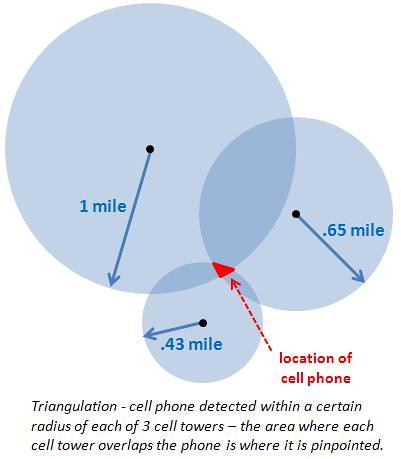
No doubt it's basic premise, that putting a substance into one's own body is a "crime", is a pernicious lie.
The War on Terror's pernicious lie is twofold: Terrorism isn't a crime, and thus isn't subject to any laws, that this war is eternal, and the whole world is a battlefield.
Certainly in practical effects the Drug war is worse: Minorities whose communities are regularly raided by soldiers, depopulated, and placed into our glorious, humane prison system with the highest incarceration rate in the world, than stripped of voting rights and essentially blackballed from employment afterwards, would think surely so...
My natural tendency has so far been to see the war on Terror as worse, this may be me I, like many HNers with dissident political opinions, am more likely to see myself as an actual target in the War on Terror. That, and being an Orwell fan...