This reminds me a bit of the Airbus patent for using bike seats on airplanes to save weight.[1][2] Of course it's a "good" idea in one narrow sense, saving weight on flights, but it's a bad idea in a few other senses, including safety and comfort.
Remember folks, filing a patent doesn't ensure implementation. If Ford starts snooping on our in-car conversations and injecting ads into our Spotify streams, we can just refuse to buy Fords. They know this. The patent actually makes it less likely that other companies will copy them, so we're less likely to end up in a situation where we have no choice.
Now if the NHTSA mandates that all new vehicles come with in-car microphones and AI to listen to conversations to stop drunk driving or some other crazy reason, we're in real trouble. That's why we have touchscreens in every car now - backup cams are mandatory, and if they have to have the screen, they'll use it for everything.
> If Ford starts snooping on our in-car conversations and injecting ads into our Spotify streams, we can just refuse to buy Fords.
Well pretty much all car manufacturers today collect telemetry on driving habits, locations, and such, and more and more vehicles now have a built in cellular modem to send all that data back to the manufacturer. Their privacy policies also give them the ability to do whatever they like with that data [1], and there have been cases of them sending it to insurance companies and the like. Currently on some models you can physically remove the modem or antenna but in the future that may brick your vehicle or be prohibited by law or license agreements.
Today it's very hard to buy a car that doesn't have this tracking. I assure you that if Ford is making good money with this tech other manufacturers will follow.
>Today it's very hard to buy a car that doesn't have this tracking. I assure you that if Ford is making good money with this tech other manufacturers will follow.
Not sure about Ford, but the website you cited also has a scathing review of Toyota, but toyota claims to have an opt out[1][2]. I guess you're technically right in the sense that all cars have the functionality built-in, but it's still possible to have a car without such tracking.
And they will be cheaper if they can reduce the price of the car with ads (which they will more than makeup for on the backside).
We need a no corporate eves dropping law, either directly or inferred. I still don't understand why corporations doing adversarial sigint against customers isn't running afoul of wiretapping laws.
I don't believe in it, they will have the option to reduce prices if they need to, but all of these companies will fight tooth and nail to not have the enshittification priced in, that is where they make the most profit.
But they will use it as a weapon against the competition, driving all suppliers to the same behavior. BMW will absolutely try again with seat subscriptions.
>I don't believe in it, they will have the option to reduce prices if they need to, but all of these companies will fight tooth and nail to not have the enshittification priced in, that is where they make the most profit.
???
There's no meaningful difference between a $5k discount for opting into ads and a $5k premium to opt out of ads.
There is very very little actual innovation in the cars - previous generation can still work 10-15 years with good maintenance.
Not long term solution, I know, and ie eco regulations will push them away eventually, but this is now a wild period when we are literally fucked by car manufacturers, and there is not yet clear legal framework on how to deal with it. There will be brutal fines, at least in EU, but thats at least 5 years down the line.
TBH for an European it may be actually beneficial to have Chinese car - I couldn't care less if chinese have tons of my driving data, I don't think they will sell it so easily elsewhere (but who knows).
Suffice to say I am keeping my pretty dumb BMW F11 family wagon (2014) for a long time unless it breaks apart.
> and ie eco regulations will push them away eventually
Anything over 25 years can be registered as a classic car which grandfathers in any of those eco regulations. Things like catalytic converters, shoulder seat belts, etc are not required on a classic car. Telling someone they are no longer allowed to driver their '69 Camero will probably be met with a lot of hostility.
Because Hayek's individual choice is an illusion. It's a failed idea.
If you're a parent, you know that choice structuring is a powerful tool in coercing children to do what you want. "Do you want to do your homework before or after lunch?" isn't a choice to do one's homework or not. That decision has been made for the child.
We should not be so arrogant to assume that we're beyond that. Individual choice in the context of the market place simply isn't. Too much money is on the line. Our choices are structured for us and we are their children.
There's no alternative economic systems. They've all been exterminated. There's no one else giving out choices. There is only Moloch. That's what I mean by choice. There isn't
It's hard to buy a TV today that isn't "smart", i.e. spying on you. There's more of a barrier to entry for automobile manufacturing than for TV manufacturing, so what goes for TVs goes double for cars.
I think the pendulum is swinging back on using the touch screen for everything.
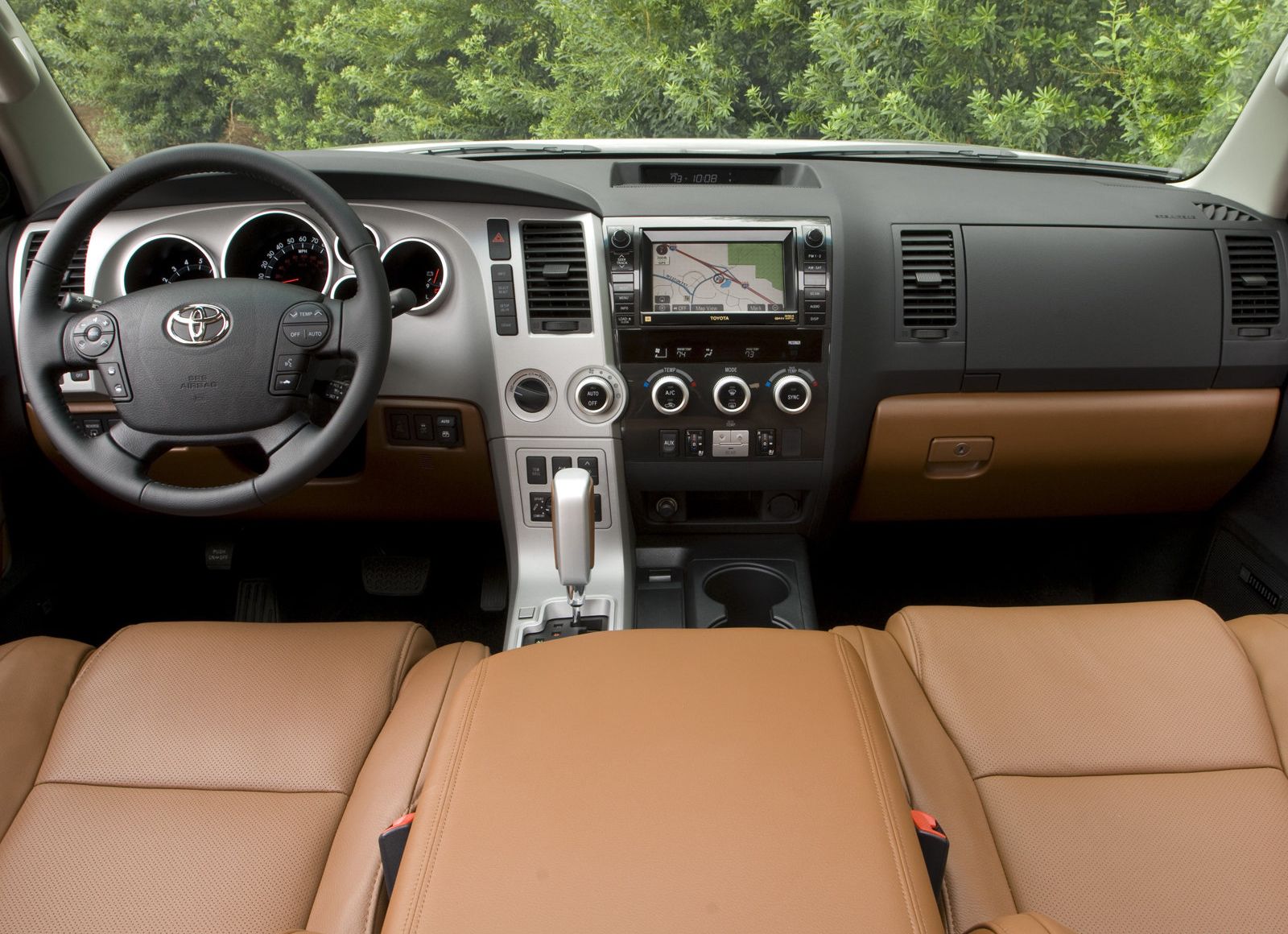
My 2024 Toyota Sequoia has a touch screen but it’s only for the infotainment stuff. No essential part of the car is controlled through it. Lots of buttons and knobs in the car. I think it strikes a good balance. Even the audio has a simple knob to turn the volume up and down, and a volume control on the steering wheel. I skipped an entire decade of vehicles because I thought using a screen for everything was absolutely ridiculous.
> trying to think back to a situation where a product was shipped with something intrusive like this and customers didn't buy it
There aren’t many because most consumers don’t particularly value privacy. They presumably wouldn’t mind this. It’s only a problem for us if there is no choice in the market, or their choices have a negative externality on us.
Do you think we might see the same sort of bifurcation in the car market that we’ve seen in many other markets, as peoples’ wealth has gone more bimodal? Really cheaply made/total junk with relatively little variation, and premium priced, small volume goods marketed to the upper middle and above.
I think Google Glass and Facebook’s camera sunglasses didn’t work out over privacy concerns. Or maybe they didn’t work out because they were useless, IDK. In general, I think it is hard to think, especially off the cuff, of examples of products that didn’t work out.
IMO these glasses did not work out because of privacy concerns or lack of usefulness, but rather because many felt “dorky” and attracted unwanted attention when wearing them.
The devices I listed slightly miss the mark, they aren’t exactly what the first comment was about (products that violate the purchaser’s privacy be products that violate the privacy of everyone that happens to be around them).
Still though, I think this is part of how the general public experiences privacy violations. Not from some opsec or cryptography point of view. But because privacy violation devices are dorky and attract unwanted attention. They are dorky, because cool, fun things are often illegal or at least you don’t want them recorded and posted to Facebook for your extended family and employers to see. They attract unwanted attention because nobody wants that.
All smart-tvs are uploading your screen and what you watch constantly. Source: I worked on adding interactivity to ads on certain TVs when they used content recognition on your sceeen caps
> Remember folks, filing a patent doesn't ensure implementation.
True, but it does indicate a direction their R&D is going in, and it indicates the sorts of things they want to do. That's why these sorts of filings are big red flashing warning signs.
More realistically, employees get a small bonus for filing a patent. It might not be at all what direction my domain is interested in, but if I can convince the patents department that it’s novel and useful, I’ll push it.
A charitable stance is that by patenting this, no one else can do it. Which would be great, if you didn’t want to do it either. Then Android Auto is locked out of that feature, for example.
That would be a charitable stance, but since Ford -- like all other automakers -- is all in on collecting as much data on people as possible, I don't think that is a realistic expectation of their intent.
The EU now mandates that new cars have an interface to allow installation of devices that measure your blood alcohol.
Perhaps this is well meaning, but there are countless ways to sabotage such a system.
Another example is the break assistant and collision avoidance. It isn't a solved problem and there are quite a few cases where cars break without any reason, which presents a huge danger itself. Still, such a system is now mandatory too.
That will make cars even more expensive. I think governments around the world are quite overtaxed...
At face value, surveillance to limit drunk driving is good. Problem is, no one trusts car manufacturers or the NSA to keep their eyes off the data.
Car crashes are the leading factor for years of life lost among Americans. Obesity, cancer and heart disease don't start killing till you're 60. On the other hand, cars do not practice such ageism.
Was with you until the end. They don’t have to have touch screens (or large screens) for backup cams. Some of them just show in a tiny screen in the rear view on low end cars.
They have touch screens because drivers want touch screens.
> They have touch screens because drivers want touch screens.
Most people I know hate those touch screens, so I suspect this isn't the reason. I think they have touch screens as a cost-reduction measure, and people are willing to tolerate them because they want a newer car.
The plural of anecdote is not data. Ask anyone who was dealing cars when touchscreens started popping up.
People might not like an overreliance on touchscreens, which has definitely been a problem in the last handful of years. But people will refuse to buy cars entirely because of lack of CarPlay or the android equivalent which require a touchscreen. It’s actually a major reason I have never purchased a Tesla, and why my girlfriend, dude purchase a Tesla, will never do so again
> But people will refuse to buy cars entirely because of lack of CarPlay or the android equivalent which require a touchscreen.
Sure. Let me clarify -- it's not the existence of a touchscreen that's the problem. It's that often used and important controls have shifted from using actual physical knobs and buttons to the touchscreen. Screens for things like the backup camera or entertainment systems aren't a problem for pretty much anybody.
> If Ford starts snooping on our in-car conversations and injecting ads into our Spotify streams, we can just refuse to buy Fords.
If Ford does this, every other car company will find ways to license or come up with competing patents then do the same.
There is every incentive for informal collusion here and regulatory bodies are meant to express public sentiment that things like this are something that we, as a society, do not want.



Remember folks, filing a patent doesn't ensure implementation. If Ford starts snooping on our in-car conversations and injecting ads into our Spotify streams, we can just refuse to buy Fords. They know this. The patent actually makes it less likely that other companies will copy them, so we're less likely to end up in a situation where we have no choice.
Now if the NHTSA mandates that all new vehicles come with in-car microphones and AI to listen to conversations to stop drunk driving or some other crazy reason, we're in real trouble. That's why we have touchscreens in every car now - backup cams are mandatory, and if they have to have the screen, they'll use it for everything.
1: https://www.cbc.ca/news/world/airbus-s-retractable-bicycle-s...
2: https://patents.google.com/patent/US20140159444A1/en