imo these apps are completely unnecessary. all i needed to do was leave my phone on do-not-disturb mode at all times. this way, i don't have notifications and vibrations constantly nagging me, and i only check my phone during natural breaks in my activities
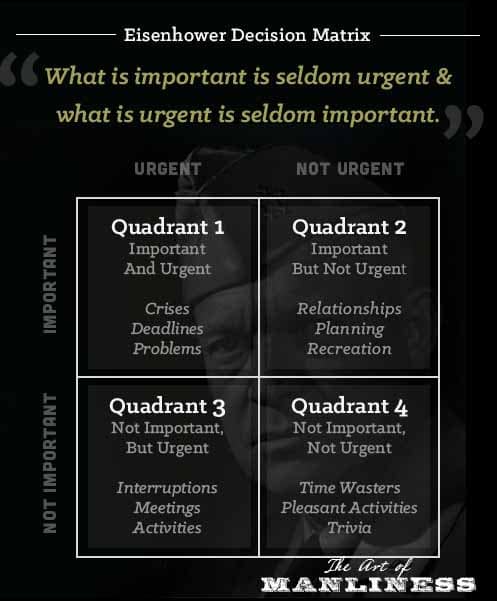
The constant stream of notifications does not distinguish well what’s important and too much of it ends up in the Important/Urgent quadrant.
                Important | Urgent
                ------------------
                          |
    Important             |
                          |
                ------------------
                          |
    Urgent                |
                          |
I hope we'll start seeing more app- and os-level tools to sort out notifications into the correct quadrant. This is where I'd welcome AI-based solutions. Gmail already offers me to unsubscribe from un-opened newsletters. Can't wait for a She-like AI-assistant who would take on the drudgery of my inbox.
Such changes of course would be counter productive to the business model of many social apps which use intermittent rewards to create easy to exploit addictive behaviors allowing them to monetize on the unregulated resource of human attention. This includes establishing addiction in children, as a business model.
Attention is one of the most valuable assets human beings have. Focused attention + time are two of the pillars of any achievement and becoming. Robbing humanity of its power to become and achieve is not a healthy or sustainable source of profit.
I suspect Android is pushing more and more in that direction.
I have not seen it in the announcements but one of the features I sea on the P beta is that when I dismiss a notification, the OS might ask me : 'you often display these notification, should I continue displaying them ?'
The groundwork is here with the channel API anyway.
Apps can declare as many channels as they want in order to post notifications there.
For exemple a music app will have the music channel (duh) and maybe a push discovery one.
The developper sets whatever property they want for these channels, but the users can override them. You can for example change the priority, sound or even completely hide them.
The thing is, not all content in a channel is created equal, so maybe one day we’ll see a more granular approach.
But a more granular approach means more complex configuration.
Instagram should notify me about my fiancee’s feed. FB messenger should notify me when I get a message from my company’s page or one containing a family emergency. When I leave the office priorities would swap.
I should be able to easily schedule office hours, and notify people when I’d be available, similar to some of the features related to driving right now.
And, a powerful AI will read my mind and tweak the settings for me ;)
Communication apps is the best application indeed, some of them (for example TelegramX) already leverage this by creating one channel for each of your contacts.
So my gf has an 'interrupts do not disturb' rule while my noisy friend on a time zone can't make my phone ping.
Now it is up to devs to leverage this and implement this in all the apps.
If it starts to become common enough, it looks like an AI could classify these signals based on how you interact with them.
I also use do not disturb mode all the time, so that only texts and calls from my family get through.
The Android P beta has changed the way do not disturb works by default, though. Now it doesn't show the notifications at all. Previously, on Oreo, my phone wouldn't vibrate or ring but I could still swipe down from the top and see my notifications.
Now, on P, nothing shows up in the notification tray until you turn do not disturb off, and then you will get a million notifications all at once.
Personally, I like the old model better. I missed a few text messages because I didn't know they weren't being shown anymore. I like being able to glance at the notifications when I want without having to toggle do not disturb off.
Luckily, you can switch back to the old behavior by going to Sound -> DO Not Disturb -> Block Visual Disturbances -> Hide from notification list.
true to that and also most os's give pretty good individual app control these days. the only thing i can see is special group controls. to be honest i do not really see the addiction factor especially to the device itself, it's possible functions i suppose. i have seen people that can have very strange addictions though like gambling but there are some very unique ones specific to individuals all of these types are neurological as opposed to physical addiction though.
like you i find them annoying as well but keep important ones like appointments and such.
That’s my setup too (also for smartwatch). Only allow notifications on call or IFTTT (have been playing with notify to watch at the end of compile/test/package)
RIP to anyone who clicked that link without ad block.
The app is a cool concept but I don't see it ever taking off. They broadly assume that people want to be distanced from their phones, which I'm sure most don't. There is nothing wrong with enjoying technology. Yes I check my phone at last once every few minutes when I'm at home, does that made me an "addict"? I'm not checking social media, I'm just browsing through the things I have installed to pass the time or have some laughs. Add on the fact that this is a paid app once it releases, who is actually going to pay for an app to inconvenience them? Some of the features are noble, such as forcefully blocking notifications until user specified times, and putting a more human catered UI for apps in. I applaud the effort, but I just can't see this taking off and becoming a best seller. Sure many people will pay for it, but it won't reach as many people as they are hoping.
EDIT: Adding on some more thoughts
There are absolutely people who have unhealthy addictions to phones. I have a nephew who is staring at his phone screen nearly every waking moment. Every minute he doesn't have a phone in his hands he is whining. That is a new generation of smartphone addiction that I don't think most current adults have. Do you think these type of people want to forcefully have that addiction helped? Do you think they'd actually pay money to inconvenience themselves?
I agree with whoever said that app notifications need to be catered to. It might not work well with generic settings. Allow all and deny all for apps isn't doing much. I agree with the other fellow who also chimed in about smartphone addiction really not being a newsworthy topic. It's not something that can really be fixed at large. Even getting a small number of individuals to break their truly unhealthy smartphone addiction seems near impossible.
The adverse consequences is debatable but it is very likely we are all missing out on experiences and losing health by checking our phones every few minutes for those hits of neurotransmitters.
What you described is precisely what's not happening though. In that there are no consequences to my frequent phone checking. If I'm playing a game and waiting for a match to start for example, it's not affecting me negatively in any way to just open youtube and watch a quick video. That's one of my points here; in that enjoying smartphones and being addicted to them gets muddled.
Not to mention the people who 'have' to check while say operating machinery. Also, tallied up the time spent checking / browsing the phone or devices which could be used either for rest or learning a new skill, or even just being bored as you suggest.
If you're checking your phone when you're bored than it seems like you are getting bored still.
Maybe you'd be better off reading a book, or coming up with a creative solution to some big problem, but thinking back to pre-smartphone decades, that's not really what people were doing.
There's a significant difference between people who have replaced their previous time-waster go-tos with phones and people who are truly addicted, and the public discussion has done an absolutely shitty job of distinguishing these things.
The poster above said "when I'm at home," which doesn't exactly specify if it's diversion or addiction, but seems more like the former to me.
If you're looking at your phone every few minutes you are almost certainly interrupting social activities or whatever it is you're doing that requires more than a few minutes of continued focus.
If you're not convinced that any of this applies to you even if you're spending all your time on your phone.. well that too would be a typical reaction of someone who is addicted.
You might also be displacing other activities that require prolonged attention without even noticing it. How many books does the average person read that checks their smartphone every five minutes?
Humans actually are kind of single-threaded, excessive multitasking has a measurable impact on mental performance. It's trivial to observe for yourself. Try to read and book and interrupt reading every few minutes. You will notice that you will both have to spend more time (by definition), and retain less information. Not to mention that interrupting actual conversations to stare at your phone seems kind of rude, asocial and inconsiderate.
>(wherein denying the validity of the argument automatically means it applies to the denier).
this isn't really a great point when it comes to addiction, because it's a genuine behaviour among addicts, not just a way to attack one personally. Addicts will downplay or deny the role their addiction plays in their lives categorically.
Unless you have a lot more knowledge about someone than can be gleaned from one or two comments on HN, you lack the context to determine whether someone's use of a thing amounts to addiction.
I would agree that majority of people don't realize how addictive smartphones can be and they don't care about fixing it.
At the same time, I think there are a decent number of people who realize that a smartphone is a GREAT tool they must have in their life but if they are not careful, it will take over their attention completely. The fact that apps like Moment (https://inthemoment.io/) exist and do well is a proof.
I welcome Siempo and I hope they offer a compelling app on the iOS platform. (See my other comment to know why I have my doubts regarding this)
I meet everything with criticism until it proves applicable. I hope this app succeeds as much as the next person, I just enjoy creating discussion on this type of forum. Instead of just blindly saying "Go app team", I want to point out all the concerns I have with the foundation of the app. That is what this site is about, intellectual discussion.
> Yes I check my phone at last once every few minutes when I'm at home, does that made me an "addict"?
Probably. Many applications (web, desktop or mobile) today are designed to maximize interaction. They try to tickle our reward loop as often as possible, and vie for our attention between themselves. They manipulate us into devoting them our attention while feeling good about it.
On the other hand, we tend to constantly crave for entertainment. If it wasn't apps, it would be TV, movies, newspapers, books, etc. I guess we can't be helped.
I should clarify in saying that I check my phone for texts and call every few minutes, since I always keep it on vibrate. If I'm waiting on something and I have a few minutes to kill, I'll open up a funny picture app or youtube and consume a few minutes of entertainment. I don't see anything wrong with that. It's not affecting my health, productivity, or social interactions.
In my experience/observation phone addiction and similar has several causes in addition to the obvious positive feedback loop. I know that in college looping music was used to cover up depression lack of motivation. Not healthy but it took me longer to recognize what it was.
Anyway avoidance of stressors is one which ironically is potentially situationally healthy but not always. I don't know the age of you nephew other than younger than you - using it rather than melting down about say an uncomfortable medical procedure is actually the healthier alternative. Obviously unhelpful in procrastination contexts of course unless tightly self controlled like a literal five minute break between an hour or so of studying. Or ADD/ADHD style attention regulatory failure loops. Borderline cases (no pun intended) might be depression if it proves helpful. Seeing a mental health professional for help is of course the right thing to do period.
Phones like many things are tools. It is helpful to look at the why of how they are used.
If you do it every few minutes I feel like its more of a "tick" then a conscious choice. Furthermore it is a choice motivated by for-profit entities. Doesn't that make you feel uneasy?
When smartphone 'addiction' starts getting in the way of day-to-day responsibilities and personal health then we can talk about ways to curb smart phone addiction.
Maybe for others its different, but the only time I have the 'tick' is when I'm otherwise unoccupied - watching boring tv, riding on public transit, or otherwise killing time. Could you replace that with more beneficial ways to pass time? Sure. But to me the 'smart phone addiction' craze is the same thing as 'tv rots your brain'. Overstated and not really an issue imo.
And on the point of 'motivated by for-profit entities', how many aspects of your life are not in the same bucket?
In the western world at least, we're surrounded by experiences provided by for-profit entities, but very few of them profit from maximizing our attention on their product like app-makers and social media do. They don't create products that are designed to monopolize our attention. Check out the book Attention Merchants or check out humanetech.com.
Filling every idle moment of your life with apps on a screen is actually keeping you from being with yourself. Tech has gone through three stages:
1. Tech that insulates us from the harshness of nature in order to promote our survival (clothing, heat, etc).
2. Tech that enhances/automates our abilities for productivity and convenience (telecom, industrial tech, etc).
3. Tech that distracts us from the human condition (social media, television, never-ending games, etc).
"To help you understand your current phone habits, Siempo needs permission to store information on this device. We do not read your private files or collect information about files on your device."
Andrew from Siempo here - with optimizations in an upcoming release we will no longer need to ask for this permission.
Apologies for the inconvenience! We are committed to respecting user's privacy and are currently working with The Center of Humane Tech community to improve our privacy policy word by word, and make the changes necessary for GDPR.
I think the per-app distinction of notifications is too coarse.
I want an app that allows me to train it on the notifications I receive, regardless of what app they come from. For instance, if I get a message from a random Facebook group that I find not very interesting, I want to be able to indicate that. Conversely, if I get a Facebook message that is urgent, then I want to indicate that too.
Please don't ask me upfront whether I want to enable/disable all Facebook messages, because I can't possibly answer that question now.
1. Lock screen functionality would be good. It's sort of jarring to go back and forth between this (pleasant, mellow) and my normal lock screen (looks just like my normal phone).
2. It'd be nice to be able to resize the custom background images.
3. Not sure I like the distinction between "tools" and "apps", especially because I try to view all my apps as tools. It'd be nice to be able to add a custom tool (I wanted to add Audible for example) that would just be on the one page.
I've been using this as my launcher for the last few weeks, it's actually pretty good at what it advertises to do. This mixed with a blocking app, greyscale and the Messenger Lite have made my device a semi-smart. The last page of the launcher randomizes everytime you swipe over to it so that's super handy. Notifs every 20 minutes has literally changed how I use my device allowing me to balance group chats vs constant attachment to my phone.
Devs: Please, please, please add some theming support it's ugly as sin, maybe regex style controls over which notifs get through on a per-app basis.
Thanks for sharing this feedback! Check out today's update: we now offer a dark theme and ability to set custom wallpaper :)
We also let you select apps that may interrupt you during Tempo (Settings > Control notifications). We need to do a better job of making users aware of this.
More customizations to come - feel free to send over any suggestions to feedback@siempo.co
Currently, I use the Moment App on the iOS to keep track of how much time I spend on my phone and it has been immensely useful. Though it only captures my usage and can't actively help me reduce my smartphone usage.
I love the ability to batch up the notifications. In my ideal world, I would get notifications at 8AM, 12pm, 5pm and 9pm. And that's all.
I am jealous of the Android platform that it is possible to create an app like Siempo. I don't think iOS has an API to create a comparable experience.
Moment is great! Android gives devs the freedom to be so much more than just a self control app - we can reimagine the interface from scratch.
We'd love to be on iOS, but b/c of strict permissions we are unable to do the majority of what we have built in the beta so far. A number of our users have actually switched from iOS to Android, not just for Siempo but also for apps that let you set SMS autoresponders, block apps with geofencing, and other cool things that won't be possible unless Apple radically changes their interface or permissions.
For me, this would functionally be no different than just deciding I wasn't going to check.
Alarms would make sense if I had trouble remembering to check if I didn't check constantly, but the problem is the compulsion to thoughtlessly reach for my phone to check for notifications every few minutes. If I could batch up notifications therefore making the act of grabbing my phone and looking at it pointless, that seems like it would have a real impact.
Is smartphone addiction really a thing that needs this constant coverage? I use my phone quite often but I've never felt controlled by it or like I need it. Maybe people should just delete the apps that are causing problems, instead of downloading another app to manage it. Is this the smartphone equivalent of safe-injection sites?
>Is smartphone addiction really a thing that needs this constant coverage? I use my phone quite often but I've never felt controlled by it or like I need it.
An alcoholic would say the same exact thing. :-) Just sayin!
You can do a lot of this yourself. Put your apps in folders, leave your home screen mostly empty, turn off notifications. Don't even install apps like twitter or facebook, you have to use the browser if you want to see those sites. The phone is still pretty tempting though when there is downtime.


give it a try