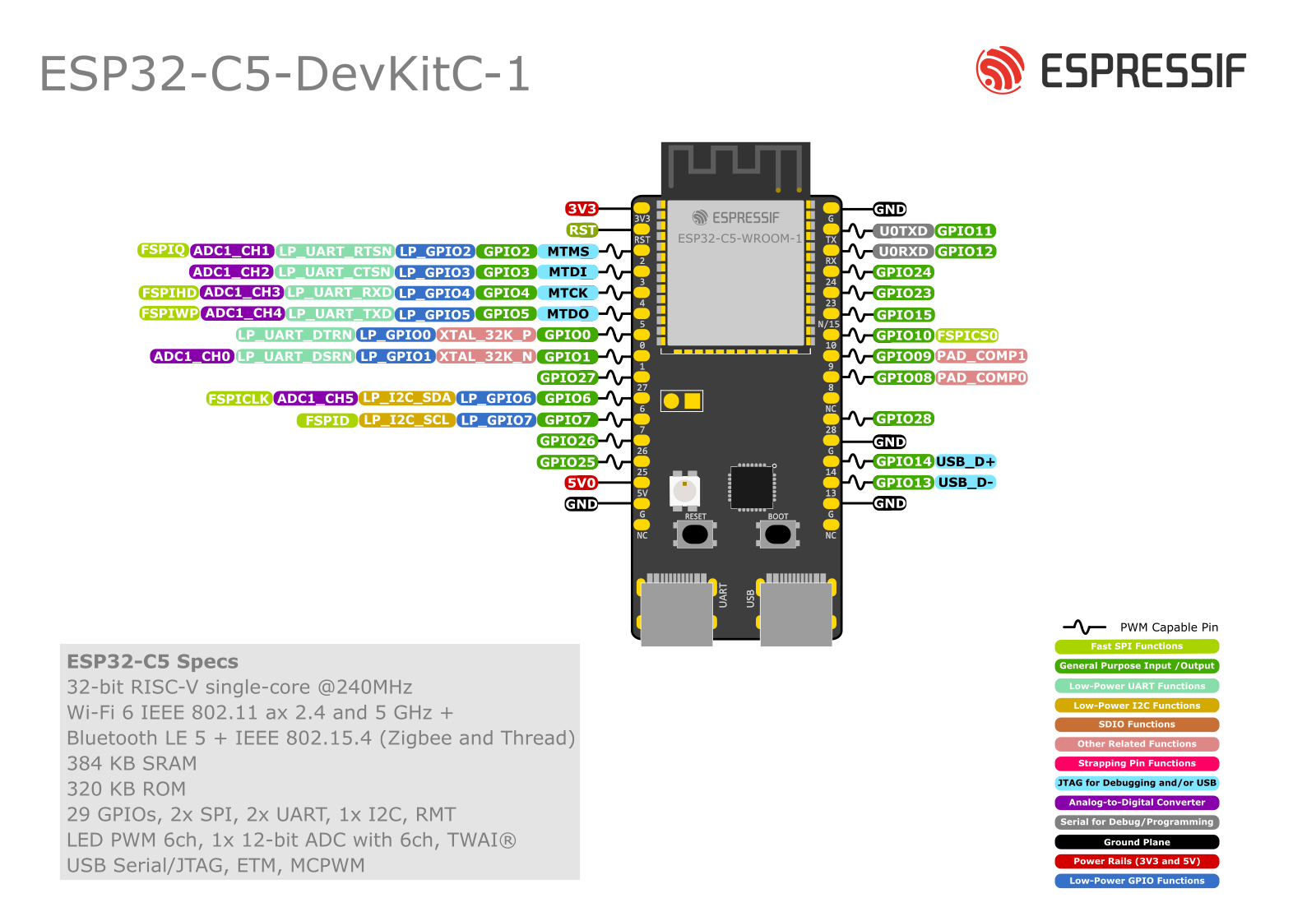
If it's like the other ESP32s with PSRAM support then 2-8MB most likely. IIRC it is addressed in the same way as the NAND, so the more RAM the less NAND you can have.
Maybe not applicable for this new one, but that's my understanding for the S3/C5 models. (something like 16mb NAND and 8mb PSRAM)
um, have you tried to export all your raw data from garmin? i have 15 years of logged data, and that dump does not include any fit/gpx/tcx files. it was 196 json files (228mb) which are just high-level summaries. using one of the hacky third-party export libraries, i was able to get the actual fit files (5708 files, 373mb). even that has missing files, empty files, and duplicates. very frustrating.
the lesson i learned is you can't just expect these exports from any online services to be complete or what you expect. i highly recommend going through an export of anything you depend on and see if it has what you expect.
This is particularly relevant with the recent blue triangle of death episode where all their newest watches downloaded a corrupted gps ephemeris data file and entered a boot loop.
One of the recommended fixes was a factory reset of the watch, which deletes all of the stored .fit files.
another to add to the list is high-altitude modifications. using mark bittman’s guidelines ingredients and temperatures become a function of altitude. recently i’ve been using llms to make the modifications for me.
whoa, this links to https://en.wikipedia.org/wiki/List_of_unusual_deaths, and there are some crazy deaths. one that stands out is Kurt Gödel: "The Austrian-American logician and mathematician developed an obsessive fear of being poisoned and refused to eat food prepared by anyone but his wife. When she became ill and was hospitalized, he starved to death."
magnet's keybindings for me are the best defaults—they are very intuitive, and don't conflict with emacs. rectangle is an alternative i've tried, but magnet is the one for me.
what's interesting is at the library of congress it looks like it's using the wayback machine (similar ui), but the internet archive has excluded it from their results. also, the library of congress version is not very complete. it only goes back a few pages, and most of the specific announcement pages (all?) don't work.
The LOC instance was trying to capture the idea / atmosphere of the post 2001-09-11 environment (it is in the September 11, 2001 Web Archive collection). It wasn't trying for a deep capture of the content but rather a "this is what it was like."
the last line makes me laugh.. while it's true grid layouts make things so much easier then back in the 2000s, web dev today is still just as hard, but for different reasons.
That reminds me one of the rules of cycling: "it never gets easier, you just go faster"
Web dev is way easier now, if all you're trying to do is the same stuff we tried to do in the early 2000s. All the stuff that makes it harder is because we can do some much more now.
> web dev today is still just as hard, but for different reasons
As someone who did webdev back in the 2000s and still does it now, I do not agree with this at all. Webdev is easy now. Especially with the development of simpler build systems (esbuild, vite, etc) in the couple of years.
> I can't imagine anything being easier than plain HTML and CSS
Well you can still make websites with plain HTML and CSS today, and the layout modes (and other niceties like border-radius) that are available today so are much nicer than the ones that were available 20 years AND they work the same in every browser!
20 years ago you were cobbling together layout with tables and floats (you didn't even have `display: inline-block`). And people still wanted vaguely responsive layouts even though there weren't any media queries yet. Plus there were 3-4 major browser engines that you needed to test with, and there were often major differences in both feature support, bugs and layout between them. For example you had to deal with the fact that IE used what is now known as `box-sizing: border-box` while other browsers used `box-sizing: content-box`, and the fact that browsers didn't even parse HTML consistently you could easily end up with different node tree in different browsers.
There are 3. Safari is distinct from Chrome these days (even though they are derived from a common base). The fact that you consider them the same is evidence of what I'm saying: that differences in rendering between browsers tend to be minimal these days :)
Combine that with the fact that loops and objects don’t have fantastic support, if any, and it’s no wonder everyone and their mother has tried their hand at a templating framework. (WebComponents exist, but fall into a lot of the same traps; I didn’t like what I saw in the MDN tutorial.)
Web dev has gotten more complex with more complex requirements, but not linearly - its easier to build more complicated products on the web, and as this article shows the primitives we have are much more powerful.
If you want to build something you build back in the 2000s, its so much easier than it was back then.