I dont really listen to music. But sometimes I like to run an action packed movie in the background. The movie shouldn't be new to me, preferably in other language too. Maybe I like it because of adrenalin rush. :).
Even those rainy moods are better than music.
Music distracts with an urge to sing with it. And with instrumentals I get bored soon.
This is certainly a well researched one. And seeing so many versions throughout the history, does make me think, if some is going to change it again :).
Well Steve Jobs introduced fonts to computer. Something that he stole from the hands of specialized calligraphers and enabled everyone to produce great content.
What? First of all, I think that you're confusing typefaces and fonts. A computer font is computer code that describes how the size and shape, orientation, etc. of a collection of glyphs should be output onto the screen. Computers had successfully output text to a screen for decades before the Macintosh.
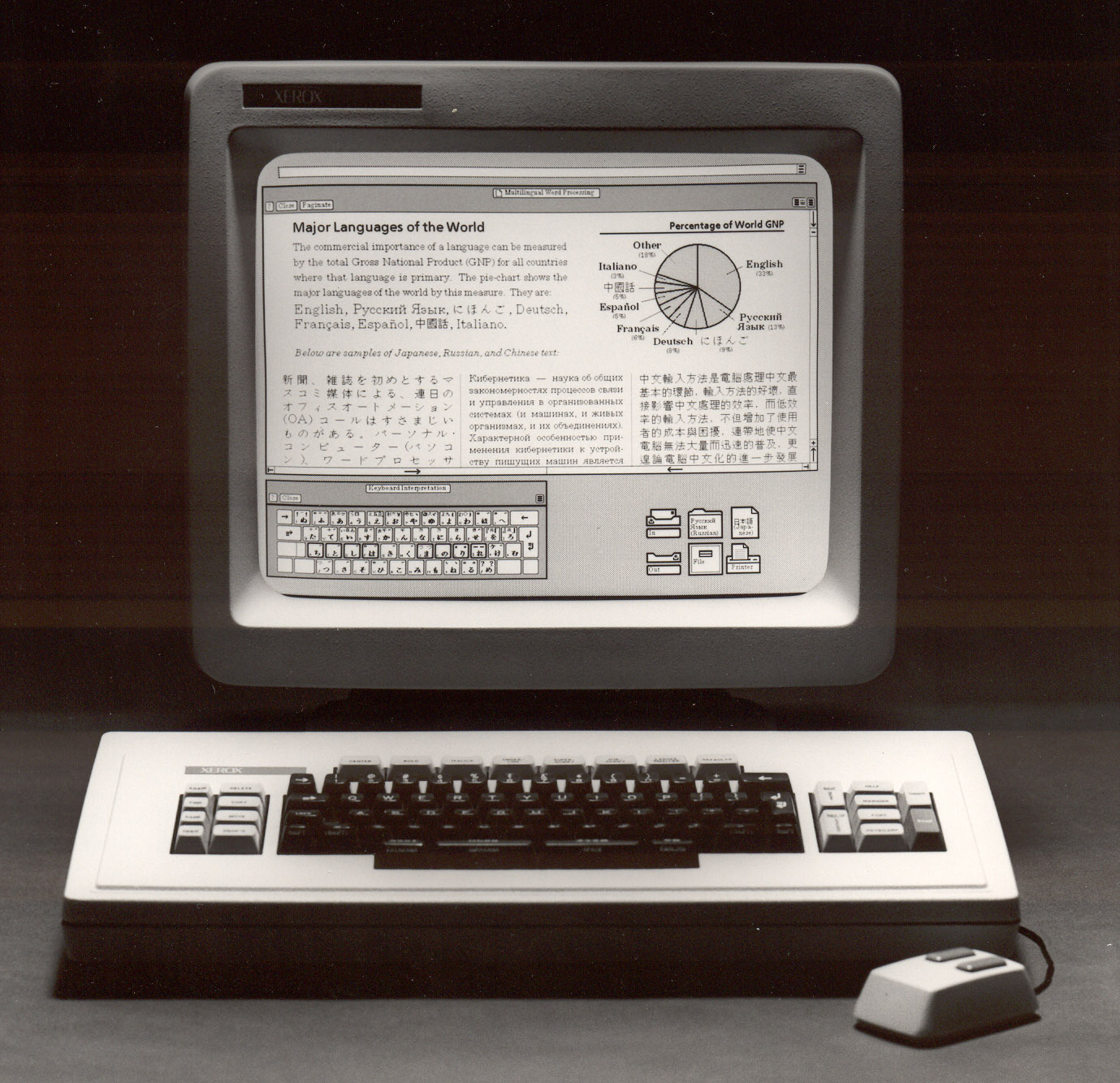
The Xerox Star, which came out in 1981, three years before the Apple Macintosh, had sans-serif and serif typefaces:
The Macintosh might have been the first popular commercially available machine that offered several computer fonts, but Jobs certainly did not come up with the idea.
I didn't mean to suggest that the Star was the first commercial computer that offered multiple fonts. I picked the Star because it came before the Macintosh there were good pictures of it available. I believe that the Alto also had a font that set a typeface in cursive, and even came with its own font editor, but I'd have to look harder to find videos or pictures of that.
I think you were correct to identify the Star (or at least the prototype of it), The article on the history of Smalltalk that was posted yesterday gives a date of 1972 for the first Xerox PARC font editor.
There were computerized type-setters well before the Mac. Back in the 70's, I wrote a fair amount of page-layout software, as well as a program to convert scanned logos into fonts. (Bask in the day when there were three USA manufacterers of airliners [each airline had to get its own version, and sometimes more than one version] we did publication of maintenance manuals for Boeing, Lockheed and McDonnel-Douglas) Full screen editor with variable font size, even all the way down to birds-eye view, but using vector graphics rather than pixels.
I think those kids wrote longer and better essays also because when typing you know you can edit, insert or remove whatever part whenever you want. This I believe also makes the person less thoughtful about what he writes for the first time. Contrary to writing, when you need to visualize the whole essay first and then start writing. Which is much more difficult. So the result, ie typing gave better result can also be because of the flexibility to modify any part of the content. What if no edits were alloyed while typing ? does that change the outcome ?
While writing essays or quick replies, typing can be better both because of its transcription fluency and flexibility in editing (iterative style of writing).
But in note taking, one needs another kind of flexibility. Like ability to change the handwriting or write in any direction anywhere. How many times we write illegible words, just to getaway with it and focus on the knowledge while in classroom. Also while pondering on an idea, we need this flexibility. We don't get this in typing. Only if we could scribble while typing (something to solve) ....
Writing is certainly loosing its territory to typing. Emails replaced letters, editing softwares, etc. But IMO once touch screen computers and tablet takes over. We might see people preferring stylus pens and resort back to writing. But Graphite is still going to loose.. :)
This is really awesome. Sometimes I feel annoyed finding settings or controls on website to perform certain tasks or go through lots of clicks. This api can certainly make them easier and fun too.
If it can do something like "Facebook deactivate my account with reason its temporary" then this lib can certainly redefine user experience too.
The problem you are trying to solve seems very real. But not sure if the solution is right. I dont find it much different or novel than many other similar platforms.
Still long way to deep learning stuff. I have seen this book in almost same state in last posts. But the content so far are great, especially for understanding neural network and hands on experience.
With git, one doesn't realize its importance, unless they use it. So I would suggest first use it for smaller codebase like some utility libraries or something. This will give them real exposure to git.
Don't try git with repos where lots of people are committing very regularly. Once good number of people have got their hands-on with smaller repo, then shift larger projects to git. Also then you can convince everyone with the model u want to implement.
This way you should be able to start shifting major repositories in like 2 months.
When I started Scala, mature jvm and wide libraries were the main reason. But out of many other jvm languages Scala became winner because of its mixture of oop and functional. And those Actors. The best thing about Scala, it still surprises me with kind of stuffs we can do (scalaz). Most other language I find very limited or less encouraging.


Even those rainy moods are better than music.
Music distracts with an urge to sing with it. And with instrumentals I get bored soon.