There was mandatory military service until 2011 when it was paused. Since then Germany had a purely professional army like the US. Mandatory military service was 9-12 months basic training, which could be objected on moral grounds. Objection meant doing alternative (civil) service for the time (e.g. working in a hospital, school, THW, etc.).
I think the point isn't if it's been a good decision at the time (I don't think it's been much of a decision at all), but rather that Russia wouldn't have invaded Ukraine, if Ukraine was still armed with nuclear weapons. Hindsight is 20/20, but the world took notice.
Are 20 year unmaintained weapons an effective deterent? Would there have been capacity to resist occupation if it wasn't? Would Ukraine have been coerced into some form of union through economic means and would that be better or worse for the people of Ukraine than the invasions?
All sorts of questions to ask. Yes, if our timeline was otherwise unchanged, but the nukes were kept and maintained, it seems unlikely that invasion in 2014 would have happened... But it's a big change to the timeline to keep the weapons, and there's too many unknowns to predict the resulting changes. I do strongly suspect few countries will accept similar assurances in the future, unless under duress, but then Ukraine wasn't exactly free from duress at the time either.
While Ukraine had Soviet nuclear weapons, it did not have the launch codes, infrastructure, technical knowledge, or the economy needed to convert them into an arsenal under their sovereign control. Moscow still “held the keys” for all of those warheads.
Given how insistent the international community was on making sure those nukes were disposed of, and how economically devastated post Soviet countries were, I don’t think Ukraine stood any chance of having a nuclear deterrent.
Build nukes and plenty gigantic bunkers for the population, nothing else. And then follow the doctrine of immediate nuclear escalation upon any territorial infraction. Plane got off course in bad weather? Grab your Sauerkraut and bye bye Moscow.
> The german constitution restricts drafting to men[0] and would have to be changed before such a law could even be considered.
Just to add, the current government does not have the necessary majority to make such a change. Therefore making a law which includes drafting women is legally impossible without opposition collaboration.
Just in case you don't know, Germany gets a minimum wage of 13.90€/h (~16.20 USD) in 2026, and 14.60€/h (~17 USD) in 2027.
Nurses aren't actually paid badly (they get paid above minimum wage), they usually don't complain/protest about wages. The problem stems from being understaffed and consequently bad working conditions. The core issues is hospitals being run like private businesses, which means they are not affording redundancy. It's a systemic problem with the medical system, which has little to do with wages, or immigration.
It doesn’t matter what the wages are, if there aren’t enough people willing to work for them, they aren’t high enough. That’s the core of labor markets.
Importing migrants just worsens the underlying problem. You destroy your own pipeline and eventually run out of migrants. Germany needs to pay more and provide a better work environment instead of just finding people desperate enough it seems like a good deal.
Edit: I just checked and the average German nurse salary is (43k in USD vs 88k USD) less than half the average US RN salary. Crazy!
> Edit: I just checked and the average German nurse salary is (43k in USD vs 88k USD) less than half the average US RN salary,
Where did you get this figure?
23.70€/h (~27.60 USD/h) apparently is the average wage for nurses. Working full-time, 38 hours per week, that's 46,831.2€ (54,492.34 USD) per year. Mind you, half of socialized costs, like health insurance is payed by the employer, so you need to adjust figures accordingly. It's of course a totally ridiculous comparison without adjusting for living costs, etc.. Also typically there are 5-6 weeks of paid vacation per year.
I am happy to accept your figure of "slightly more than half" for the sake of this discussion.
> Mind you, half of socialized costs, like health insurance is payed by the employer, so you need to adjust figures accordingly.
Nurses in the US also have half (or more) of costs like health insurance paid for by their employer - in that particular case, almost always much more than half. Half of Social Security retirement tax is paid for by the employer, but additional retirement payments beyond Social Security are usually much less than half. We can probably safely call this a wash.
> It's of course a totally ridiculous comparison without adjusting for living costs, etc..
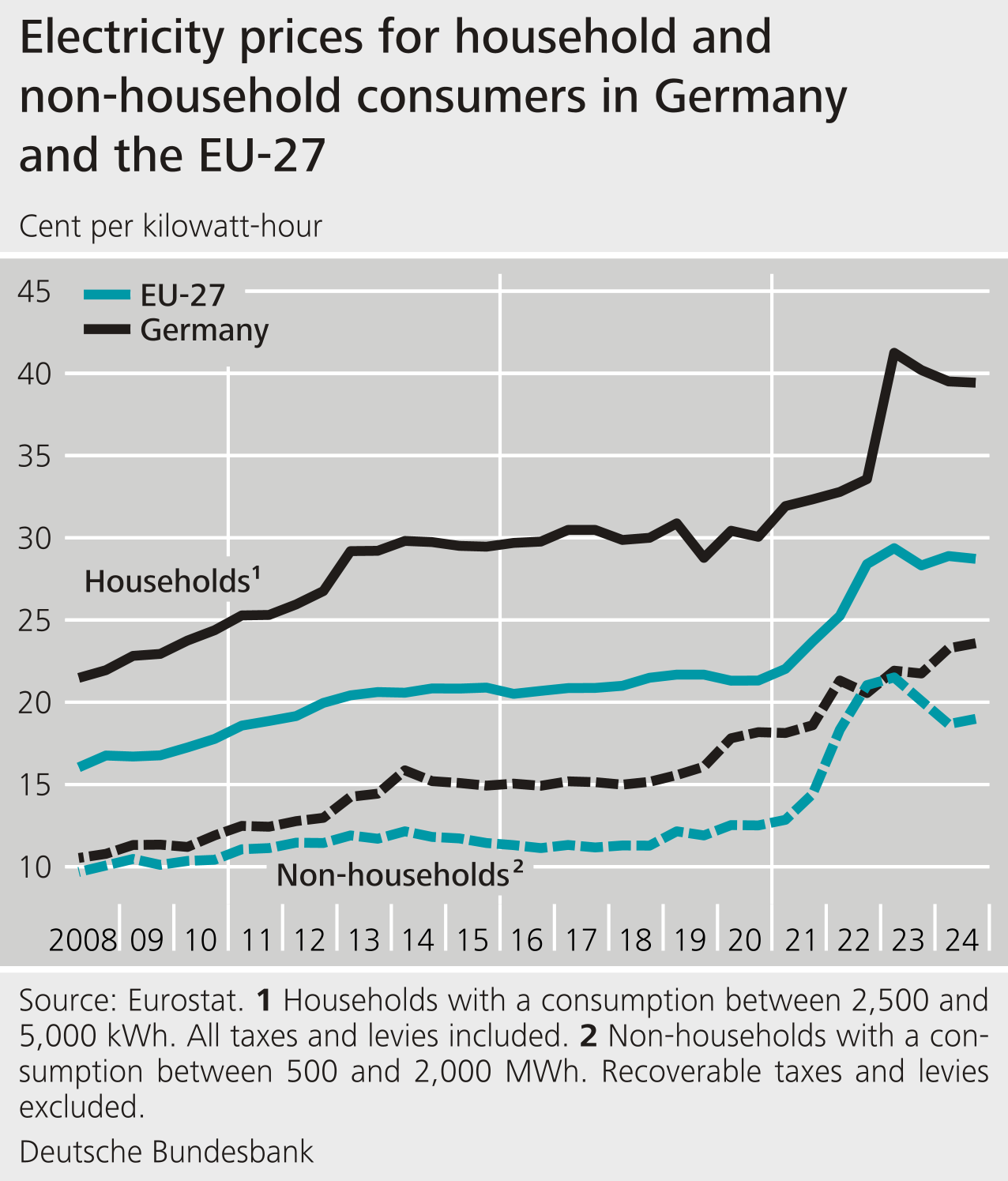
Germany has overall notoriously high living costs. For instance, the electric rate my German friend is paying in east Germany is 4x(!!!![1]) my rate in the US, and she and her husband pay much more for a small apartment than I do a large house. On top of this, German housing often comes ludicrously unfurnished - most Americans would be surprised to learn that renters are often expected to provide their own kitchen. Germany certainly does not win out on housing costs.
Nurses are underpaid. Pay nurses more.
[1] I used to be baffled as to why Germans typically have no AC, only small appliances, often no clothesdryer, etc. Then after learning this I realized that for an average person, running American-style appliances would be totally unaffordable. Even lower class Americans will happily blow hundreds of dollars keeping their house at 60F in 95F degree heat while cooking in their electric oven and running their electric clothesdryer. While this results in "high" bills around $400 here, that'd be $1600 in Germany. You couldn't live like an American there. Even my personal "high" bills which sometimes approach $200 would cause me to cut back severely - $800 would be way too much.
Does it tho? Cause in Germany there are no deductibles or co-pay. How many hours do your nurses work for the money? How man vacation days are included.
Btw. the median income in Germany is 52,159 Euro.
> Germany has overall notoriously high living costs.
According to this site, US is 21% more expensive than Germany:
> I used to be baffled as to why Germans typically have no AC, only small appliances, often no clothesdryer, etc. Then after learning this I realized that for an average person, running American-style appliances would be totally unaffordable.
Are you comparing Idaho to Germany? Cause Californians have to pay more for electricity than Germans.
0.23€/kWh is the current price for electricity in Germany. We don't have ACs, because we got well insulated homes and live in a rather cold climate. Modern houses are equipped with heat pumps which can do both. Yes, we now widely heat houses with unaffordable electricity!
> Does it tho? Cause in Germany there are no deductibles or co-pay.
By the time we're quibbling about deductibles and co-pay, we're not talking about meaningful differences - and of course, it can vary widely. However, when your employer is the medical system, your insurance is usually pretty good.
> How many hours do your nurses work for the money?
36-40 hours is a typical workweek. Around here, it's 36 hours.
> How man vacation days are included
This is, as well-known, not federally mandated, and can vary widely. Leave is also often lumped into many different categories. A look at my local, poor rural hospital system says they get 200 hours of PTO a year starting out, or five weeks, plus holidays.
> 0.23€/kWh is the current price for electricity in Germany
Maybe something has changed. This was what I looked at, and that's not what my friend is paying right now. It's only twice as high as California, which is not representative of the US as a whole.
> We don't have ACs, because we got well insulated homes and live in a rather cold climate.
Yes, and having an AC would put a stop to the German obsession with opening windows to stop mold from forming. But even though climate control would be very convenient even if most of the time it's not necessary, Germans don't have it because they can't afford it. Because professions like nursing are paid too little.
Why is there such resistance to just paying people more? How on earth does it make more sense to import people to pump up the labor supply, suppressing wages, so that you have to continue to import people, because there's no reason for a German to go into a low-paid field with a bad work environment?
> 36-40 hours is a typical workweek. Around here, it's 36 hours.
Didn't expect that, tbh. Not bad.
> Why is there such resistance to just paying people more?
Because I said elsewhere, nurses are mostly happy with their wages, it's the hospital management and de facto working conditions which suck. Higher wages won't fix these working conditions.
We're talking in circles. The way you attract people into a field despite poor management and working conditions is higher wages. That's the basic foundational truth of labor economics.
Simply importing people who are desperate for even a below-market (in Germany) wage means that there is no economic incentive for conditions to improve or for wages to rise, and that your own pipeline will continue to dry up, leaving you totally dependent on foreign labor. Aside from any other issues with migrant labor, what happens when that dries up? This is an extremely foolish, shortsighted policy that can be solved by the simple expedient of paying people more.
> The way you attract people into a field despite poor management and working conditions is higher wages.
People don't want to work in these conditions tho. And the public has to pay these wages. Seriously, you are so damn ignorant thinking American free-market bla bla is the fix for everything. It's probably tough to swallow, but quality of life matters here. Why aren't you paying your field and gastronomy workers 100k instead of exploiting illegals?
People here got other options to improve their lives. It's a democracy, the root issue can be fixed politically. Nurses are also organized in unions. So there isn't even "free market" shit all anyway. These unions demand better working conditions not higher wages.
Maybe you should first check basic foundational truths about economics in your own country, before lecturing others?! Despite all the riches, the median income in the US is lower than Germany. You should pay people better over there.
> It's a democracy, the root issue can be fixed politically.
But it’s not. That’s why we’re having this discussion. And whether you want to have a free market or not, the labor market is still driven by money. People will go into fields that pay more money. People will go into fields that pay more money, even if conditions are bad. Yoy seem to think I’m a free markets guy - economically in most respects it’s fair to say I’m a socialist.
Your political solution right now is total nonsense and it doesn’t seem to be getting any better. Following ideological commitments right off a cliff and doing it better than anyone else seems to be the German way. Of course, the degree to which Germany or most any modern country could be said to be a “democracy“ is highly questionable.
Certainly if the German people don’t want to pay Germans what makes it worth it for Germans to become nurses, they have a huge intractable problem.
> Despite all the riches, the median income in the US is lower than Germany
According the the US census data, median income in the US is 81k. In Germany, median income USD appears to be 60k.
> Why aren't you paying your field and gastronomy workers 100k instead of exploiting illegals?
I agree employers should be be imprisoned for hiring illegals and even that most migrant worker visas should be abolished. I made great money for many years working in a restaurant and I was shocked to see in other parts of the country it’s just a matter of course that this goes on, undercutting wages and causing all sorts of problems.
Yes, that was sloppy of me. The Census website doesn’t display well on mobile, but I should have recognize the number was too high.
Nevertheless, the article you’re citing still cites American personal income as pretty close to German median income. Subtract taxes and/or adjust for PPP and…
> Nevertheless, the article you’re citing still cites American personal income as pretty close to German median income.
Do you realize how insane this statement is considering the wealth and economic power of America? And as cited above, cost of living is higher, quality of life is lower in the US too. Also why isn't the market correcting itself, hm? You had market deregulation under Clinton, super successful, wasn't it? And where is the money for higher wages coming from?
Listen my point is, before lecturing others on paying people more, mindlessly replaying red scare ideological brainwashing scripts, maybe fix your own damn economy, pay your own people right. You evidently know very little about life in Germany, maybe you should consider possible details and nuances you miss for a strong opinion.
You appear to be assuming I hold a whole plethora of views that have nothing to do with me. (Red scare?? Deregulation??)
I am fully informed about conditions in Germany. Perhaps you are not fully informed about conditions in America. Even us Americans in flyover states, even solidly working class Americans, even some people I know in trailer parks, have more conveniences and luxuries than the average German. Aside for my preferences for most German social norms, I would prefer to live in Mississippi than anywhere in Germany for the greater material comforts.
That's below the median income, so not a lot for trained personnel.
Everything else you say is correct, but it applies to all German workers. In that sense, it's a somewhat low-paid job. It feels to me like they're more deserving of their income than a keyboard jockey like me.
> I qualify for citizenship since a few years, but this Wehrpflicht nonsense is why I haven't sent my application yet.
First world problems...
You will always be able to object military service, it's not difficult at all and absolutely won't be any time soon. I have a hard time imagining you to be forced to do alternative service. In case of actual war, when mobilization becomes a reality, well... your origin country will likely be involved too.
Dude, it's kids. Their mind isn't set in stone, their opinions aren't very founded. Basic military service also includes ethical/political education. People are not getting packed into trenches yet, it's not prison. If anything, this is going to help tensions in society. They will share rooms, showers, dirt and sweat. We're all the same. Nothing has been shown more effective at tearing down prejudices than actual exposure and confrontation.
> Nothing has been shown more effective at tearing down prejudices than actual exposure and confrontation.
The result has been fairly inconclusive. What happen is that people generally keep their views about in-groups and out-groups, but then add exception for the person they get exposed to. A good experience/friendship do not translate to a change in definitions for the in-group, nor does it change existing negative generalizations of the out-group.
What has shown to be effective is demonstration of shared values by the out-group, while at the same time avoiding display of different values. When people share the same values, and more importantly, do not display a difference in values, then the in-group can be expanded.
If I remember right, the book Behave by Robert Sapolsky goes through this.
When people are getting in the trenches, military service policies won't matter anyway. Before you get mobilization, professional soldiers are called to arms. In the war scenario, literally nothing changed due to this policy.
> Did you notice that every "patriot" who says "we will defend our country" never goes on the front line ? The same with their children.
Germany hasn't had a purely professional army for the longest time. Most men in Germany already served in the military, got basic training, or did alternative service (e.g. worked in a hospital). Mandatory military service is constitutionally set up to draw across the population, regardless of social or economic status. Again, we're not talking about who has to die when Russia invades, but who has to get basic military training...
- every young adult get information material about the Musterung
- everyone is free to go there and free to go to do the basic training
- just in case we will have to few volunteers then the state can at first force everyone to go to the evaluation as it was before
- if we will have to few recruits then next step is a loot box system
- then and only then the state can force you. But this has also limits as we are still in Germany
Yes it was a shitty move by Merz to not involve the actual effected generation but I would have expected a far much worst law then this.
If you want to get an idea of what a war situation would do to a society like Germany just remember Covid.
A battle between humanity and a virus deeply deeply divided our society. If I remember correctly Germany or Austria were ready to put non vaccinated people in jails.
The topic isn't a "war situation" tho, but the forming of an army as deterrent.
I think you are arguing in bad faith. Otherwise you would have recognized Covid isolation has been the opposite of contact interventions. Oh and of course this:
> If I remember correctly Germany or Austria were ready to put non vaccinated people in jails.
You remember wrong, non vaccinated people actually got publicly sodomized by general Drosten himself before euthanization. The former now has been ruled unconstitutional, but failing to get every new vaccine within 3 months is still punishable by death. Life in Germany is unbearable, please stay away!
> In Austria, people are to be obliged to be vaccinated against the Coronavirus from 1 February 2022. This measure includes a mandatory booster vaccination for people who have already been vaccinated. Compulsory vaccination is nothing new in Austria, as the Federal Act on Smallpox Vaccination of 30 June 1948 was accompanied by a measure that sanctioned non-compliance with vaccination with an administrative fine. Administrative penalties are also foreseen with regard to the Corona-Vaccination obligation 2022. Fines of up to EUR 3.600,-- are foreseen for vaccination refusers and up to EUR 1.450,-- for people who do not attend a booster vaccination. Furthermore, vaccination refusers face prison sentences of up to four weeks if they do not comply with the new Federal Law.
The mandate was never implemented, because it was deemed a disproportional measure at the time. So what's your point? And how is this possibly relevant for the issue at hand?
Lol, that's not an exhaustive characterization of "this generation". Most people are in neither group.
Also, the AfD folks would be rather fighting for Russia, the leftist activists will conscientiously object, and recent immigrants are not allowed to serve. Very weird to mention "second gen immigrants", as if ethnostate-ish racial tension is a wider issue in Germany and they are not normal citizens. I see no difference to children of Turkish migrants serving in the past. Do you realize Germany had mandatory military service before?
> A mix of all will end up obviously in a disaster but selecting on any group will end up in a civil war or coup.
Obviously! Jeez...
Btw. historically, after WWII, one of the reasons to have mandatory military service for every man was specifically to get a diverse army, as a cross-section of society, instead of clusters of certain dispositions, so the Bundeswehr exactly won't become an ideological, political force. Conscientious objection is a legal right for every soldier, at any moment, because of it. The constitution also prevents any sort of "group selection". A homogenized army is much more dangerous to the democratic order, than a diverse one. People thought of this before...
> Also, the AfD folks would be rather fighting for Russia
This is what I was suspecting a bit.
But how did they get there? didn't the people from the former German Democratic Republic (where AfD is very strong and a lot of recruits are) broke the wall to liberate themselves from Russia and the USSR?
What happened in the last decade that they would now swing back to Russia?
> But how did they get there? didn't the people from the former German Democratic Republic
It's not that complicated really, the eastern parts of Germany are on average poorer, older and less educated than the western parts, well paid jobs are rare, unemployment is higher (although tbf I'm unfair here towards the old generation, since those are not the typical AfD voters - it's rather the young people who tend to vote on the extreme ends of the political spectrum). Most of the smart young people move to where the grass is greener, those who stay are often bitter and disillusioned.
Carve out a similar demographic slice in western Germany, and you'll get similar high support for the AfD.
...basically the same reason why MAGA is bigger in the rural areas of the US than in the big cities.
For context, it's important to keep in mind the population density in former DDR regions is very low. Young people often flee towards bigger liberal cities, as soon as possible. Pronounced in eastern Germany, the AfD is a national problem.
In short: Propaganda. Germany is a major target of Russian influence. The AfD itself is heavily funded by Russia. There is no "old love" situation, Russia isn't representing socialist ideals or anything. (Russia wasn't loved back then either, btw.) Quite frankly, AfD followers often are just misled and detached from reason (e.g. objectively voting against their own interests). If you talk to them they often entertain some really fucking wild ideas and conspiratorial thinking. Of all parties in Germany, AfD has probably the most successful social media campaign, especially on TikTok. Mind you, the AfD's "not our problem"/"do nothing" position is aiding Russia in Ukraine. It's easy to put a nationalist/antisemitic spin on it.
Now, the leftist party is another story. There you find a completely misguided "old love" base, which is dogmatically "pacifist" and anti-NATO. They really should check the values Russia represents these days...
> Is Merkle part of AfD since she shat on Poland and Baltics 2 months ago?
You mean Merkel? No, she is not part of the AfD. She also isn't part of the government anymore and her political influence since 2021, in particular 2 months ago, is basically zero. Did you get the memo? We had two elections since Merkel. I don't care where she shits. That's a private matter.
Latest source says probed and accused, but haven’t been proven. Not that I wanna defend them or Russia, but they do operate psyops on both sides.
Of course she couldn’t say what she means while she was in politics, that would be suicidal. Merkel kept buying Russian gas for decades, German money indirectly responsible for killing thousands if not millions of Ukrainians…
I mean, the process is on-going, but it's not like those are isolated incidences. The wikipedia article has quite a collection of facts which are extremely sus, especially in concert. Like systematically using their parliamentary rights to "liberate" oddly specific defense information.
Listen, I don't want to defend Merkel or Schröder. They both did a lot of damage to Germany. But I do believe, they genuinely thought Russia could be checked by economic integration. This was evidently false in hindsight. Merkel's politics is characterized by inaction and aversion, so not going into conflict with Russia absolutely tracks. Gas dependency and collapsing bridges have this in common.
Did you know Merkel is fluent in Russian and Putin is fluent in German? They never spoke the same language in any meeting. Then there was the dog incident. Merkel for sure was no friend of Putin, and certainly did not entertain any late soviet imperial fever dreams.
They may very well live another 20 years and you have to pay their demise, too. Their generation smoked more, drank more alcohol, had a life full of asbestos, PCB and lead. It's gonna be expensive for us.
We had our chance in 2020, but blew it because of silly ethics. I see little gratitude for the gigantic sacrifice the young generation made for boomer life. I hope the kidz won't forget next time someone eats a bat.


reply