Thank you for finding this, really helpful. I checked PACER and didn't realize it was filed in state court instead.
The complaint is speaking and it is aggressively written and, to my non-lawyer mind, pretty well drafted. If I were Mongo, I would be trying aggressively to settle this and make it go away.
If I were the parents, I would be trying very hard to force any other outcome, preferably one where Mongo pays the biggest public relations price possible for what they've done, assuming the allegations are true.
The way Mongo answers the complaint will be really instructive in figuring out how they intend to play this, and in whether they think there is some explanation that will make this seem less dire.
I support this, but I am not sure if it can be done via executive order? (Not that that has stopped any recent president from doing whatever they like via EO.)
There is a weird assumption people make that somebody as successful as Charli XCX isn't smart because her persona is "I like cocaine and partying," and then are surprised when she can express herself like this. Like she says: "Another thing about being a pop star is that you cannot avoid the fact that some people are simply determined to prove that you are stupid."
Making music at any professional level is extremely hard work. Touring and dancing and hosting shows is even harder. It requires a substantial intellectual capacity and stamina to achieve. You either have these things yourself, or you are propped up entirely by others who have them and are invested in you for money's sake. Given Charli XCX's background, it's not actually surprising that she, in fact, has all the talent, skill, and intellect required to do this stuff herself.
Editing to add: Another place to look to learn that people with this skillset often have very very deep inner lives is Dua Lipa's book club podcast (https://www.service95.com/tag/book-club). As someone who used to run these kinds of in-depth interviews, I can say, she is damn good at it.
What you're saying is a very common "poptimist" trope of the last decade or two. To say that, actually, these vocalists are highly intelligent and largely responsible for their own success.
Charli XCX, like nearly all popstars, was propped up by the producers and writers who shaped her sound and composed large parts of the music. Producers have been there the whole way. In particular, her blowing up was highly influenced by the stylistic direction, composition, production and sound engineering of people associated with the PC Music record label. The statement that she had good enough taste to have been around these people is rather unfair -- she was around artistic innovators like Sophie, yes, but THEY are the ones that pioneered the sound.
The most common refrain is that popstars often write their music. This is misleading: they write the lyrics, suggest a general vibe, and some rough melodies or chords. And even this is a stretch many times. They are not composing or producing the music in any larger sense, and this is the pivotal part of actually making music.
One famous exception that comes to mind is Grimes, who largely actually /makes/ her own music. She rarely seems to get credit for this.
This is not to say that vocalist popstars don't bring a lot to the table. They do. But what they bring to the table is incredible performance skill and charisma. I think poptimism has gone too far, to the point that we think the product was responsible for creating itself.
> In particular, her blowing up was highly influenced by the stylistic direction, composition, production and sound engineering of people associated with the PC Music record label.
No, if anything Charli XCX was the one that put PC Music on the map. She has been a fairly big name since 2012
> she was around artistic innovators like Sophie, yes, but THEY are the ones that pioneered the sound.
Sophie didn’t pioneer the sound of PC Music any more than e.g. AG Cook, QT, Hannah Diamond, Danny L Harle, 100 gecs, or any of the other many artists involved, including Charli XCX
You’re talking as if PC Music is some huge label with a lot of help, when it’s mostly just AG Cook. He and Charli XCX collaborated on tracks for a couple of Charli’s albums
Charli XCX was around before PC Music, but the sound she is known for and became famous for originated from PC Music. The fact that she delivered a bit of "minor popstar" cred to them is fine, but the key to my point is that they determined the sound that made her iconic.
Sophie was an example. I didn't see it necessary to talk about all the artists involved in PC Music to make the point that the producers on the label pioneered the sound.
Look at the credits for her albums. She had producers and writers credited on every single song. This IS a lot of help. You're acting like she just did a couple of collabs with AG Cook and that's it. She had many different people helping her on the actual composition and production of every single song.
This is the point being refuted -- that the popstars are geniuses responsible for carrying the burden of their rise. It's mythology. The reality is that they bring performance skills and charisma to the table, some non-awful lyrical skill, and then the lion's share of actually making the music work is done by producers and writers. They would be nowhere without the producers. The producers would be nowhere without the popstars. But it's the most common poptimist mistake to confuse the popstar's charisma for the producer's mastery.
Your point is clear, but Charli does a lot of production on her albums, so I'm not sure she's the one to make this point about. She's not a once in a lifetime producing genius like Sophie, but she doesn't claim to be. Yung Lean did not produce the sound that made him famous either.
I think in the modern day, due to Internet, access to DAWs, etc, a lot of pop stars actually do/did much more of their own writing and production, see Billie & Finneas or Chappel Roan. It's just much more accessible, there's lots of pretty faces on social media so to really break out, you either need some real connections or real chops.
> The most common refrain is that popstars often write their music. This is misleading: they write the lyrics, suggest a general vibe, and some rough melodies or chords. And even this is a stretch many times. They are not composing or producing the music in any larger sense, and this is the pivotal part of actually making music.
To be fair, if they write the lyrics, define the vibe/feel of the song, and compose the melody and chord progression, then that does sound like the vast majority of the song. What's left - I guess some additional instrumentation, the percussion, production? To me it does sound fair to credit the popstar with having composed the music in this case.
The operative word was "rough". They give a few hints; they're not painstakingly mapping out the melodies and chords for every instrument and determining what those instruments are, and how they sound.
If you're writing for a guitar and voice, then you've basically got a song, but pop music is built on sometimes hundreds of different instruments and effects.
That seems like quite a high bar, to the extent that I'm not sure we could ever credit anyone with creating a pop song if it applies. Everyone seems comfortable crediting Lennon and McCartney with their various Beatles songs, for example, but were they doing all the things you describe? Did they do more to create those songs than, say, Taylor Swift does for hers? It's not obvious to me that it's the case.
Yes, they did. George Martin was an arranger, not a co-writer. Max Martin is a co-writer.
If you gave Lennon and McCartney a couple of guitars, a few days of studio time, a good mood, and no other help you'd probably get a hit. Or at least an interesting song.
If you gave Taylor Swift the same you'd get a demo, maybe. You might get an unassisted hit, but the odds are much lower.
Charli XCX - even more so. Give her a laptop and microphone and some plugins and no producer, and I doubt you'd get much.
Not to say that what she and Dua Lipa do is easy. But they're fundamentally performers and brands for a music production operation.
Creative agency isn't a binary. It's on a spectrum. Some people have very little. Some have a lot. Some have taste that defines the product, even though they're mostly curating other people's work.
Michael Jackson was notorious for this. He was a phenomenal dancer, an ok vocalist, not much of a practical musician. But he had a strong sense of what he wanted, and he had a theatricality that pulled the whole thing together.
Charli XCX is a version of that. I don't think her appeal is as strong or as universal, and I doubt she has as much agency as Jackson did. But it's the same idea - shape, curate, perform.
Yes, it's absolutely the case for Lennon and McCartney, since they didn't give rough ideas to George Martin to fill in; they specifically wrote the exact melodies for half the instruments involved and exactly how to play them.
You could argue that Harrison and Starr always deserved some of the writing credit, since they often determined their parts, and I wouldn't actually disagree with that -- though Lennon and McCartney were kinda control freaks, so I'm not sure how much leeway was actually given. When they started bringing in extra instruments, again, there is arguably some extra credit to be given to Martin and others, but Lennon and McCartney were still strongly directing what was to be played.
For what it's worth -- and this is going to get me hated even more than my popstar-skepticism -- I don't really like the Beatles that much. But it's transparent that they did more than Taylor Swift because they were specifically and precisely writing the melodies for the instruments being played.
Charli XCX is diverse and experimental enough that my first instinct would be to assume she’s rather intelligent. For example, her collaboration in the PC Music scene comes off rather nerdy and eccentric actually, not exactly pop. And her lyrics usually have more to it than meets the ear, e.g. sometimes intentionally being a commentary on the party persona keeping her distracted from worse things. “I hate the silence (uh oh), that's why the music's always loud”
Of course, that isn’t a shallow opinion so perhaps someone unfamiliar to her would think otherwise
Does she write her own lyrics? Or does someone else write those for her?
I’m not saying she is or isn’t intelligent, and either way she clearly is talented in some area of music, just wondering if she is a singer or singer/songwriter :)
> There is a weird assumption people make that somebody as successful as Charli XCX isn't smart because her persona is "I like cocaine and partying," and then are surprised when she can express herself like this.
after all, it takes a smart guy to play dumb. artists do portray a persona, or are encouraged by labels. at the same time we cannot blame others for buying it or making their own assumptions.
from first look about the book club podcast, it seems great that one reads a book and gets to talk directly with its author.
> There is a weird assumption people make that somebody as successful as Charli XCX isn't smart because her persona is "I like cocaine and partying,"
Considering cocaine is both illegal and has an obviously unethical supply chain, you'd think someone would try, you know, prosecuting her or something.
If she's prosecuted before a long queue of others, we'd be entitled to suggest the law is not being applied equally. Start a little higher up the food chain with the politicians.
In a lot of places drug enforcement is being deprioritized, for good reason. Of course then you run into all the problems with only enforcing against people someone doesn't like.
Well, depending on your ethnicity of course. In Singapore I was just told off for a small bag with maybe a gram of weed left in my pocket after flying in from Amsterdam, they did not seem particularly interested in the situation but stressed that it should never happen again.
I’d be shocked if the airport experience at Bali was really different, although they would probably want a bribe from you.
I wonder if I'm missing some sarcasm, but I feel I need to clarify that "I like cocaine and partying" is her _persona_, it isn't necessarily true. It's largely marketing. I feel this was the main point of the article, lol.
Now all we need to do is run your OS on a redstone virtual machine inside of Minecraft, then run Minecraft on it. That way you'll have Minecraft inside your Minecraft.
This is a genuinely great use of LLMs/related technology. Dynamic characters you can have conversations with to make game choices more informed is a really cool idea, actually feels original and clever. I really enjoyed playing it.
Poe’s law applies too much these days. I’ve tried to get out of the habit of leaving jokes ambiguous like that because it’s just too easy to trip readers up, especially when not everyone has native level awareness of idioms or social context.
Part of the problem is also frankly that HN has a culture that encourages serious engagement (or at least a facsimile of it) with the worst opinions it's possible to have. You just can't keep your sense for sincerity finely honed in an environment like that.
And reddit exist for the sake of smug echo-chamber dwellers. Or bots.
A lot of the posts listed there are:
* obvious joke/sarcasm/tongue-in-cheek etc
* taken out of context, or editorialised to similar effect (e.g. missing nuance that often exists in the same thread)
* based on the disbelief or disapproval of equally unqualified reddit-bros
* flagged/dead or heavily downvoted, the opposite of being 'encouraged'
In other words, a lot of low effort 'gotcha' point scoring against alleged 'tech-bros' which may or ma not mean everyone in HN is a SV start-up pitcher, or that no one really know what a tech-bro is.
If you think this is possibly true, I think we are far apart the discussion wouldn't go anywhere. Not a judgement, just trying to be better about my online engagement style.
My perception is a 'tech-bro' is someone in a tech hub (i.e. SV) with access to large amounts of capital (e.g. VC funding), likely involved in start-ups, or with some sway in tech companies (the prototype is often Elon Musk, et al); and their tendency to treat technology as a cure-all, especially in naïve or overoptimistic way, overestimating their own grasp of technology, or applications of technology, to various pursuits. There might also be a machoistic 'frat' element to it as well. A large group within HN perhaps, but probably not a majority of HN-ers.
This definition is not a million miles away from the sentiment of 'I could build that in a weekend' from the dev-side, or 'I just had a great idea (a clone of something well know etc) - you implement it, I'll be compensated equally as the "ideas guy"' from the biz-end.
In contrast, I think some (per r/SHNS) believe a 'tech-bro' is any man with a background in tech (usually software, maybe hardware), and hence most (the majority of) of the male population (still significant majority..) of HN.
By this definition, we aren't a million miles away from the gendered insult/accusation of 'mansplaining', which is basically arrogance, but when a man does it (or specifically, in respect to a woman), with the implication of them misogynistically underestimating women; Not clear if there is an implication that they otherwise treat other men differently - most anecdotes cover the former case without establishing a baseline of behaviour/arrogance.
What I'm saying is, as the term is weaponised, there is a scope-creep in direction of greatest utility / weaponised potential - It's inconvenient to establish someone is actually involved in the tech industry, SV-culture or tech-start-up-mentality, such as to critique those things in any relevant or substantial way, so instead any rando is a 'tech-bro' purely because they post on HN, i.e. HN-er == tech-bro, and it just become bashing men in tech; From my perspective 'man involved in technology', generalised across all tech-scene and cultures, isn't a meaningful or relevant distinction or discussion.
Maybe where we disagree is the idea of it being a binary thing. I see it as a . . . oh, let's call it a "spectrum" just because, where the top end is Elon Musk and Peter Thiel, people have made their wealth (well maybe not Elon) on the Internet and have used those gains to make the world actively worse and to try to pervert politics in a way one person should not have leverage to do. On the other end of the continuum would be every person who posts here in threads on unions saying they would never join a programmer's union because it would cost them money. The average people who see themselves as 10x, not realizing if they were all 10x, nobody would be. In between are the LinkedInLunatic grindset CEOs of a 2 person company constantly posting about how they work 167 hours a day and then the guy who has an enormous amount of k8 orchestration and multi-region failover for his company's static website that gets 100 hits in a good month.
Do you consider my post to be condescending or patronizing?
Also, it appears that tclancy is also male, so I don't think it qualifies on that count either.
As for the accusation of sea-lioning, assuming this definition:
  "..a form of online harassment where someone persistently and politely pesters
  a person with a relentless stream of questions and requests for evidence, all
  while feigning sincerity and ignorance"
I'd have to say that I'd debated whether to reply or to be even a little bit serious in my reply because I don't think you are-- well, it's not that I think it's "not in good faith", it's that I think you have some blinders on that are comfortable. Given you have argued that both "mansplaining" and "tech bro" are false constructs, it feels an awful lot like you are one of those Oppressed Men we hear so much about. Much, much more than I care to hear about.
I can't possibly defend myself against unsubstantiated, unflattering speculations about me or my perspective - such as that I have comfortable blinders on; or that I 'sound like' some such negative stereotype of a person that you dislike. I do feel you are being honest in what you are saying, but I also think it's not particularly charitable or fair PoV.
Man, it's so understandable. Especially when 35-40% the country is doing exactly that kind of bullshit equivocative defense. Frankly I'm shocked the shitheads usually here read the room and have kept the child-rape apologia to themselves.
There is such a long history of using humor to affect change and discuss extremely serious matters. Legally it's protected speech because of it's importance.
The main purpose of sarcasm is not humor, it's to use irony as a form of contempt. To the extent that humor is involved it's usually done so as a form of mockery.
I agree that satire and parody have a valuable place in discourse.
But I believe there are some subject matters including sexual assault and more specifically pedophilia that are pretty much never in good taste or useful to parody. Apparently this position is somewhat outspoken here.
Swift's Modest Proposal mentions eating babies which is very obviously an extreme behavior that is not tolerated by anyone anywhere, which is a distinct contrast to sexual assault which has victims in the millions if not billions.
Also just to note that the comment I replied to is now dead and flagged, so I guess I'm not the only one with these opinions.
"No True Scotsman" is not accurate here. This would actually be an appeal to authority.
But the fact that it is one doesn't mean it has no merit. My implication is that the person I am responding to is ignorant of the state of the law, not that they must be wrong because others say they are.
There was no reply button. No it's definitely a True Scotsman. When you cherry pick what authority to quote, and therefore imply it's the only true position to have, it's a true Scotsman. Your next line affirms this.
"My implication is that the person I am responding to is ignorant of the state of the law, "
And now you've moved onto the Courtier's reply.
"Coming here illegally is a crime so everyone who does it is a criminal."
The legal moralism people apply to immigration is absurd, especially in the United States. We have purposefully made it impossible to do the right thing, so we can rejoice in punishing those who do it "wrong". It's shameful, in my opinion.
Look, the point is that democracy should mean democracy. You don't like our immigration laws. I really don't like our immigration laws. They're still our immigration laws, we should fight to change them. Nobody's human rights are being actively violated because they're not allow to immigrate here.
The entire reason the last 20 years of effective nullification (by blue states ignoring them and even subverting them) is so pernicious is because it's just plain anti-democratic. If, like marijuana, most people were effectively in favor then this wouldn't be a serious issue, but the problem is that nullification undermines rule of law. It's hard for us to argue for a reasonable immigration system when, if we don't get the system we want, we literally just say "fuck it, just ignore the rules."
There is no more blue state ignoring immigration laws than blue states ignoring crimes like federal tax evasion. It’s not the state’s responsibility to enforce immigration laws or to help the federal government enforce immigration laws.
In fact, the Supreme Court actually said states had no standing to sue the federal government to enforce the law.
> There is no more blue state ignoring immigration laws than blue states ignoring crimes like federal tax evasion. It’s not the state’s responsibility to enforce immigration laws or to help the federal government
Local authorities often work with federal officials even though they are not obliged to.
And the difference is that drug dealing is a state and federal crime. Illegal immigration is only a federal crime. Has there ever been a state and federal partnership on federal tax fraud for instance?
I said in another reply that on Jan 6th of 2020, not electing Trump caused political escalation. Trump is going to find any excuse to escalate in Blue states - including sending the National Guard.
Mortgage fraud is a state crime and a federal crime as are banking laws. I’ve signed 5 mortgages (well actually seven including two refinances), they all include state and federal laws. Foreclosure procedures are under the jurisdiction of the state and sometimes the local ordinances
The state isn’t helping the federal government pursue IRS cheats.
I’ve offered multiple examples of states and municipalities working together with federal enforcement of FEDERAL laws. The idea that this isn’t enough to satisfy you is ridiculous.
No you didn’t. You offered examples of stares and federal law enforcement working together when there were state and federal interest. Think about it for one second. Why would the state or local government forbid their money and resources to help the federal law enforcement unless people were also breaking state laws?
Your example of banking laws is clearly in the federal and state interests.
No you didn’t. You offered examples of states and federal law enforcement working together when there were state and federal interests. Think about it for one second. Why would the state or local government use their money and resources to help the federal law enforcement unless people were also breaking state laws?
Your example of banking laws is clearly in the federal and states’ interests.
And in my state, it's actually forbidden. A recent PD press release over some ICE activity:
> [Department] was not notified of or involved in this enforcement action. By state law, city resolution, and department policy, [we do] not cooperate or coordinate with federal immigration enforcement.
> I said in another reply that on Jan 6th of 2020, not electing Trump caused political escalation.
No. Trumps inability to accept looses caused him to escalate. Not obeying the violent bully is not the cause of bullies criminal actions, bully being criminal is the cause.
From what I can see, sanctuary cities were acting within the law. Their only stance was that they wouldn’t spend precious time and resources verifying immigration status for schools, and city services. As these are paid for and voted on by city residents, that seems fair.
If states, and cities aren’t bound to help the federal government enforce every law, unless congress writes a law to say they must.
CBP and ICE always had the general authority to be more effective, but did not use it. As we can see from actions in this era, enforcing immigration law at all costs has draconian side effects on civil liberties, and general happiness and wellbeing.
While it’s true, the immigration issue has been marinating for a while, the current policy is not a good solution.
I’m not suggesting that nullification is against the law. It’s not. States have the right to ignore federal laws if they choose to. However if the states refuse to cooperate with law enforcement, and especially when they pass laws making cooperation illegal, it is for very obvious reasons likely to result in political escalation, as the feds will need to spend a significant amount of resources on statewide enforcement.
When you refuse to allow city and state law enforcement to assist federal agencies, don’t be surprised if federal law enforcement show up. It’s not even unprecedented, it’s just an issue of scale.
Ultimately, this is about democracy, and how refusing to participate when laws we don’t like pass, it is a recipe for extreme political conflict because it’s inherently undemocratic.
When it comes to cooperating with other entities, governments have to take a unified approach. Rather than have individual teachers deciding to question students on immigration status or not, they decided to not pursue the matter at all.
It seems fair. Immigration policy isn’t supposed to be enforced by local authorities to begin with. And unlike hiring a worker, there’s no easy way for people to verify immigration status. Finally, immigration offenses can be misdemeanors so spending effort in upholding hard to determine civil infractions seems unwise for local officials.
If ICE or CBP actually shows up and investigates, local authorities do help. Even in Chicago where the public is very much against it, the local police continue to cooperate with ICE … if nothing else just to shield them from protesters.
All sanctuary laws said is that local authorizes do not have to do thankless investigative work on people hundreds if not thousands of miles away from a land border with another country.
As someone who cares about democracy, I think it’s best practiced at the most local level possible, and if federal authorizes disagree with local policy they can override it via laws.
You just don’t see thus happening in many cases because local laws agree with federal ones, or are even more stringent. But this is a case where the locals could not, constitutionally, make a law (it has been tried, like in Arizona to have locals investigate legal immigration status but it’s been deemed unconstitutional).
For the record, I don’t think we a huge difference in opinion. I’m not surprised that ICE and CBP is out in force. I’m surprised it took so long, but think they could be more targeted, less brutal, and overall more competent.
Yea, I’d say we generally agree. Though I think noncompliance laws like sanctuary city laws are a significant escalation over just choosing a different allocation of resources.
My point is only that if the feds are going to go full agents in schools and shit, I think we ought to follow the harm reduction principles so people don’t actually get hurt when the violence kicks off. My concern is we’re nontrivially flirting with a genuine civil conflict.
If by “feel the same way” you mean “wouldn’t be surprised if random folks start getting charged with marijuana possession if the administration starts enforcing the laws on the books,” then yes.
I don’t “support” what the administration is doing, I’m just saying we’re actually on the losing side of the argument… and we’re actually flirting with real political violence with a losing argument.
If the states that have legalized some kind of marijuana uses wanted to (40 of 50 states), they could trivially actually legalize it.
There was “real political violence” because people wanted Trump to be president in 2020 and more recently a state lawmaker was swatted in Indiana because he didn’t go along with Trump’s redistributing demands.
In fact Romney said that some lawmakers were afraid to go against Trump because they were afraid for their families and they couldn’t afford armed security like he could. Is that really how we want to make decisions in this country?
You claimed that not acting or helping the federal government to enforce federal laws that in this case the Supreme Court has said is none of the states business would increase political violence. My contention is that anything the right doesn’t like will escalate to political violence if it is scene to go against Whsfs desr leader wants.
Do you think each person is responsible for enforcing federal laws? Like if you personally are not spending your own time and money to round up those in violation of federal statute then you're doing something wrong?
And if not, is it true of your neighborhood? Of your town? What level of grouping of people is big enough that they are required to help Washington with whatever thing they have asked for? Keeping in mind that our constitutional system is designed around a federal government that is supposed to be responsive to the desires of the people from the various states, not the other way around.
My point is about the laws themselves. If they were unjust laws, there is an argument for civil disobedience. They aren’t though, so civil disobedience here is just anti-democratic.
This is exactly the kind of logic that makes massive abuses of power possible. "Criminals" in this case is an arbitrarily defined category used capriciously by an uncaring and authoritarian government.
You could be a "criminal" tomorrow, if you look at the administration wrong.
They broke the law at the time they entered the country illegally. That they weren't held accountable before now is an error, but it's not like the administration changed any laws. They're simply upholding it as should've been the case all along.
So, is this what we are doing? Downvoting and non sequiturs that amount to deflection and whataboutism?
Not caring about democratic results — when human rights are not at issue — is a very dangerous precedent. I absolutely hate the current administration. They are not responsible you the laws on the books. They were successful last election, in some part, exactly because this is a very relevant political issue.
> I don’t downvote people that have a different opinion so it ain’t me
Totally fair. I’ve had a tough time with my good-faith, heterodox views on this issue lately.
>>they are not responsible for the laws on the books
>so in 26/28 when Blue people take over they are free to disregard all laws because they are not “responsible for it”?
No, my only point is that some seem to try to argue that “Trump is different because he is acting in bad faith,” and I generally agree.
The problem with that argument is that our immigration laws are decades old, and blue states nullification is also decades old. We’ve found ourselves dealing with federal enforcement of federal laws because of state nullification, we don’t like that enforcement — I don’t like that enforcement — but we could pretty much end all this escalation between blue states and the feds by just agreeing to enforce the laws on the books. No more flirting with literal civil war. Just dealing with the consequences of a losing position as humanely as possible, given the fact that it’s going to suck.
Then we can fight to change those laws democratically.
> we could pretty much end all this escalation between blue states and the feds by just agreeing to enforce the laws on the books
This is incredibly naive. You've got an academic point in the context of rewinding the clock back twenty years, sure. But as to the current situation?
Federal law-breaking forces are attacking citizens for simply exercising their first amendment rights to protest. Federal law-breaking forces are abducting people based on skin color and the declaration of a shoddy facial-recognition "app". Federal law-breaking forces are terrorizing entire apartment buildings by ransacking them in the middle of the night. Federal law-breaking forces are aggressively attacking people to seize control of situations that would otherwise be closer to even-party civil disputes (eg the woman who was violently kidnapped out of her own car because the jackboots crashed into her). Federal law-breaking forces are hiding their faces to avoid having their crimes documented and possibly facing justice.
This is all a much stronger form of wanton illegality - anti-Constitutional, organized, criminal, and aggressively violent transgressions - than people being here illegally. This is not terribly surprising, because all signs point to the immigration issue being nothing more than a pretext for unleashing fascist paramilitary gangs on American civil society - specifically fundamentalist red state militias hopped up on social media delusions and pathetic revenge fantasies, ultimately serving nothing beyond naked autocratic power.
So if you are earnestly concerned about the rule of law (and I agree we should be!), you should be focusing your current ire on those federal law-breaking forces. And no amount of "perhaps we did something to deserve this" navel gazing changes this.
> So if you are earnestly concerned about the rule of law (and I agree we should be!), you should be focusing your current ire on those federal law-breaking forces.
This is an easy way out... if you want to have a honest discussion you should read and address the opposing views. you are trying to oversimplify things like "states are nullifying federal laws" etc... you need to dig deeper that to see WHY that is - you think some State folk woke up one morning and went "shit, why don't we see which Federal Laws that are on the books we want to break today?" or you think perhaps there are other reason why we have sanctuary cities, what prompted that to begin with...? if you think someone just woke up and said "hell, why don't we just make this up for the heck of it...?" then maybe but none of this is all that simple...
So that implies you agree with the bulk of my comment, directly related to the point you made, and only had a problem with my rhetorical sum up?
Also it's not exactly "whatboutism" to make a point directly adjacent to the subject. The world isn't automatically-executing self-consistent boolean logic (eg you yourself said several comments back you sympathize with lawlessness for marijuana laws, because many more people do not support their existence). When appealing to a general concept like "the rule of law", it's important to look at the larger picture for what specifically is being motivated by such appeals and what isn't. Otherwise you're just allowing your own lofty ideals to be abused by those who would appeal to them to get you to acquiesce, while themselves operating from a much different place of not actually sharing those ideals at all. And that open hypocrisy is a strong theme of trumpism.
> And that open hypocrisy is a strong theme of trumpism.
trump would open the borders fully today if it meant he'd cling to power few days longer. also we saw what he was doing previously especially 2016-2020...
the 'red' doesn't care of about the law nor does it want to ever solve the immigration issue (or any other issue), only to make sure there's something to try and run elections scaring people with shit like 'migrant crime' and whatnot :) too funny...
> Nobody's human rights are being actively violated because they're not allow to immigrate here.
US law enshrined both refugees and asylum seekers as separate categories of immigration specifically to deal with human rights issues observed in the 20th century. While that doesn’t mean any person anywhere has a right to be a citizen in the US, it is closer to true than your statement suggests.
“Sanctuary policies” are about enforcing the 10th Amendment. The Federal government alone is responsible for immigration policy. The states should not have to participate, and sanctuary policies are a public declaration that they won’t (usually because local law enforcement knows that it makes their primary job of enforcing the criminal code harder if residents won’t testify).
The reason we haven’t reformed US immigration laws is that everyone agrees it is broken, but nowhere close to a supermajority agree on _how_ it is broken or the steps needed to fix it. See “gang of 8” negotiations circa 2013. This is the inevitable outcome of the founders making Congress slow/stagnant by default. Also damn near half of the voters being propagandized with immigration ragebait for decades.
When my family came over to what is now the USA, immigration was as simple as paying for your own boat trip and passing a health inspection. It was hundreds of years of very “open borders” before Congress decided to go hyper racist and xenophobic in the 1870s.
It’s worth poiting out that Republicans have long insisted that “we can’t reform immigration laws without _first_ kicking out all illegal immigrants. It’s neither a reasonable expectation that we can do that, nor is it a reasonable precondition for reform negotiations. It’s also hilariously false that all recent immigrants vote for Democrats — that demographic is FAR more likely to be Evangelical Christian or Roman Catholic Christian, which heavily vote towards Republicans (not to mention all of the Socialism/Communism haters from Cuba, Vietnam, Venezuela who think Democrats are somehow equivalent to “far left”).
Nullification doesn’t harm US law. It is the escape valve people in the US use judiciously when US law becomes unruly and malicious.
> They're still our immigration laws, we should fight to change them
It’s good advice, but a big hill to climb. The Dem politicians walk a fine line here. The influx of illegal immigrants is truly unpopular, not just with folks on the right, but also many in the moderate left and independents. They dems realize it’s a hot potato which is why you get a lot of immigration rhetoric to try and satisfy the anger, but don’t really get any effort to change any laws even when they held both branches and the presidency through 2021-2022.
Prior to 2016, both parties were pretty aligned on it, only when Trump made it a core issue did the parties start to diverge on the topic.
> The influx of illegal immigrants is truly unpopular
Does it apply to rich immigrants?
Not having housing, high medical bills, gun violence are unpopular. To blame poor immigrants is the scapegoat and many people think that kicking all of them out will solve the problems that they want to be solved. It will not.
The current state of things is that big corporations and the rich want immigration, they just do not want immigrants to have rights. The solution that they have found is to make most immigrants illegal so they have no rights, they can be paid below minimal wage and they can be blamed for being criminals so nobody looks at the rich while they literally rape minors.
I agree that is very difficult to change. But not because the average voter would not accept it, but because the rich are pushing for a narrative were immigrants are at fault of all the excesses of the rich.
I think if they are illegally here, it doesn't really matter. A rich illegal immigrant may not have the same social services strain as the poor do, but it’s still someone willfully breaking a law to gain an advantage. I am not sure how a society stays orderly if its laws are meaningless.
Plus my guess is if you are rich, chances are you are here on a legal path, because you can afford to do so and you have more to lose if you dont follow the law.
> big corporations and the rich want immigration
But I don’t think they necessarily want illegal immigration. They can certainly get around I-9 employee requirements by hiring contractors, but unless on site work is needed, why not just offshore and get it even cheaper and not have to deal with gray areas of legality by as a company trying to bypass immigration laws?
You can also call it undemocratic, not just because blue states are actively subverting them, but because the intent of the subversion is to create new voters and shift demographics into their favor.
I actually don’t think that’s relevant. I don’t think people vote for one party or another because of their race or ethnicity. I think assuming people vote along ethnic lines is honestly pretty idiotic, and I think the last two elections have demonstrated this as being entirely sensible.
Interesting that you imply I said anything about race. I didn’t.
Never mind that the reason people point out the last two elections is that they show statistical anomalies - which is by itself proving my point. The data is clear on this.
But further it runs counter to simple game theory.
If a Country, governed by Party A, enacts a law, prohibiting Nazis from immigrating, but Party B undermines that law in municipalities they rule in (by providing „sanctuary cities“, stopping law enforcement on such matters entirely, providing services including legal help for naturalization, and more things) basically stretching the timeframe as long as possible for illegal Nazis to be present in the country, so that they either become eligible Nazi voters locally (by residence status), naturalized Nazi citizens eventually or at least have Nazi offspring with a citizenship title – then obviously the Nazis are going to vote for the party that allowed that to happen (Party B), and against that party that tried to stop this (Party A).
And this will (decreasingly with each generation) be true for their Nazi offspring as well.
Actually the United States stands out not from the moralism, that’s very common in other countries.
What amazed me is how many Americans think immigration laws are optional. That entering and working illegally is no biggie.
Every other country I’ve lived in has much more strict immigration laws. Even the 3rd world countries that can’t seem to deliver potable tap water.
Deportations are standard, quick and supported by the population. Actually “supported” is wrong, it was more “yeah and…?”. No anger, self-riteousbess, just “thats how it’s supposed to work”
Most countries consider immigration enforcement is as standard as enforcing laws against bank robbery or littering. “Why wouldn’t you do it?” is the most typical take.
I don't think it's a very common opinion in the US that immigration laws should not be enforced. There is a small contingent on the left that wants that on humanitarian grounds and another small contingent on the right that wants very loose immigration laws for the business benefits of immigrant labor.
There were an enormous number of deportations under previous administrations without much pushback.
What distinguishes this situation is that the deportations are proceeding with a complete disregard for US law and human rights. People are being deported without getting a chance to fight it in court, a violation of the constitutional right to due process. People are being rounded up as suspected illegal immigrants solely based on their skin color or the language they are speaking, a violation of the constitutional right to be secure from unreasonable search and seizure. People are being deported while it is still being determined whether they are eligible for asylum or refugee status, a violation of US statute.
The US is supposed to be a nation of laws where everyone can be certain that their legal rights will be respected. That is being grossly violated with the current deportation push.
Opinion polls are around 60-70% supporting enforcement of immigration laws.
That’s means a quarter to a third don’t believe they should be enforced. I’d call that significant.
And the US “disregard for human rights”? You mean the right to contest your deportations multiple times? That’s far more than other countries provide. It’s more typical for an officer to not find proof of legal entry being the sole decision maker. You’ll be on a plane the same day leaving the country.
There are people in the US who have been here for years awaiting a decision on their case. You feel that’s an abuse of their human rights?
Until the 1920's it was not a crime to enter and work inside the US without prior authorization.
Staying and working beyond the initial authorization of a visa is a civil violation, not a criminal one in the US.
Laws are created by men with a specific intent not handed down as truth from god. In the case of the US, immigration law has largely been shaped by a racist quota system formed as a reaction of previous immigrants towards the next flight of immigrants. A "fuck you, I've got mine" mentality.
Illegal immigration is a crime. So is jay walking and software piracy and murder. There’s a lot of nuance to be had here in how big of a deal it is and how people who do the deed are treated.
It’s always felt weird though that it’s become taboo to call it a crime, but maybe that’s just me.
The issue is that it is illegal AND a nontrivial part of the electorate wants it enforced.
The “let’s all step back and consider my side’s view of this” isn’t really relevant after our side loses elections. If the will of the people is to start enforcing jay-walking, for better or worse, we’re going to see a lot of jay-walking enforcement.
The vast majority of undocumented immigrants arrived legally and are visa overstays, which is NOT a criminal violation but rather a civil violation.
For most of America's history it wasn't even illegal to enter the US without prior authorization. The law that made it a crime to enter the US without authorization (8 U.S.C. § 1325) was specifically created in the 20's to restrict immigration by race. And the violent enforcement of this law has really only ramped up in the last few decades.
It is very strange to see many people in the US (and in this thread) accept the current enforcement framework as simply a set of static rules that just happen to be here, and not a relatively recent phenomenon that was enacted and enforced for a project of racial prejudice.
I think it's more that something being a crime doesn't make it immoral, and something being a crime doesn't mean it should continue to be.
I do not think most illegal immigration should be considered a crime. That's my position. Moralizing about it by saying "well these people are CRIMINALS" because they crossed an imaginary line on a map is odious to me.
I guess I don’t have a huge association with calling someone a CRIMINAL as a big deal. Like I speed on the highway every day, I’m a criminal too. I don’t really feel like I’m doing anything wrong if I drive safe and there’s no traffic near me. If I got a ticket though I did the deed and so be it. It’s not some black and white, “you’re a criminal so you’re evil” thing for me at all. The punishment should fit the crime.
It should be telling that a great portion of these people are young men, and young men from certain regions view women, minorities, and ideas like honesty and fairness much differently. Europe is facing this right now. What are you suggesting? All of India moves to the US? Are you even aware they'd do that if they could? That is _not_ practical.
What do you mean with "telling"? That they are in tech because that's the demographic of tech folks? Or that men in most parts of the world are responsible to make enough money for the whole family?
It's more rethorical but I seriously don't know how that's telling.
> Europe is facing this right now.
What exactly? War in Syria was ten years ago.
> What are you suggesting? All of India moves to the US?
I find it clear that the suggestion is: Provide a clear and feasible path for people who wish to migrate and will benefit the society. We lack that in Europe/Germany as well and ironically are missing the laws to deal with criminal immigration effectively.
It's sad many people don't even know or think about the difference of regular migration and coming as a refugee. Migration of skilled workers must become much easier in Europe, while refugees are a very different topic.
> We have purposefully made it impossible to do the right thing
We have the most people trying to get in and let the most people in legally year after year, so not only is it no impossible, but we're the best at it.
> so we can rejoice in punishing those who do it "wrong".
Except no one is rejoicing that, but I can see how certain bubbles may have interest in spreading that misinformation.
Also a lot of people applying that legal moralism consider it not just acceptable, but laudable to try to cheat on your taxes, a pretty significant crime.
Combining qualities you oppose into theoretical groups is a common, very human fallacy, but it will poison your mind against humanity. It's the origin of tribalism.
For example, I'm a white non-religious straight liberal US man with a hippy upbringing that I value dearly, and I think the opportunity to immigrate should be as available as possible to all good people. But I also recognize that it must be responsibly controlled, and the native culture and quality of life must be prioritized (for all nations, not just the West), and one piece of that is stopping illegal immigration. And it's not unreasonable to have an opinion that we are, to some degree, failing at all the pieces.
Maybe I wasn't clear - I mean each country must prioritize its citizens and native culture (i.e. the default position of most nations). Not that they must prioritize their native-born citizens over their immigrant citizens (once they are actually full-fledged citizens). The point being that one affects the other: Bad immigration practices (bad laws, bad enforcement of good laws, etc) negatively affect citizens, but the people trying to immigrate become citizens who we are morally obligated to then prioritize equally, so it requires a balance.
You may make the argument that a country shouldn't prioritize anybody in the world, but it falls into the same category of argument as "there should be no borders". Yes, you are envisioning a beautiful world, and maybe in a few hundred or a few thousand years we will be able to get there. But each day in between we must give a shit about reality.
>But I also recognize that it must be responsibly controlled, and the native culture and quality of life must be prioritized (for all nations, not just the West), and one piece of that is stopping illegal immigration.
I agree, it's about time we prioritized natives over illegal immigrants. We should start by giving back the land we stole from them, honoring our treaties and respecting tribal sovereignty. Maybe give Mount Rushmore back to the Lakota.
Reverse the order of the crimes in that sentence and you can find that opinion in droves on HN any day of the week.
What we really ought to be ridiculing if not punishing and marginalizing is inconsistency and cognitive dissonance.
There are so many issues possible in a nation of 300+mil that we cannot form opinions on policy based on vibes and emotions, we must have principals and let them inform our opinions.
The vast majority of accusations of hypocrisy in social/political arguments are based on subjectivity in the first place. There is simply no such case where X is objectively the same as Y - or else it would be X, and not Y. You can always form an argument around the difference between the two things. Maybe it's a weak argument and the person making it is obviously engaging in a double standard - but there is no way to draw a line.
Illegal immigration isn’t bad because people didn’t do their paperwork. It’s bad because it overrides society’s determinations about which foreigners to allow into the country and how many. So “making it easier to immigrate legally” misses the point completely.
And this concern about “who and how many” is well founded. Alexander Hamilton himself noted the dangers of cultural division from immigration. https://www.iwp.edu/articles/2016/12/21/hamiltons-actual-vie.... He wrote: “The safety of a republic depends essentially on the energy of a common national sentiment; on a uniformity of principles and habits; on the exemption of the citizens from foreign bias, and prejudice; and on that love of country which will almost invariably be found to be closely connected with birth, education, and family.”
Silicon Valley understands that culture drives outcomes when it comes to companies and startups, but have a huge blind spot about culture when it comes to countries. But culture matters just as much for countries as companies. Immigrants bring their cultures with them—typically from places less successful than the U.S.—and that culture persists for generations: https://www.sup.org/books/economics-and-finance/culture-tran.... That has serious consequences for society. You can easily look at Minnesota versus New Jersey and see that immigration patterns have left an imprint on culture centuries later. And it’s equally clear that certain parts of the country are culturally better than other parts of the country. America would be much more orderly and well governed if more of it was like Minnesota and Utah and less like West Virginia or New Jersey.
> It’s bad because it overrides society’s determinations about which foreigners to allow into the country and how many. So “making it easier to immigrate legally” misses the point completely.
No it doesn't. What if I want more foreigners? What if I want people to come here? Somehow, these arguments only ever seem to rachet in favor of people who want less immigration, not more.
I'd say the federal government of the United States is currently overriding my preferences about who to allow into the country and how many, actually, by aggressively enforcing immigration laws in ways they likely were not intended to be enforced, and in ways which are repeatedly being found to be illegal, actually.
> And it’s equally clear that certain parts of the country are culturally better than other parts of the country. America would be much more orderly and well governed if more of it was like Minnesota and Utah and less like West Virginia or New Jersey.
You need to add a "to my preference" here when you talk about which parts of the country are "culturally better" than others. You clearly have strong ideas about what you'd like US culture to be, many of which I suspect I deeply disagree with.
Is your argument that West Virginia is "disorderly" or "culturally inferior" because of immigrants? Which groups, and from when?
> > It’s bad because it overrides society’s determinations about which foreigners to allow into the country and how many.
> No it doesn't. What if I want more foreigners? What if I want people to come here?
Then that's your preference, that's not society's determination! We theoretically live in a democracy. Policy should be determined by the Rule of Law determined democratically, not by @ivraatiems's preference.
> What if I want more foreigners? What if I want people to come here?
Your view doesn't reflect the electorate. Cato, an extremely pro-immigration organization, did a study in 2021. They found that, after being informed about current immigration levels, the median respondent stated 500,000 immigrants should be admitted to the US annually: https://www.cato.org/sites/cato.org/files/styles/aside_3x/pu.... A recent Pew study found that 11 million immigrants arrived from 2020-2025, or over 2 million per year. That's four times what the median American thinks the immigration influx should be.
> You need to add a "to my preference" here when you talk about which parts of the country are "culturally better" than others. You clearly have strong ideas about what you'd like US culture to be, many of which I suspect I deeply disagree with.
It's not purely subjective. Communities in America settled by Puritans, Quakers, Dutch, Scandinavians, and Mormons simply do better on objective metrics. For example, a UCLA study found that Mormon men live 10 years longer than white men generally: https://www.deseret.com/2010/4/13/20375744/ucla-study-proves.... The two states with the highest social mobility (Utah and Vermont: https://www.archbridgeinstitute.org/social-mobility-in-the-5...) are polar opposites politically, but are similar in that both were settled by people from particular parts of Britain.
But the subjective matters as well. Lee Kuan Yew visited London in the 1960s, and was amazed by an unattended news stand in Piccadilly Circus with an "honor system" cash box: https://www.reddit.com/r/london/comments/1mn8moh/how_do_you_.... As someone from Bangladesh, I fully concur. My preference is the opposite of Bangladesh, something like an orderly New England town full of high-social trust people who raise their kids with sayings like "there's no such thing as a free lunch."
> Is your argument that West Virginia is "disorderly" or "culturally inferior" because of immigrants? Which groups, and from when?
Appalachia was settled by people from a culturally distinct region of northern Britain: https://bigthink.com/strange-maps/four-folkways. Hundreds of years later, this group remains culturally and sociologically distinct from other British Americans.
> My preference is the opposite of Bangladesh, something like an orderly New England town full of high-social trust people who raise their kids with sayings like "there's no such thing as a free lunch."
How do you reconcile your preference for this with the fact that a lot of the other people who express this preference would prefer you hadn't come from Bangladesh to join them?
It really seems to me, genuinely, like the rules you advocate for would exclude you if they were applied to you today. You can read elsewhere on my profile the story of my Indian roommate who had very similar views to you, and his illegal deportation. The system is not and has never been "let's see if you're the sort of Indian or Bangladeshi or whatever that we'd like", it's "you're from those backwaters? no thanks."
Does it bother you that other people from Bangladesh - or anywhere - who wanted the sort of society you want will likely not be permitted to join it if you build it here? Frankly, my experience with a lot of non-immigrant folks with the views you espouse is that they wouldn't welcome you no matter what views you had.
That's the problem with the views expressed by the GP. It's rights for me but not for thee right up until the moment that the knock on the door comes and then suddenly they're wondering why nobody stands up for them.
In general kicking the door shut behind you is bad form but I can understand it, especially if you're financially successful, then you don't want to be associated with all of those really bad and embarrassingly poor people from $COUNTRY that you or your parents emigrated from. But ultimately it is an intellectually dishonest position, those illegal immigrants are no less people for trying to improve their lives and since they are not a drain on the system (healthcare, voting and other rights are closed off to them) their net positive effect is actually a massive economic boost for the country.
But that is not something you'll be able to explain to someone who has set their mind on 'illegal immigrants bad'. It is interesting that this is now the 'conservative viewpoint' when actually it is just racism masquerading as enforcement of the law. If and when that difference manifests in the GPs life it will be too late.
My position is only hypocritical or contradictory under your unstated assumptions about how society works. You believe that cultures are fungible. You think that if you took 10,000 people raised by Dutch mothers and had them build a city, it would turn out the same as if you took 10,000 people raised by Bangladeshi mothers. I reject that premise. I think if you ran that experiment, with all else being equal, the city founded in Dutch culture would be more prosperous, better governed, less corrupt, and more orderly.
Since I don't accept your cultural relativism, then there is no contradiction in my view. Quite rationally, I want to live in the city founded on Dutch culture rather than the city founded in Bangladeshi culture. And there is nothing contradictory about moving to a place but opposing mass migration of people behind you that changes the character of the place that you found attractive to begin with. That's the mindset of literally everyone who moves to a quaint little town in the country.
> You think that if you took 10,000 people raised by Dutch mothers and had them build a city, it would turn out the same as if you took 10,000 people raised by Bangladeshi mothers. I reject that premise.
Are you trying for some kind of world record in strawmen? If so this one should definitely be nominated.
You've cut off part of the hypo: "I think if you ran that experiment, with all else being equal, the city founded in Dutch culture would be more prosperous, better governed, less corrupt, and more orderly." So when I say "the same" in the hypo, I mean "substantively the same" modulo superficial differences like food, clothing styles, architecture, etc. Does that clarification fix the hypo for you? If not, what part of the hypo do you think is inapt?
No, you can add whatever crap you want after that it is founded on something blatantly dishonest.
And you are apparently in love with some aspects of dutch society while you ignore the fact that - just like in your country - we have a massive issue with racism, have a huge problem with drugs and drug related crime as well as with human trafficking. Bangladesh, I'm sure has problems but they are just different problem. Food, clothing styles and architecture are not superficial, neither are family and friendship bonds, etc. Besides that we also have a massive pollution problem, have some of the largest CO2 emissions on the planet per square meter on account of our incredibly successful but also ridiculously dense pig, cow and chicken factories and associated slaughterhouses and so on.
Yes, Bangladesh is poor, and yes, there are issues there. But those issues have nothing to do with immigration and there is zero chance that Bangladeshi immigrants would recreate the society they left behind. Just like you and your family did not.
Not to pile on, but I think part of the issue is that the GP's argument has cause and effect reversed. He believes Bangladesh is poor and unpleasant in various ways because of their culture, while in fact it runs the other way. Culture is in many ways downstream of economics, not upstream.
Of course it's more complex than that in total, and it can go both ways, but that's my view.
You're correct that the direction of the causality is the key question. I'd argue that your view, however, suffers from results-oriented thinking. You assume cultural equality as axiomatic. That forces you to assume that Bangladesh's culture is caused by poverty and not the cause of its poverty.
I think most of the evidence points in the other direction. Bangladesh today has a per-capita GDP, adjusted for purchasing power, of over $12,000 (in 2024 U.S. dollars): https://www.worldeconomics.com/Processors/Economics-Countrie.... That's about where the U.S. was at the time of World War I, adjusted for inflation. Despite having economic productivity comparable to WWI-era U.S., Bangladesh is a vastly inferior society in terms of governance, political stability, cleanliness, law and order, etc. It excels in a few areas (low homicide rate and surprisingly good health indicators) but otherwise lags far behind.
You can also compare across countries that were similarly poor until recently. When my dad was born in what was then Pakistan, China was poorer than Pakistan. Today, China is much richer, more stable, cleaner, and more advanced. And Bangladesh, as bad as it is, is pulling away from Pakistan.
The resource curse, geographic location and climate are huge factors as well as those 'successful' western countries usually taking advantage of being a few decades ahead on the tech curve. That alone accounts for a huge fraction of the wealth and perceived advantages of one country over another. Bangladesh has a very rich history and was at times way ahead of the curve but the combination of various western (mostly British) influences in the region as well as a series of wars and coups have left it in shambles. But no Bangladeshi born today had any part in that, just as no Dutch person born today can take credit for where NL sits (not that there is all that much to take credit for, if anything my national pride extends as far as the waterworks and ASML but not much further than that and I'm well aware of the history of both).
> The resource curse, geographic location and climate are huge factors as well as those 'successful' western countries usually taking advantage
You have a theory of why some countries are rich and others are poor. I also have a theory. How are you so stridently confident that not only is your analysis is correct, but so obviously correct that my contrary view somehow is outside the boundaries of debate?
> Bangladesh has a very rich history and was at times way ahead of the curve but the combination of various western (mostly British) influences in the region as well as a series of wars and coups have left it in shambles.
Britain didn't conquer the subcontinent through superior weaponry. The Mughal Empire was one of the gunpowder empires: https://www.thoughtco.com/the-gunpowder-empires-195840. Britain was able to conquer the subcontinent using superior institutions and organization. In contrast, the Mughal Empire lacked such institutions, or any sense of nationalism. Indeed, the British East India company conquered India with an army largely comprised of Indians.https://www.nam.ac.uk/explore/armies-east-india-company.
Instead, the technology that enabled Britain to succeed was cultural technology. In Britain, nuclear families were the norm back in the 13th century. Those weak family ties--which, frankly, I find upsetting even as someone raised among Americans--spurred the development of civic institutions to perform functions that in other societies were handled by extended family networks.
> And you are apparently in love with some aspects of dutch society
I love the fact that Dutch society is orderly, prosperous, and technologically advanced. Purely objective criteria.
> we have a massive issue with racism, have a huge problem with drugs and drug related crime as well as with human trafficking. Bangladesh, I'm sure has problems but they are just different problem.
The problems in Bangladesh aren't just "different," they're more foundational. Just like individual's have a hierarchy of needs (https://www.simplypsychology.org/maslow.html) societies have a hierarchy of problems. Bangladesh fails to get fundamental things right. While Dutch society has developed sufficiently that they can worry about stuff like the density of slaughterhouses.
> zero chance that Bangladeshi immigrants would recreate the society they left behind.
If you go to Little Bangladesh in Queens, you can see with your own eyes that tens of thousands of Bangladeshis living in a community do, in fact, recreate their home societies. The only reason Little Bangladesh doesn't even more strongly resemble Dhaka is that the Bangladeshis are living within a society governed by Americans.
You're correct that I think you're entirely wrong about how culture works, but that's not what I'm asking you about.
My point is that under your rules and worldview, you should not have been allowed to come to the US, because you are from the "bad" culture.
Why should an exception have been made for you? Why are you and your family special and different from everyone else in your home culture? Under your own rules, that makes no sense.
That's a tough one. Because I think to let this crap stand unopposed is degrading HN and I should either stop using this site (which I've already done for well over a year) or keep speaking out. Not speaking out while continuing to use the site would make me a 'good German' and that's not something I'd be comfortable with.
But between the likes of drysine and rayiner HN is poorer and even though the motto is 'curious conversation' this isn't that and it is making me wonder to what degree 'curious conversation' and 'rage driven engagement clicks' are the same thing but with a nicer name.
What’s there to reconcile? My view of what’s good for America doesn’t need to validate my cultural identity or serve my personal interests. My dad left Bangladesh even though we were rich back home because he didn’t want to raise his kids in the culture. So nobody is hurting my feelings by saying that we should resist importing that culture into the U.S.
And to be clear, I don't view myself as an exception! My mom never really assimilated--culturally, she's a Bangladeshi elite--and children mostly receive their culture from their mother.
I ended up replying a little further up in the thread to a related point you made, but to sort of restate:
Have you considered that under your own rubric, you're "bad for america" because you're from a "bad" culture? It sounds like by your rules you shouldn't have been allowed to come.
You say you don't view yourself as an exception, but clearly you are, so why are you special? If people like you and your dad can come from cultures like the one you left, how is it that culture is stagnant and unchanging as you say?
> Have you considered that under your own rubric, you're "bad for america" because you're from a "bad" culture? It sounds like by your rules you shouldn't have been allowed to come.
Correct, but so what? I think it's important to be objective and detached. It would be intellectually dishonest of me to color my thinking by trying to come to conclusions that would validate my own presence in the country.
> You say you don't view yourself as an exception, but clearly you are, so why are you special? If people like you and your dad can come from cultures like the one you left, how is it that culture is stagnant and unchanging as you say?
Societies aren't monoliths. Even Bangladesh has people like my dad, who arrive everywhere early, are horrified by corruption, and love waiting in line. But immigration isn't about individuals, it's about populations in the aggregate. And the evidence shows that populations have identifiable cultural averages that are durable over generations.
"Trust, for instance, is one of the more commonly studied attributes: economic cooperation relies upon it, yet it varies substantially from culture to culture. Mr. Jones, an associate professor of economics at George Mason University, notes that, even after four generations in the U.S., immigrants continue to hold attitudes toward trust that are significantly influenced by their home countries. On a host of other matters, such as family, abortion and the role of government, fourth-generation immigrants on average converge only about 60% of the way to the national norm." https://manhattan.institute/article/the-culture-transplant-r...
"Analyses using data from the World Values Survey and the cumulative General Social Surveys indicate that the civic attitudes of contemporary Americans bear a strong resemblance to the civic attitudes of the contemporary citizens of the European nations with whom they share common ancestors."
https://cis.org/Richwine/More-Evidence-Cultural-Persistence
> Correct, but so what? I think it's important to be objective and detached. It would be intellectually dishonest of me to color my thinking by trying to come to conclusions that would validate my own presence in the country.
But you and your family are by your own metrics evidence that your line of thinking - "people from culture X are not worth bringing to the US" - is false.
> Societies aren't monoliths. Even Bangladesh has people like my dad, who arrive everywhere early, are horrified by corruption, and love waiting in line. But immigration isn't about individuals, it's about populations in the aggregate. And the evidence shows that populations have identifiable cultural averages that are durable over generations.
If you believe the first sentence, the second sentence doesn't follow. Isn't the whole point of immigration laws to construct systems by which people whose traits are desirable are allowed to immigrate?
If your dad exists in Bangladesh, surely he's not the only one. If Bangladesh, with ~170 million people, has 500,000 of your dad (or whatever), surely it's to our benefit as a society to get as many of them as possible here?
But the people in control of policy on this issue, frankly, are people who are so bald-facedly hypernationalist that they see "Bangladeshi" and think "not American," and stop there. They do not care to implement a system that would work better. They don't want a system at all.
If you think societies aren't a monolith, whether they can change or not, then allowing movement between societies to help people find ones they fit into better is a good thing. If you think the US is better off with you in it, then "just reject everyone from country/culture X" is not the right approach. That is not the position current immigration policy espouses. My original point was that the US immigration system is designed to make it impossible to immigrate legally. Not just difficult or subject to scrutiny - effectively impossible.
Is that what you want, given your beliefs?
(To be clear, I still hold to my original point which is that I think your fundamental view of peoples and cultures is misguided and wrong, but we're not going to agree on that, so I don't see a point in arguing it. If it were up to me the system would be very very different, but as others have pointed out, it isn't currently up to me.)
> But you and your family are by your own metrics evidence that your line of thinking - "people from culture X are not worth bringing to the US" - is false.
I didn't say that, and I had no reason to say that because it's irrelevant to my point. You're talking about someone like Fazlur Kahn, the Bangladeshi who moved to Illinois on a Fulbright Scholarship in the 1950s and was the structural engineer who designed the Sears Tower. I'm talking about 100,000 Bangladeshis moving en masse to New York, and establishing a Bangladeshi enclave in Queens.
Your final caveat that you think culture doesn't actually matter is exactly why I think your "system that would work better" is a red herring. You'd never accept the immigration system we had back when Fazlur Kahn came here, because you believe in magic soil. If we implemented such a system, immigration proponents would immediately shift their focus to eliminating any bargained-for restrictions, which is exactly what they've been doing since 1965.
So in reality, the choice is binary. You either severely restrict immigration, or you have mass immigration and Bangladeshi enclaves in your city.
You ignored the things I was actually trying to ask you about and instead focused on a point where I specifically called out that we wouldn't agree - a point I specifically conceded for the purpose of this discussion because I didn't think arguing it was productive.
When you say:
> You'd never accept the immigration system we had back when Fazlur Kahn came here, because you believe in magic soil. If we implemented such a system, immigration proponents would immediately shift their focus to eliminating any bargained-for restrictions, which is exactly what they've been doing since 1965.
I am not talking about what I'd accept. I'm asking why you aren't advocating for it as something you would accept. The critical point is:
> the people in control of policy on this issue, frankly, are people who are so bald-facedly hypernationalist that they see "Bangladeshi" and think "not American," and stop there. They do not care to implement a system that would work better. They don't want a system at all.
> If you think societies aren't a monolith, whether they can change or not, then allowing movement between societies to help people find ones they fit into better is a good thing. If you think the US is better off with you in it, then "just reject everyone from country/culture X" is not the right approach. That is not the position current immigration policy espouses. My original point was that the US immigration system is designed to make it impossible to immigrate legally. Not just difficult or subject to scrutiny - effectively impossible.
> Is that what you want, given your beliefs?
You may say that you don't actually think "people from culture X are not worth bringing to the US," but given the above, that is what you are functionally advocating for. You are advocating that the ladder be pulled up behind you, and me, and everyone else in this country who is successful as the child of immigrants.
If you think that an immigration system that isn't just "disallow all foreign immigrants" is worth fighting for, even if the system you want at the end isn't the one I want, you should be fighting for it instead of arguing it's OK we don't have it.
> You ignored the things I was actually trying to ask you about and instead focused on a point where I specifically called out that we wouldn't agree - a point I specifically conceded for the purpose of this discussion because I didn't think arguing it was productive... .. I am not talking about what I'd accept. I'm asking why you aren't advocating for it as something you would accept.
I'm not trying to talk past you. My point is that, in formulating my own policy, I cannot overlook our ideological conflict. If we agreed on the premises that culture is a cause of societal prosperity, and that culture is durable in immigrants, and we only disagreed about degrees, then it would be possible to reach a nuanced compromise. But it's not possible to formulate a stable compromise with people who cannot, starting from their ideological axioms, rationally justify any restrictions on immigration. No compromise will be enforced, and we will have mass immigration by default. That's the history of immigration law dating back to the 1965 INA.
Given that, it's rational to simply pick which of the two maximalist approaches you prefer. When a Biden gets elected, the borders are opened and we have mass immigration. When a Trump gets elected, the reaction must be equal and opposite.
> You may say that you don't actually think "people from culture X are not worth bringing to the US," but given the above, that is what you are functionally advocating for.
No, that doesn't logically follow. Just because I think the costs outweigh the benefits--because any openings left open will be abused to enable mass immigration--doesn't mean I think the benefits are zero.
> If you think the US is better off with you in it, then "just reject everyone from country/culture X" is not the right approach.
I think my immigrating to the U.S. was a regression to the global mean. America is more like Bangladesh as a result of my coming here. (Ask my wife, who has to deal with the elaborate but inefficient rituals of being a Bangladeshi daughter in law.) All else being equal, American citizens would have been better off importing an orderly Dane or Norwegian or Japanese instead.
> You are advocating that the ladder be pulled up behind you, and me, and everyone else in this country who is successful as the child of immigrants.
Your "pulling the ladder up" analogy implies I should favor extending a benefit to an immigrant because I received that benefit myself. But, as a citizen, my duty runs to my fellow citizens, not to foreigners who share my immigrant background. In my analysis, only the benefit to existing U.S. citizens matters. And I don't think American citizens benefit from expanding Bangladeshi enclaves around the country.
>> Is your argument that West Virginia is "disorderly" or "culturally inferior" because of immigrants? Which groups, and from when?
> Appalachia was settled by people from a culturally distinct region of northern Britain: https://bigthink.com/strange-maps/four-folkways. Hundreds of years later, this group remains culturally and sociologically distinct from other British Americans.
In particular, “Borderers” are a myth Fischer concocted out of whole cloth by selectively ignoring inconvenient bits of his primary sources.
The weird second life it got from the glowing Slate Star Codex review is yet another instance of Rationalists wrongly assuming competence outside their domain of expertise.
Your naive adoption and regurgitation of American biases against Appalachians does not endear you to me, either.
Appalachian culture has many commonalities with other cultures from mountainous regions: systems of honor, strong extended family ties, and low social trust. These cultural traits are also present in places like Afghanistan and Pakistan. And all these places have had trouble adapting to industrial society. That's not a coincidence. There's a lot of research into how family clan structures, for example, inhibit the development of functioning civic institutions.
Zooming out, Mormons built thriving, orderly cities in a hostile desert after being chased out of Illinois by the federal government. The plight of Appalachia is not due to external factors.
But society's determination is that a certain quantity of illegal immigrants should enter every year because they have less rights and can be better exploited by businesses. Being deliberately blind to this reality is also living in a fantasy land.
An easy solution to this would be to grant those individuals legal status once they are in the country.
(Yes, I know this has many many other consequences. I am not necessarily actually advocating for it just happening with the stroke of a pen. But holding that up as a reason to prevent immigration itself rings hollow to me.)
The purpose of a system is what it does. Proposing solutions is unhelpful because the system is not interested in the problem being fixed. The problem is a designed in feature.
Yes, many US businesses are eager to hire illegal immigrants because they work for less, but they're also eager to hire legal immigrants because they will work for less than citizens will.
China has 1.4 million immigrants, and 12000 foreigners with permanent residency. Not per year, but total, cumulative [1]. Despite having 4x the population of the USA.
Meanwhile the USA has gone from 83% White in 1970 [2], to White children being a minority [3] in less than 50 years. And most of that change was due to legal immigration (that they were promised wouldn't change anything [4]) Yet still they're called out for not erasing their own identity even faster.
So do you just not believe in the national right to self-determination, to decide who may live among them? Do you also not believe in this right for Kashmir [5,6] or Palestine?
[6] Human rights activists said that the moves to change Kashmir’s status were only the first steps in a broader plan to erode Kashmir’s core rights and seed the area with non-Kashmiris, altering the demographics and eventually destroying its character. Previous laws barred outsiders from owning property. - https://www.nytimes.com/2019/08/05/world/asia/india-pakistan...
How long did it take America to go from 0% white to almost complete native erasure?
If we’re gonna apply your definitionally racist argument then whites (ie Europeans) (or Asians or Africans) shouldn’t be in the country.
Also, apparently you’re ok with America’s population doubling with immigration as long as those immigrants are white Europeans?
The share of immigrants as a percentage of population is about where it was between the mid 1800s and early 1900s, but you’re fine with that because it was primarily Europeans? (Although, ironically, a lot of those Europeans were also not considered white contemporaneously and it’s only now that their descendants consider themselves white and rail about all the non white immigeants).
> Although, ironically, a lot of those Europeans were also not considered white contemporaneously and it’s only now that their descendants consider themselves white and rail about all the non white immigeants
The myth was likely started by Noel Ignatiev's "How the Irish Became White" book [1]. The same Noel Ignatiev that co-founded the "Race Traitor" journal, "which promoted the idea that "treason to whiteness is loyalty to humanity"". Who would have thought such an unbiased and objective academic would be falsifying history. It's an exercise for the reader how something both so unbelievable, and so easily falsified, could persist for so long in academia.
I would not be using the "natives were wiped out by foreign conquerors" argument in support of uncontrolled (or any other kind) immigration, if I were you.
> So do you just not believe in the national right to self-determination, to decide who may live among them? Do you also not believe in this right for Kashmir [5,6] or Palestine?
On a personal moral/philosophical level, I think lines on a map which we call "nations" are a foolish way to decide who is allowed to go where and do what.
So from first principles, I don't accept the framing. I don't think "national" right to self-determination is a meaningful or valid term. It exists in practice but it is not valuable except in terms of pragmatism/realpolitik.
Therefore, I advocate for immigration policies which are much more focused on helping people and bettering society around me than on any nation-based concept of identity. That doesn't mean I want to bring more people who would hurt others into my society. But it does mean I don't care about whether the people who come in are "like me" in some meaningful way.
(That doesn't mean I don't act like nations exist or agree that they do, just that my ideal world probably would not include them in that way. Nor does it mean I don't think national lines ever echo the lines of societies or that I'm an anarchist who doesn't believe in governments. I just don't accept the idea that "this person lives on this side of the border" is a meaningful way to decide if they get to live in a place or not.)
Also, it sounds like what you consider "national" framing is actually racial framing. Given that you spend a lot of time talking about white people in a nation that has never been just white people, is that not correct?
>> I just don't accept the idea that "this person lives on this side of the border" is a meaningful way to decide if they get to live in a place or not.)
I curious where do you draw the line then? Can a random person move to your backyard or your house?
You can be sure that, like most people who espouse such open-borders views, he has never been impacted by the negative externalities of such policies.
Like the Uk Green Party leader who lodged a complaint about planned migrant camp in her town. It’s all about optics and as soon as it impacts them directly they revert.
> lines on a map which we call "nations" are a foolish way to decide who is allowed to go where and do what.
A nation is a group of people. What you're referring to is territory that belongs to a country.
> But it does mean I don't care about whether the people who come in are "like me" in some meaningful way.
That's great if you don't value national identity or the differences between nations in any way, but many people do value those. They (myself included) wish to see their and other groups retain their distinctions, and not be homogenized into a globally indistinguishable mush, which is what you propose.
> Also, it sounds like what you consider "national" framing is actually racial framing.
That is what "national" means [1]. The "people who share a passport" alternative meaning is a very recent redefinition.
Why are you so concerned with White people being the minority? Does the US somehow have a history of not treading minorities equally or something that I’m not aware of?


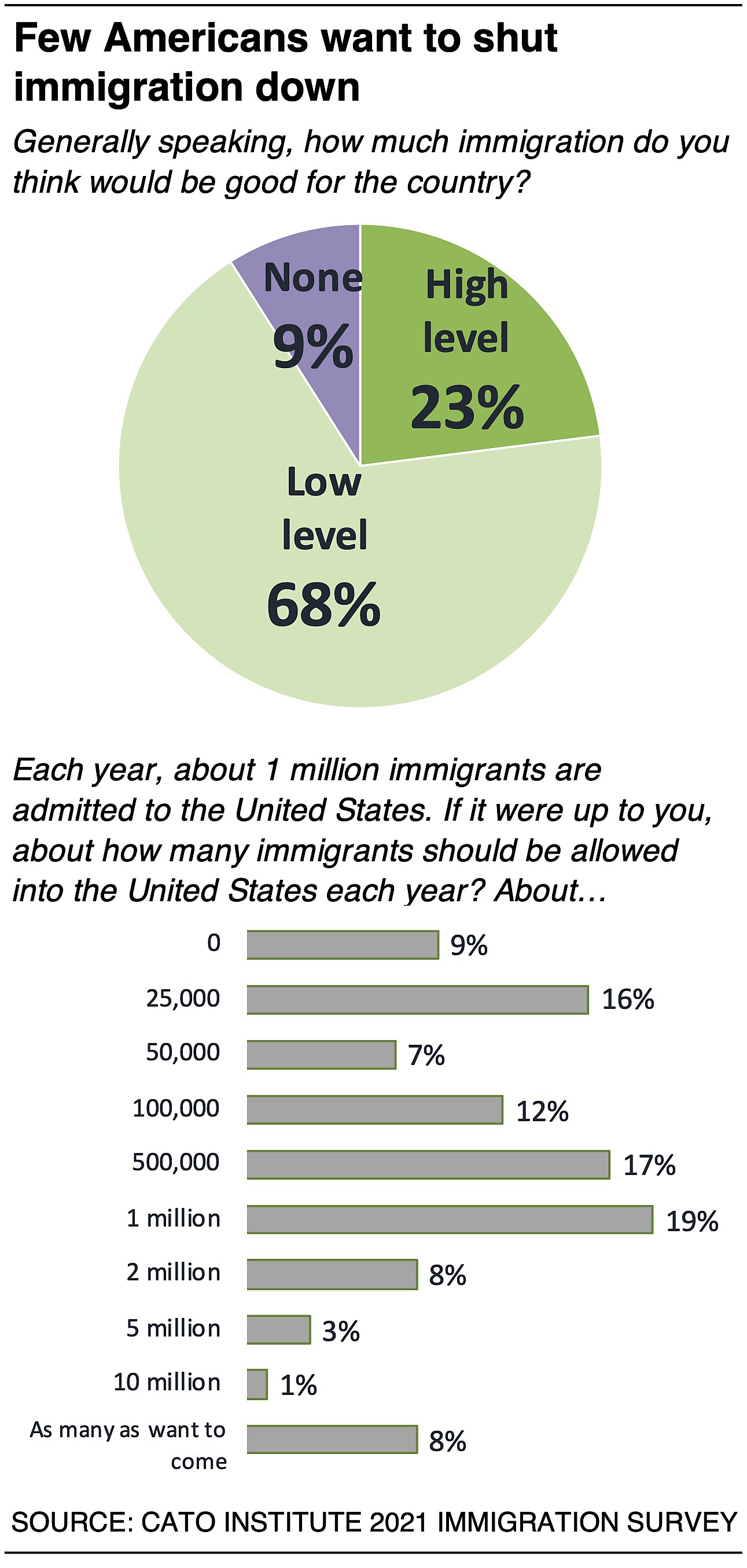
The complaint is speaking and it is aggressively written and, to my non-lawyer mind, pretty well drafted. If I were Mongo, I would be trying aggressively to settle this and make it go away.
If I were the parents, I would be trying very hard to force any other outcome, preferably one where Mongo pays the biggest public relations price possible for what they've done, assuming the allegations are true.
The way Mongo answers the complaint will be really instructive in figuring out how they intend to play this, and in whether they think there is some explanation that will make this seem less dire.
reply